



 English
 Español
 عربى
عربىContent
The most critical factor in selecting hard shell luggage is the material composition of the outer casing, as it directly governs the balance between impact protection, overall weight, and long-term structural integrity. For the majority of travelers, polycarbonate shells offer the optimal combination of lightweight maneuverability and high impact resistance, absorbing shocks during rough baggage handling without cracking or permanently denting. Understanding how different materials perform under real-world conditions allows you to match the luggage to your specific travel frequency and typical journey type, whether that involves short-haul flights, extended international trips, or ground transportation.
Understanding Shell Materials and Their Trade-Offs
Hard shell luggage on the market today primarily uses four distinct material categories. Each presents a different profile of weight, flexibility, scratch resistance, and cost. Selecting the right one requires weighing these characteristics against how frequently you travel and what you typically pack.
Polycarbonate
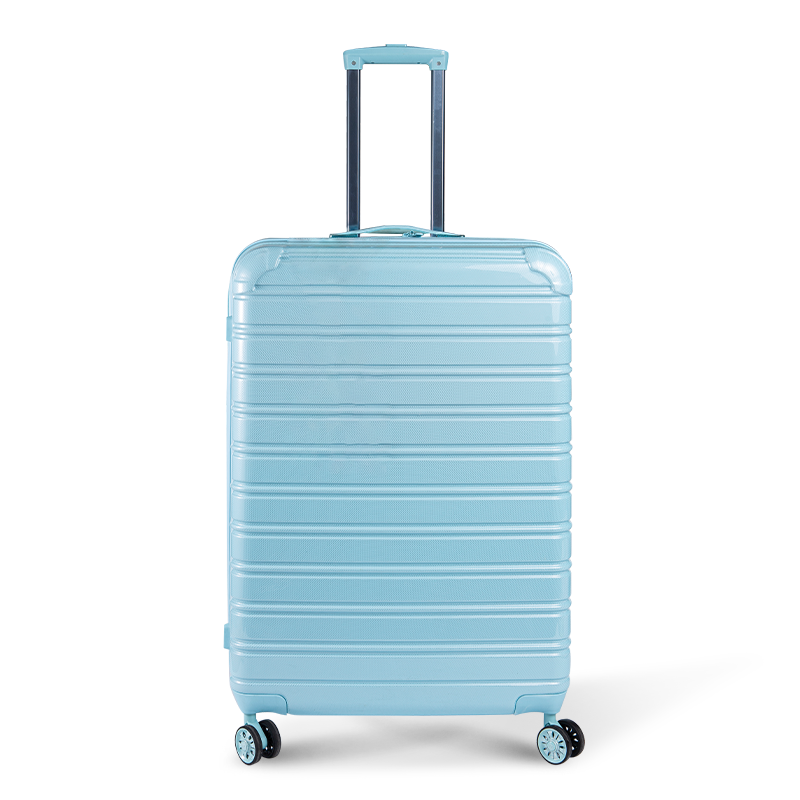
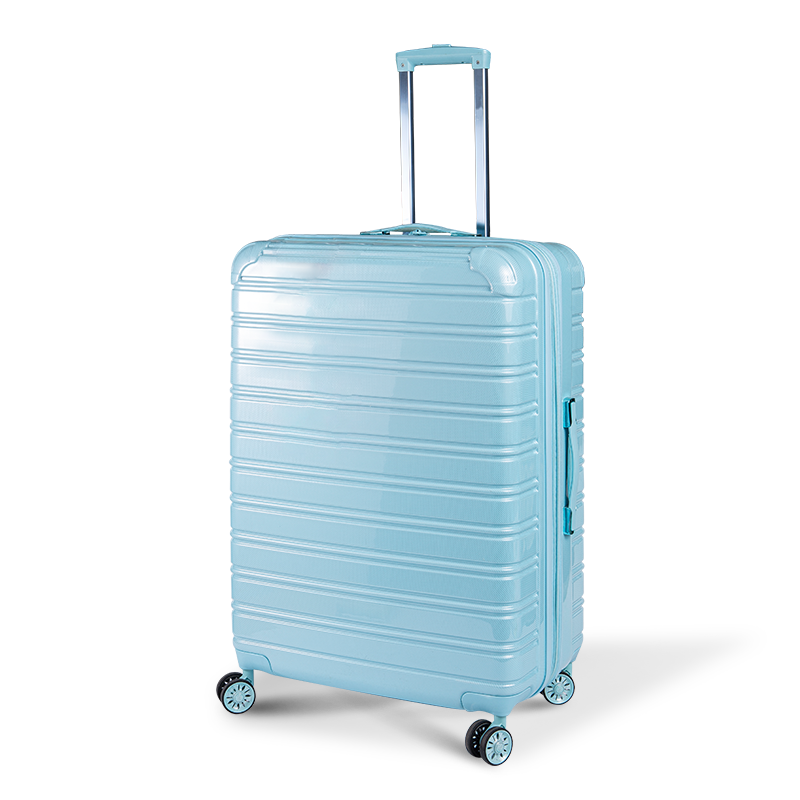
Polycarbonate is a high-performance thermoplastic known for its ability to flex under pressure and return to its original shape. This flexibility means that when a polycarbonate suitcase is dropped or thrown, the shell absorbs the energy by bending momentarily rather than cracking. High-quality virgin polycarbonate can withstand significant impact at weights as low as 2.5 to 3.2 kilograms for a standard carry-on size, making it the lightest durable option available. The trade-off is that polycarbonate can show surface scuffs more readily than harder but more brittle materials, though these marks are cosmetic and do not compromise structural integrity.
ABS Composite
Acrylonitrile butadiene styrene, commonly referred to as ABS, is a rigid and cost-effective plastic. Suitcases made from pure ABS or ABS blended with a small percentage of polycarbonate are generally heavier and less flexible than their pure polycarbonate counterparts. Under severe impact, ABS does not flex significantly; instead, it can crack or puncture. ABS luggage typically costs 40 to 60 percent less than polycarbonate models, which positions it as a practical choice for infrequent travelers or those who primarily use ground transportation where baggage handling is gentler. For regular air travel with multiple connections, the lower impact tolerance becomes a notable risk factor.
Aluminum
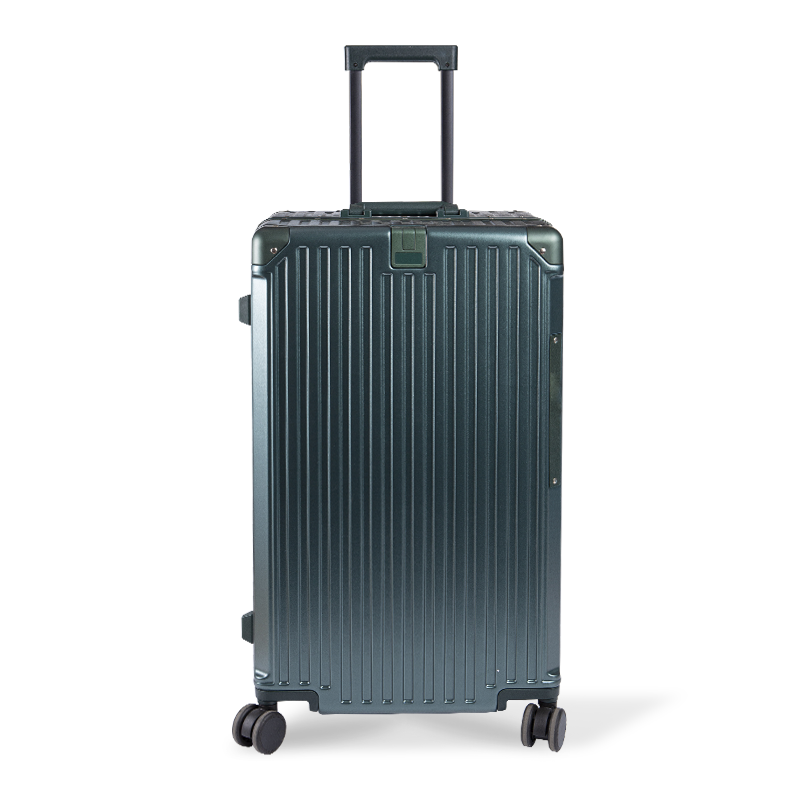
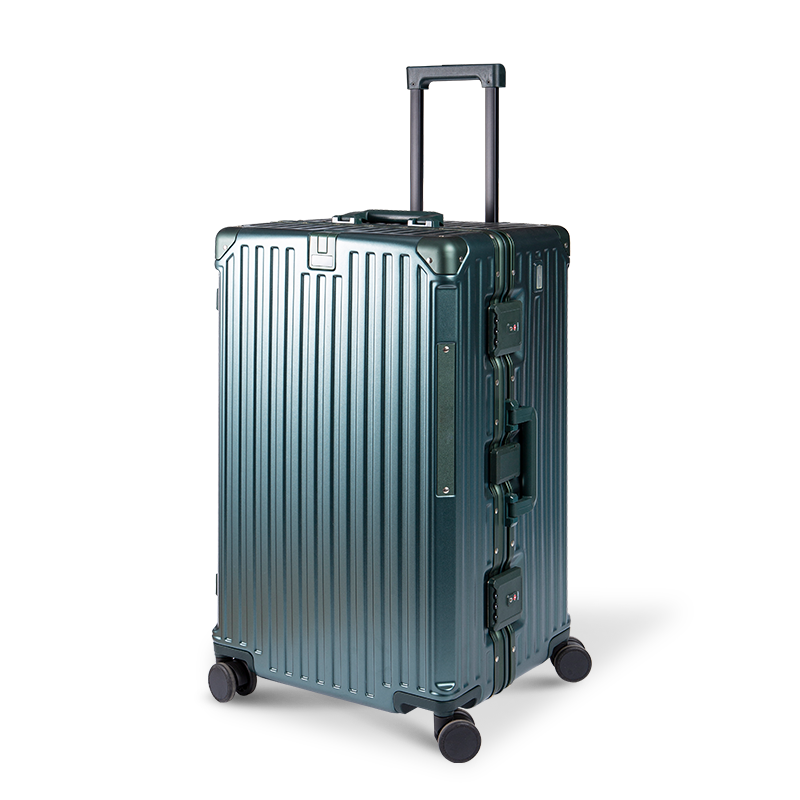
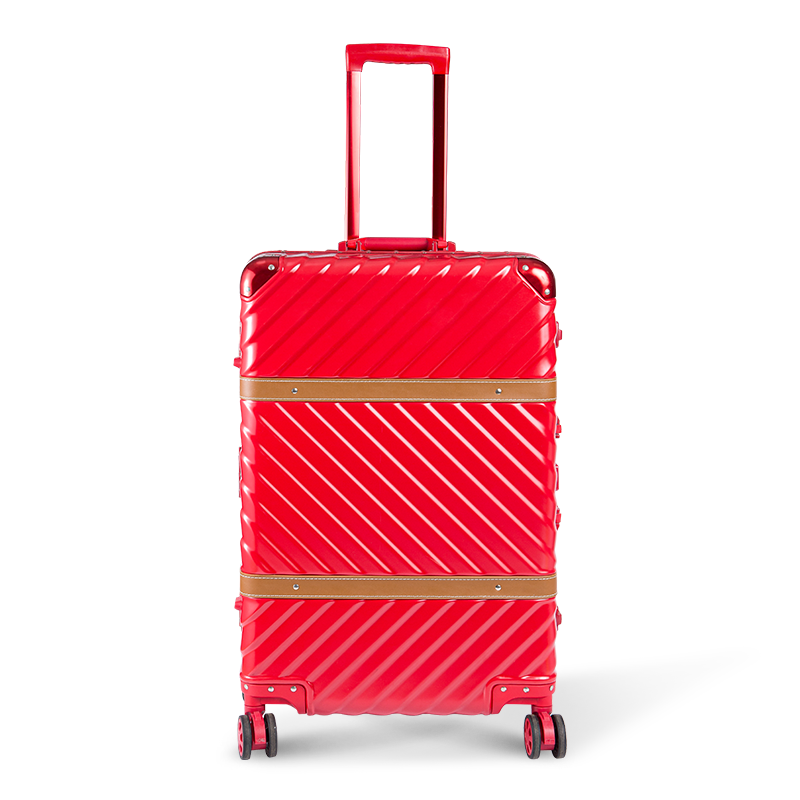
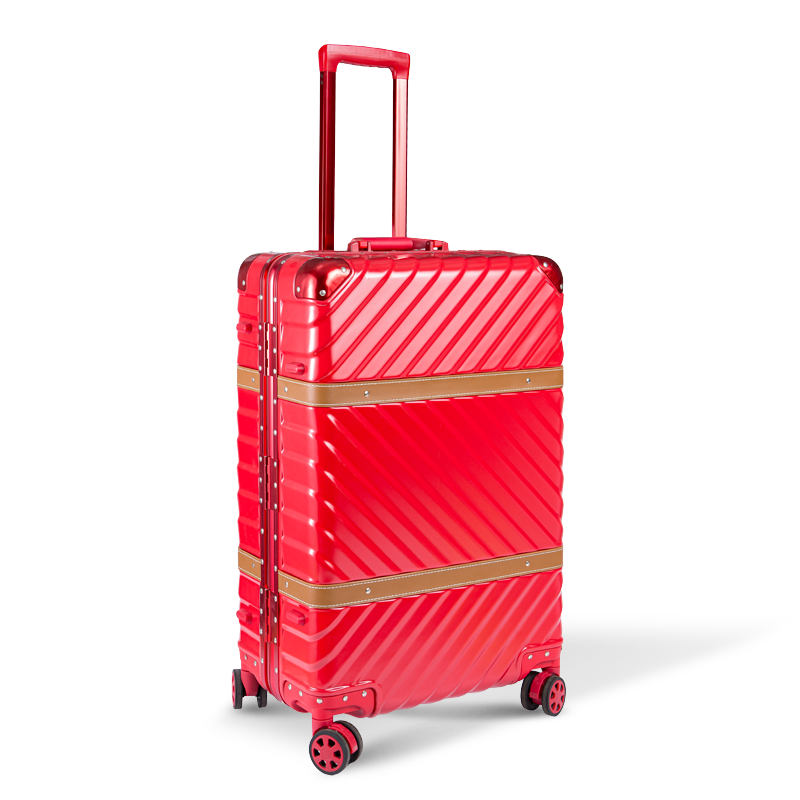
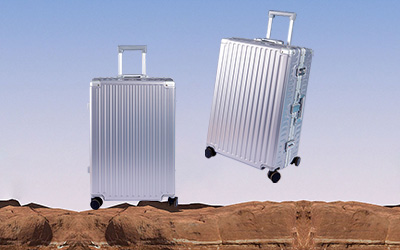
Aluminum hard cases offer the highest level of crush protection and a distinctive aesthetic that appeals to business travelers and long-haul flyers. These cases use aircraft-grade aluminum alloys, typically in thicknesses ranging from 0.8 to 1.2 millimeters. A standard aluminum carry-on weighs between 4.5 and 5.5 kilograms empty, significantly more than polycarbonate equivalents. Aluminum does not flex; instead, it can dent upon hard impact, and those dents are permanent. The advantage is unparalleled protection for fragile contents and a case that can be securely locked with integrated latch systems rather than zippers. Regular cleaning and occasional polishing maintain the appearance, but the weight penalty remains the primary drawback for travelers who prioritize easy lifting into overhead bins.
| Material | Average Carry-On Weight | Impact Resistance | Price Range |
|---|---|---|---|
| Polycarbonate | 2.5 - 3.2 kg | High (flexes and rebounds) | Mid to High |
| ABS Composite | 3.0 - 3.8 kg | Low to Moderate (can crack) | Low to Mid |
| Aluminum | 4.5 - 5.5 kg | Very High (dents instead of cracking) | High |
Construction Features That Determine Longevity
Beyond the shell material, several construction elements directly influence how many years of service a hard shell suitcase will provide. These components bear the brunt of mechanical stress during travel and are the most common failure points.
Frame Architecture
Hard shell luggage typically uses one of two frame designs: a full-wrap aluminum or reinforced plastic frame running around the entire perimeter of the case, or a hybrid design where the frame is integrated only at key stress points. Full-frame constructions distribute impact forces evenly across the entire case, reducing the likelihood of corner cracks or hinge misalignment. Cases without full frames rely on the shell edges to meet precisely, which can lead to misalignment after repeated use if the shell material warps slightly over time.
Closure Systems
Zipper closures on hard shell luggage require careful evaluation. High-quality models use self-repairing coil zippers with interlocking teeth that resist separation when the case is overpacked. Latch closures, found predominantly on aluminum cases, eliminate zipper failure entirely but add weight and complexity. A well-designed zipper with a rubber-sealed chain provides water resistance and flexibility that rigid latches cannot match, making zippered polycarbonate cases more practical for travelers who may need to expand their luggage capacity.
Wheel and Handle Integration
The most frequently damaged components on any hard shell suitcase are the wheels and the telescopic handle. Double-spinner wheels, where two wheels are mounted on each corner, offer greater stability and smoother rolling than single-wheel designs. Wheels with sealed ball bearings and a diameter of at least 50 millimeters handle uneven surfaces and cobblestones significantly better than smaller, unsealed alternatives. The telescopic handle should be made of aluminum alloy tubing with minimal wobble when fully extended, and the locking mechanism should engage at multiple height positions to accommodate users of different statures.
Size Selection and Airline Compatibility
Matching your hard shell luggage dimensions to airline restrictions prevents costly gate-check fees and ensures a smooth boarding experience. Different carriers enforce different maximum dimensions, but industry standards provide a reliable baseline.
For carry-on luggage, the most widely accepted maximum dimensions are 55 centimeters in height, 35 centimeters in width, and 20 to 25 centimeters in depth, including wheels and handles. Some budget airlines enforce stricter limits of 40 by 30 by 20 centimeters for under-seat bags. Checked luggage in the medium size range typically measures between 65 and 75 centimeters in height and offers a capacity of 70 to 90 liters, suitable for trips lasting one to two weeks. Large checked cases exceeding 75 centimeters in height can hold over 100 liters but risk exceeding airline weight limits of 23 to 32 kilograms when fully packed.
Before purchasing, verify the external dimensions including all protruding parts. The following checklist helps ensure compatibility:
- Measure the case with the handle fully retracted and wheels touching a flat surface
- Compare against the specific carry-on sizer dimensions of your most frequently flown airline
- Account for any expansion zippers that add depth when the case is fully packed
- Weigh the empty case and subtract that figure from the airline weight allowance to determine usable packing capacity
Practical Maintenance for Extended Use
Proper care significantly extends the service life of hard shell luggage, preserving both its appearance and mechanical function. Different materials require slightly different approaches.
For polycarbonate and ABS surfaces, clean the shell after each trip using a soft cloth dampened with mild soap and warm water. Avoid abrasive cleaners or scouring pads, as these create micro-scratches that dull the finish over time. For stubborn scuff marks, a melamine foam sponge applied gently can lift surface marks without damaging the underlying material. Aluminum cases benefit from occasional application of a specialized metal polish to maintain their luster, though some travelers prefer the natural patina that develops with use.
Wheel maintenance is equally important. Remove tangled hair, threads, and debris from wheel axles after every few trips, as accumulated material increases rolling resistance and strains the bearing. A drop of silicone-based lubricant applied to each wheel bearing twice a year keeps the rolling motion smooth and quiet. When storing hard shell luggage, keep it in a cool, dry environment away from direct sunlight, which can cause certain plastics to discolor or become brittle over extended periods. Store the case upright or on its side rather than stacking heavy items on top, which can deform the shell over time.
Making a Decision That Matches Your Travel Pattern
The right hard shell luggage ultimately depends on an honest assessment of how and where you travel. Frequent flyers taking more than six round trips per year benefit most from investing in lightweight polycarbonate with double-spinner wheels and a full-frame construction, as the durability and weight savings compound across hundreds of handling cycles. Occasional travelers making one or two trips annually can find reliable service in well-constructed ABS composite cases without the premium price tag. Those who frequently transport fragile equipment or valuables should strongly consider aluminum for its crush-proof properties, accepting the weight trade-off as a worthwhile insurance policy. By aligning material choice, construction quality, and size selection with your actual travel habits, you secure a travel companion that serves reliably for years of journeys ahead.