




 English
 Español
 عربى
عربىContent
- 1 Can a Duffel Bag Be a Carry-On? The Short Answer
- 2 Carry-On or Personal Item? A Duffel Can Fill Either Slot
- 3 Published Limits Decide the Answer Before You Reach the Gate
- 4 How to Measure a Soft Duffel Before You Leave Home
- 5 Packing So the Duffel Still Fits the Sizer
- 6 Duffel or Rolling Carry-On: Which One Should You Bring
- 7 What a Carry-On Duffel Needs From the Factory
- 8 Frequently Asked Questions
A duffel bag can be a carry-on. The condition is simple and often ignored: the bag has to fit when it is packed, not when it is empty. Most US carriers publish a cabin limit of 22 by 14 by 9 inches, or 56 by 36 by 23 centimeters, and that figure includes handles, straps and wheels. A soft duffel that measures 21 inches flat will pass. The same bag stuffed to 24 inches across the base gets pulled at the gate.
The duffel that fails the sizer is rarely the one that looked too big in the shop. It is the one packed two inches past its empty size.
Can a Duffel Bag Be a Carry-On? The Short Answer
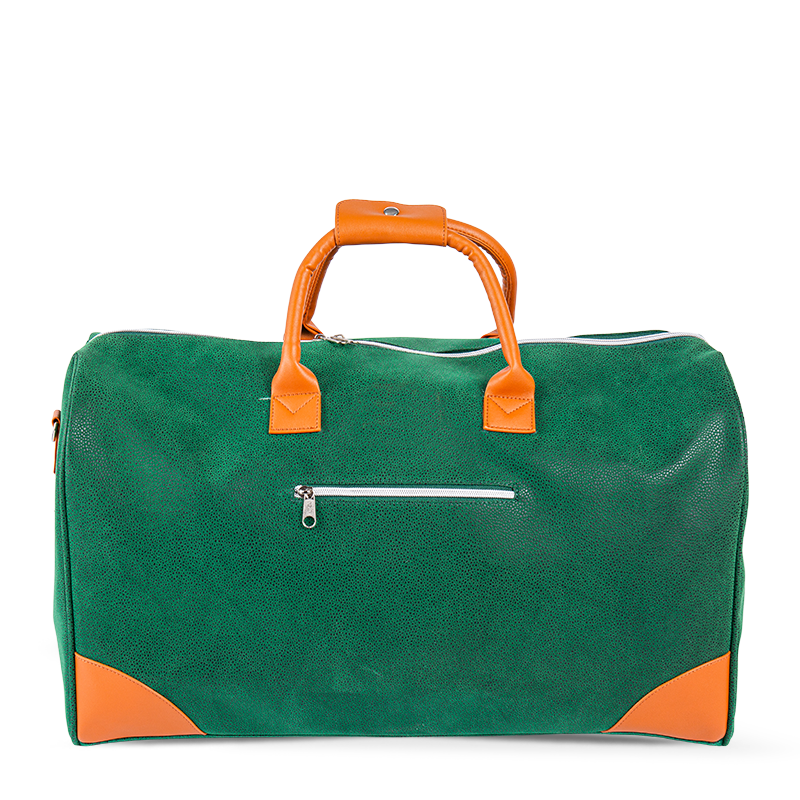
Yes, a duffel bag can be a carry-on when three things are true at once: the packed dimensions fit your airline cabin limit, the loaded weight stays under the cabin cap where one applies, and the fabric has enough give to be pressed into a sizing frame without splitting a seam.
Definition: a carry-on is a bag whose packed dimensions fit the airline published cabin limit and which travels in the overhead bin. A personal item is a smaller bag that fits under the seat in front of you. Airlines count the two separately.
- Dimensions: measure the packed bag at its widest point, with handles and strap hardware included, then compare it with the smallest limit on your itinerary.
- Weight: US carriers rarely weigh cabin bags on domestic routes, while many international carriers cap them at 7 to 10 kilograms, which is 15 to 22 pounds.
- Structure: a soft duffel compresses into a sizer only if the fabric has some give and the bag is not packed tight to the seams.
Carry-On or Personal Item? A Duffel Can Fill Either Slot
A duffel bag can also be a personal item, and the deciding factor is not the shape of the bag but the space it is allowed to occupy: overhead bin or under the seat.
Duffel as carry-on
- Typical limit of 22 x 14 x 9 inches
- Travels in the overhead bin
- One per passenger on standard fares
- Weight caps apply on some international routes
Duffel as personal item
- Typical limit of 18 x 14 x 8 inches, or simply must fit under the seat
- Rarely weighed at the gate
- One per passenger alongside the carry-on
- Holds a laptop, a change of clothes and a toiletry kit
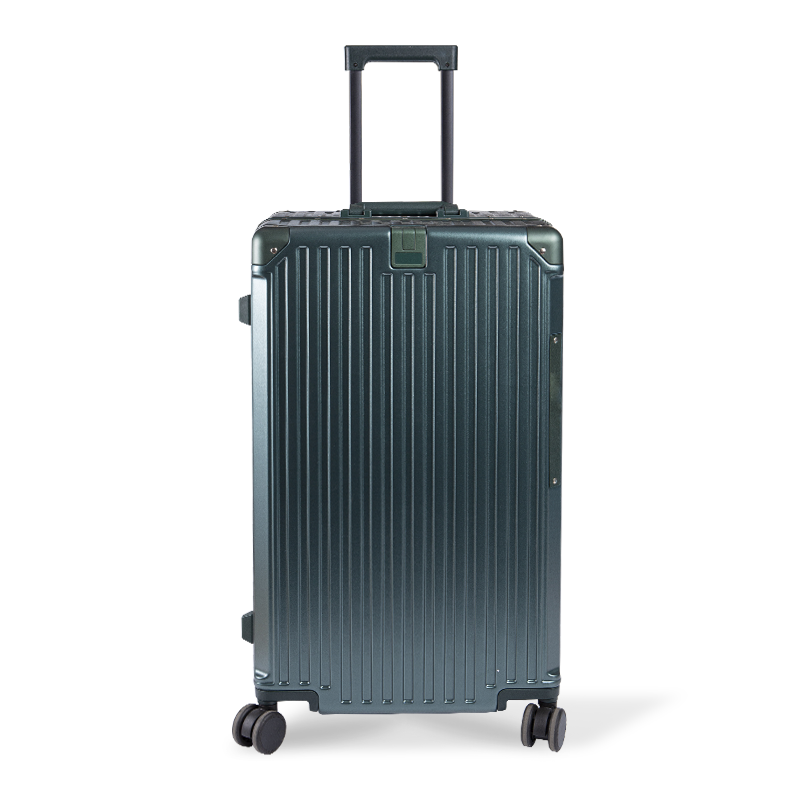
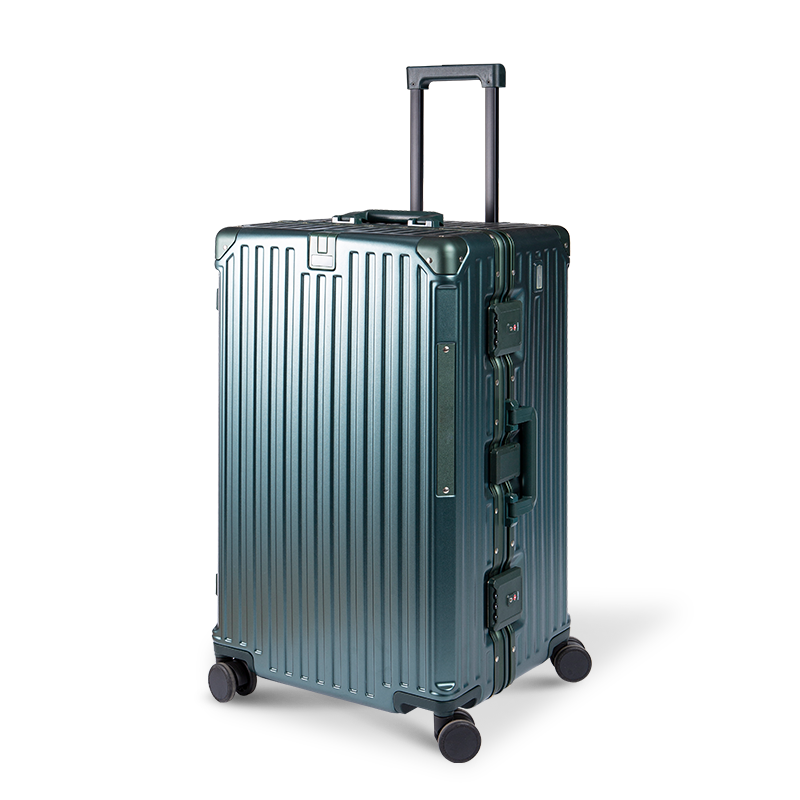
Both at once is normal. On a standard fare you may board with one carry-on and one personal item, so a duffel in the bin with a smaller bag under the seat is a compliant combination. Basic economy fares often remove the overhead allowance, which turns the same duffel into a checked bag or a gate fee. If you want a measurement that does not change between trips, a 20 inch carry-on luggage case keeps its footprint, while a duffel trades that certainty for flexibility.
Check the fare, not only the airline. The carrier that allows a duffel in the overhead bin on a standard ticket may charge for the same bag on a basic fare.
Published Limits Decide the Answer Before You Reach the Gate
Cabin size and weight limits differ more than most travelers expect, and the sizer box at the gate is the only measurement that counts at boarding time.
| Carrier | Cabin size limit | Cabin weight limit | What to watch |
| US majors | 22 x 14 x 9 in (56 x 36 x 23 cm) | No domestic limit | Wheels and handles count toward size |
| Southwest | 24 x 16 x 10 in | No domestic limit | Roomier than most US limits |
| Air Canada | 21.5 x 15.5 x 9 in (55 x 40 x 23 cm) | 22 lb (10 kg) | Bags are weighed at some stations |
| Ryanair | 21.6 x 15.7 x 7.9 in (55 x 40 x 20 cm) | 22 lb (10 kg) | Large cabin bag needs priority boarding |
| Emirates | 21.6 x 15 x 7.9 in (55 x 38 x 20 cm) | 15 lb (7 kg) in economy | Weight is enforced more strictly than size |
Size your duffel against the smallest carrier on the itinerary. A bag that clears a generous 24 inch limit can still be refused on the connecting flight.
How to Measure a Soft Duffel Before You Leave Home
Measure the duffel after you pack it, at its widest point, and keep every strap, handle and wheel inside the number.
- Fill the bag the way you plan to travel. An empty measurement says nothing about the size that reaches the gate.
- Square the base. Push contents down so the bottom sits flat and the sides run vertical instead of bulging.
- Measure length, width and height at the widest points, including the shoulder strap buckle if it sits outside the body.
- Compare with the tightest limit on your route, then leave one inch of margin for the fabric to relax in flight.
- Weigh the loaded bag whenever any leg of the trip carries a cabin weight cap.
| Capacity | Approximate packed size | Verdict against a 22 x 14 x 9 limit |
| 30-35 L | 20 x 12 x 10 in | Fits with room to spare |
| 40-45 L | 22 x 14 x 9 in | Fits only if packed square |
| 50 L | 23 x 15 x 10 in | Too long for many carriers |
| 60 L and above | 26 x 16 x 11 in | Checked baggage territory |
A duffel measured empty tells you nothing useful. Measure it loaded, then subtract nothing from the result.
Short-trip travel duffels are usually built in the 35 to 45 liter range for exactly this reason: the bag can be filled to a square shape and still read under the limit at check-in.
 Short Trip Bags Manufacturersinformation to be updatedView Product →
Packing So the Duffel Still Fits the Sizer
Packing technique, not bag size, is what usually decides whether a duffel boards or gets gate-checked at the jet bridge.
- Pack soft items against the walls first, then fill the middle. A shell of clothing keeps the sides flat and stops the base from bowing outward.
- Keep the footprint rectangular. A duffel bulges at the ends when shoes and cables get pushed into the corners.
- Use two or three packing cubes instead of loose layers, because cubes stack square and stay square through security.
- Tighten the compression straps last, after the bag is closed, and recheck the length with a tape measure.
- Leave about two inches of unused height at the top, since that reserve is what lets the bag press into a sizer without a seam letting go.
Measured length of a 40 liter duffel after packing
The compression strap is the difference between a duffel that fits and a duffel that pays a gate fee. Tighten it after packing, never before.
A wide-opening duffel also lays flat in a security tray, which shortens the screening step rather than the flight. How travel duffel bags make airport security a breeze covers the details that matter in the line.
Duffel or Rolling Carry-On: Which One Should You Bring
A duffel wins on weight and flexibility, while a rolling case wins on effort and predictable shape.
Choose a duffel when
- Every kilogram counts toward a cabin weight cap
- The trip involves stairs, trains or cobblestones
- The bag must squash into a tight overhead bin
- You want a bag that folds flat in a hotel room
Choose a rolling case when
- Transfers involve long walks through large airports
- You carry books, tools or camera bodies
- You want identical packed dimensions every trip
- Shoulder fatigue matters on a long itinerary
Three situations push the decision the other way. A duffel is the wrong bag for a fragile load, for a route where you stand in line for an hour with the strap on one shoulder, and for anyone who cannot lift a loaded bag above shoulder height into a bin. When the trip includes two long airport walks, a wheeled duffel-style trolley that still opens like a duffel solves both problems at once.
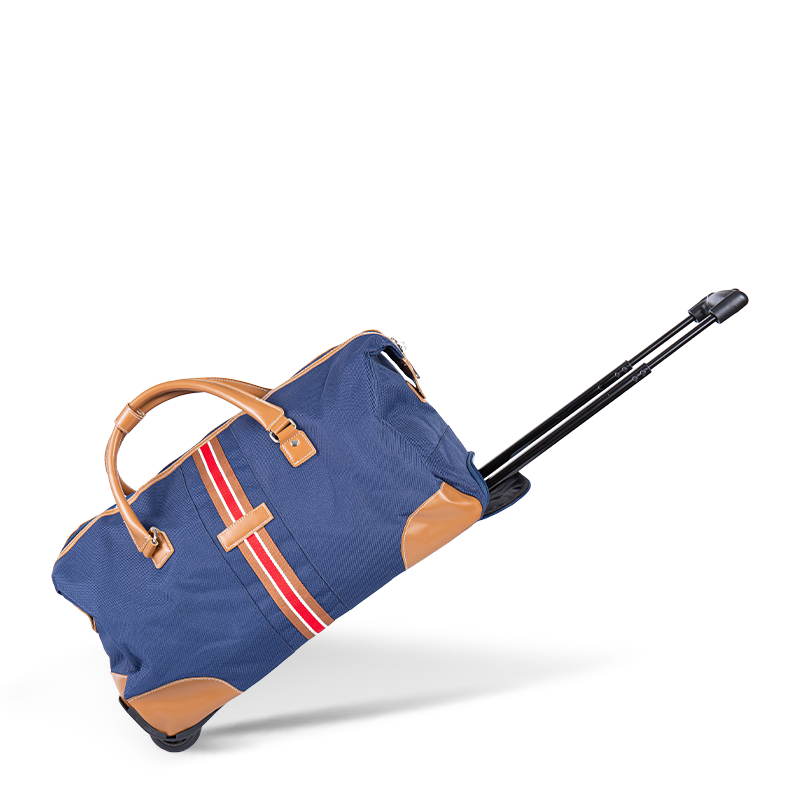 Short Trip Trolley Bag with WheelsMaterial: Oxford fabric + Leather Dimensions: 60 x 23 x 35 cm (L x W x H) Total Trolley Length: 90 cmView Product →
What a Carry-On Duffel Needs From the Factory
The duffels that survive weekly cabin travel are specified at the factory, not chosen in the store.
Fabric
600D to 1680D Oxford with a water-resistant coating holds its shape better than thin polyester, which sags once loaded.
Hardware
A number 10 zipper coil or a metal zip, wide webbing on the shoulder strap, and a padded handle wrap that does not cut into the hand.
Structure
A reinforced base panel, a rectangular silhouette, and at least one compression strap to pull the load back inside the limit.
Builders who supply cabin bags to export markets work from a specification sheet: finished dimensions with a tolerance of about one centimeter, strap pull tests, zipper cycling, and a packed shape that still measures square after a month of use. Custom logo programs usually lock those numbers before color or trim is discussed.
Pinghu Huacheng Suitcase & Bag Co., Ltd has produced bags and luggage for export since 1999, working across Oxford fabric travel bags, wheeled trolleys and hard-shell carry-on cases. A boarding-style hand-carry bag with a flat profile suits travelers who want a duffel that keeps its shape in the sizer.
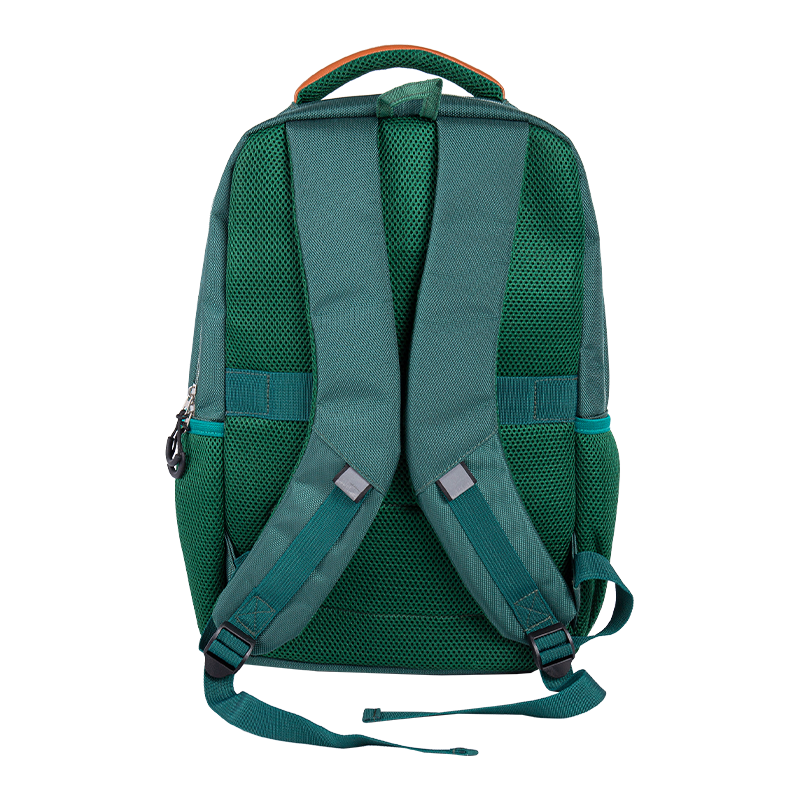 Business Multifunctional Waterproof Hand-Carry Travel Boarding BagMaterial: Oxford fabric with PVC coating Lining: Polyester Dimensions: 52 x 33 x 17 cm Color Options: Black, Army Green, Blue, Gray Interior Structure: Mesh pocket, ph...View Product →
Frequently Asked Questions
Can a duffel bag be a carry-on on an international flight?
Yes, provided it fits the cabin size limit and any weight cap on that route. International carriers enforce weight more often than US domestic carriers, and 7 to 10 kilograms is the common economy range.
Is a duffel bag allowed as a personal item?
Yes. A duffel qualifies as a personal item when it slides under the seat in front of you, which is usually a limit near 18 by 14 by 8 inches. Compact duffels of 20 to 25 liters fit that slot comfortably.
What size duffel is safest for cabin travel?
A 40 to 45 liter duffel with a rectangular base is the safest choice. Measure it once packed, and if it reads more than 22 inches long or 14 inches wide, step down to a 35 liter bag.
Do duffel bags get weighed at the gate?
Rarely on US domestic routes and often on international routes. The check-in scale is the usual checkpoint, and gate agents may recheck a bag that looks heavy.
Buy the size that fits the smallest limit on your route, then pack to the shape rather than to the seams.
A duffel bag can be a carry-on, a personal item or neither, and the bag itself decides very little of that. What decides it is the packed measurement, the fare you booked, and the weight cap on the route.
Measure once at home with the bag loaded, keep the base square, and leave a margin for the fabric to move in flight. That routine is the whole difference between walking onto the plane with your bag and paying to check it at the jet bridge.
Pack the bag, then measure the bag. In that order, every time.