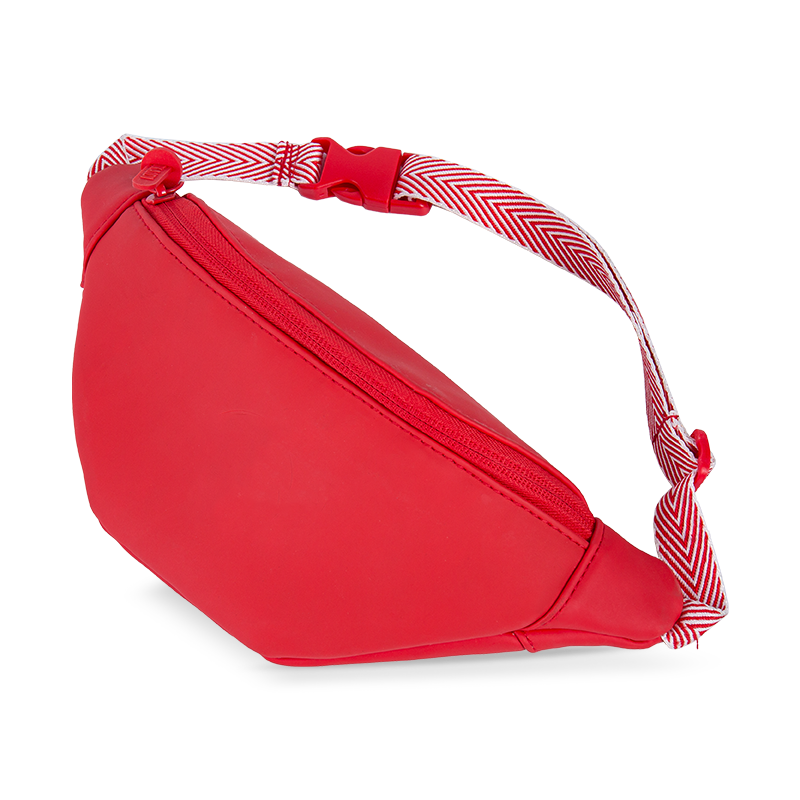
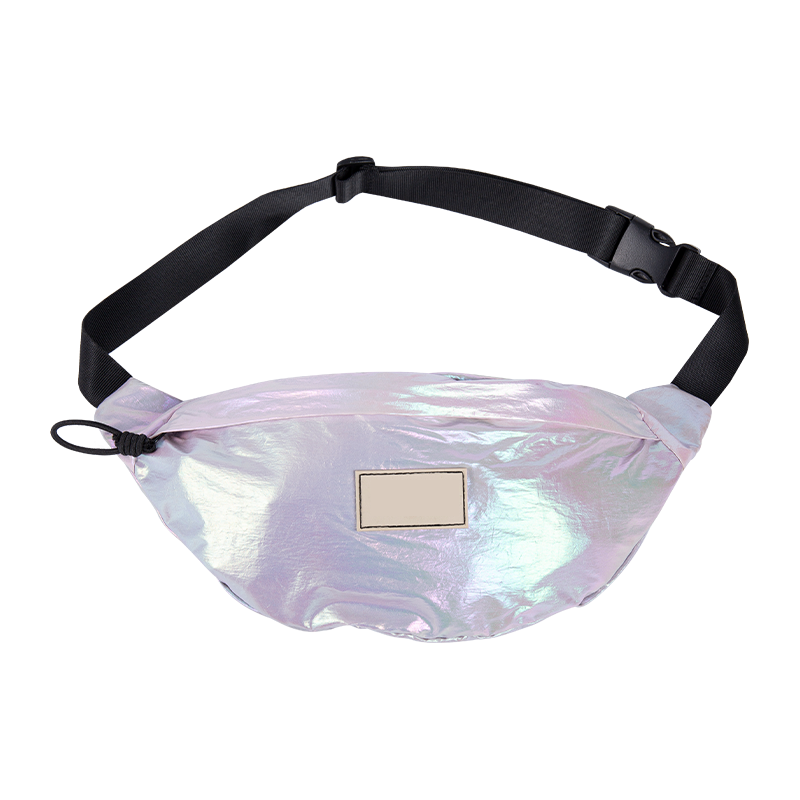
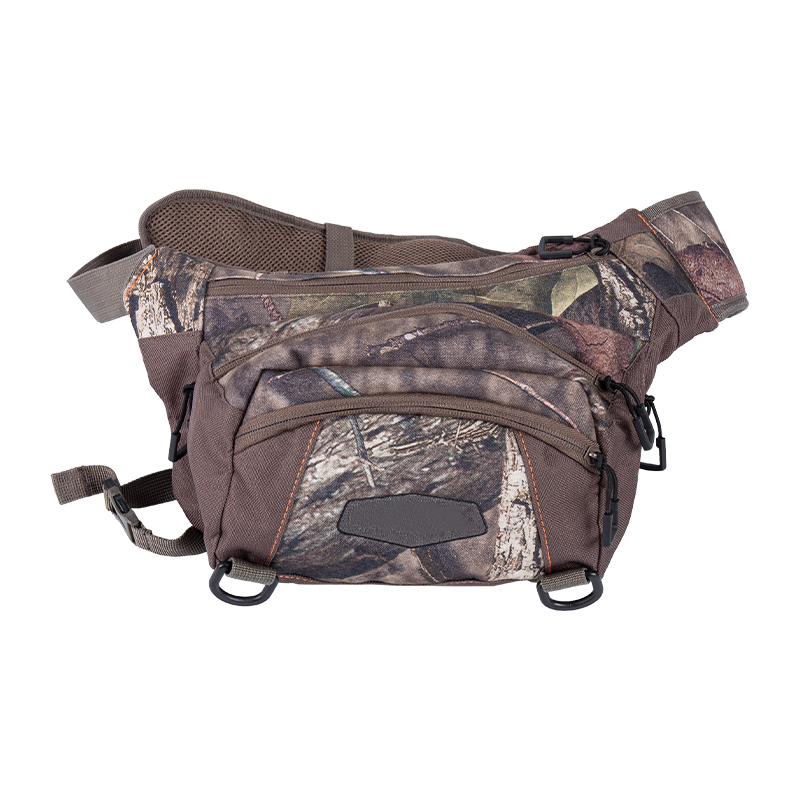




 English
 Español
 عربى
عربىContent
Six hours into a travel day, the bag that decides whether the trip feels smooth is the small one you never take off. A travel crossbody bag has to hold a passport, a phone, two cards and a power bank, stay shut while you bend down to lift a suitcase, and sit still when you run for a platform. Everything else in your luggage can be reorganised later. This one is judged minute by minute.
What Counts as a Crossbody Bag for Travel
A travel crossbody bag is a single-strap bag worn diagonally across the torso, sized roughly 1 to 6 litres, and positioned at the front hip or lower ribs so the wearer can open it without taking it off.
The strap is the whole design. It leaves one shoulder, crosses the chest or the back, and anchors at the opposite hip. That diagonal path holds the bag flat against the body instead of letting it swing out the way a vertical shoulder strap does, and it spreads the load across the torso rather than concentrating it on one collarbone.
Three checks separate a genuine travel crossbody from a bag that only looks like one:
- The body sits at the hip, not the chest. A chest-high sling is comfortable on a bicycle, but it rides under a jacket collar and collides with the shoulder straps of a backpack.
- The strap crosses to the opposite hip. If the bag hangs below the same shoulder the strap starts from, it will swing into your thigh with every step and pull sideways when you sit down.
- The opening faces you. A main zipper that runs along the top edge and opens toward the body can be worked one-handed without turning the bag around in a queue.
None of this means a shoulder bag or a waist pack is a bad purchase. Both work well on a city walk. On a real travel day, with a rolling case in one hand and a boarding pass in the other, the diagonal carry is what keeps your hands free and your documents inside your field of view.
Size, Weight and Strap Geometry
For most travel, the working range is 1.5 to 3 litres of volume, 250 to 450 grams of empty weight, and a strap drop of 50 to 60 centimetres measured from the top of the strap loop to the highest point of the bag body.
Published volume figures deserve scepticism. A bag sold as three litres with a padded tablet sleeve and a rigid base realistically carries about two litres of soft cargo, because the sleeve occupies the flat space a jacket would use. Measure the main compartment, not the marketing number.
| Size class | Volume | Carries | What to check |
| Micro | 0.8 to 1.5 L | Phone, cards, keys, passport | Strap under 25 mm digs in once the bag is full |
| Small | 1.5 to 3 L | Plus power bank, sunglasses, compact camera | Balance when loaded; front-heavy bags rotate forward |
| Medium | 3 to 6 L | Plus an 11 inch tablet, light jacket or 500 ml bottle | Needs wider webbing and a light back panel |
| Large | 6 L and above | 13 inch laptop and a full day kit | Behaves like a messenger bag; check hip stabilisation |
Materials and Weather Resistance
Woven synthetics handle rain and abrasion better than coated canvas or PU leather at the same price point, and they dry far faster after a downpour.
Woven synthetics: 420D to 900D nylon, 600D polyester
- Carry a PU or TPU back coating that sheds light rain and road spray.
- Dry within an hour indoors; no water line left behind on the fabric.
- Resist scuffing where the strap rubs against railings, seats and luggage handles.
- Take screen printing, heat transfer and woven labels cleanly.
Coated canvas and PU leather
- Look more formal and photograph better in retail listings.
- Absorb water at seams and edge piping, then dry slowly in a humid climate.
- Need a wipe-down rather than a wash, which is awkward mid-trip.
- Take embossed logos and metal plates, which raise perceived value.
The zipper usually matters more than the fabric label. A number 5 nylon coil with a reverse-coil construction hides the teeth and keeps grit out of the slider, which is what prevents the jamming complaint that reaches customer service twelve months later. Our production notes on how to choose a crossbody bag that suits the trip cover the same checks from a workshop angle.
Security, Comfort and Hands-Free Movement
The security benefit of a crossbody bag comes from position rather than hardware: the opening sits under your forearm, inside your field of view, and moves with your body when the crowd shifts.
- Zipper direction. A slider parked at the end nearest your body is the hardest one to reach from behind, and a covered or reverse coil zipper removes the easy grab point entirely.
- Strap width. Webbing between 32 and 38 millimetres plus a light pad spreads pressure across the shoulder. Anything under 25 millimetres cuts in after an hour of walking.
- Strap core. A webbing or wire core inside the strap resists a slash attempt, and a strap that anchors through a reinforced bar rather than a single stitch line survives daily abuse.
- Buckle choice. A quick-release buckle lets you take the bag off without lifting it over your head, which matters when you are holding a tray, a ticket or a child's hand.
A short strap and a flat body are what make the bag disappear under a jacket in a crowded metro. Bulk is the enemy here: a bag that stands 30 centimetres off your hip will catch on turnstiles, seat backs and other passengers.
Packing It: Weight, Balance and One-Bag Travel
A crossbody bag stays comfortable when the total load stays under roughly 1.5 kilograms and the heaviest single item sits flat against the panel that touches your body.
Those five items add up to about 1.4 kilograms, which is already at the comfortable ceiling. Anything beyond that belongs in a daypack or in the case you are rolling.
For Buyers: Specifications That Decide the Landed Cost
If you are sourcing crossbody bags for resale, four specifications decide the landed cost and the return rate: fabric denier and coating, zipper grade, strap webbing width, and the logo method.
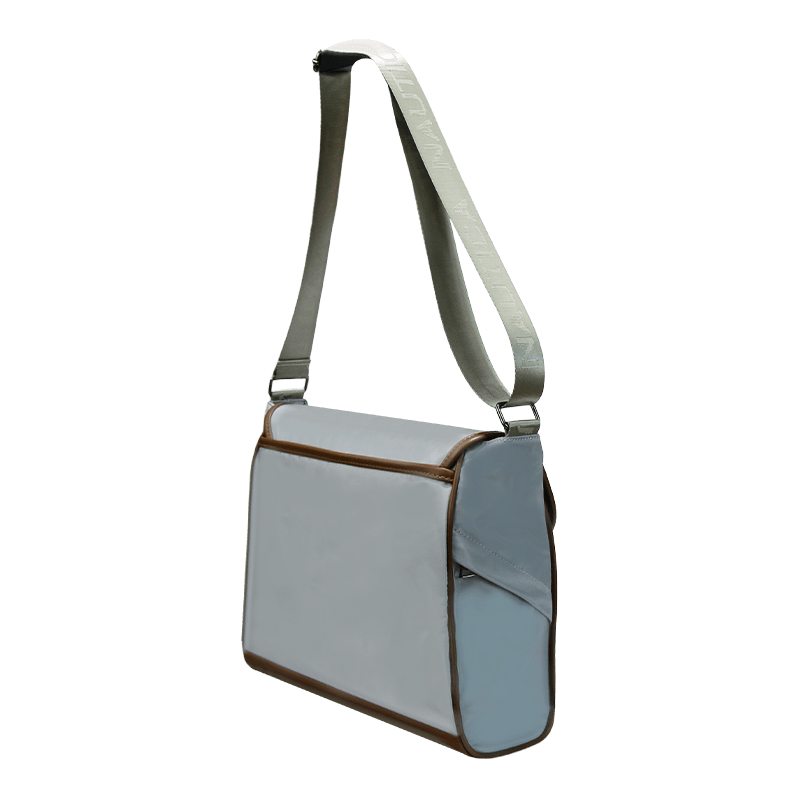 Waterproof PVC Crossbody Bag for Travel, Riding, and Outdoor UseThis waterproof PVC crossbody bag offers 3–5 L capacity, detachable adjustable straps, and logo customization, suiting resale buyers comparing zipper, strap, and coating specifications.View Product →
Everything else is negotiable. A buyer who fixes those four items in the specification sheet receives comparable quotations instead of four samples that cannot be compared with each other. A typical travel line runs from compact phone-and-cards carriers through 2 to 3 litre nylon models to larger leather-trimmed bags aimed at business travellers.
| Specification | Entry build | Better build | Commercial effect |
| Fabric | 600D polyester, light PU backing | 420D to 900D nylon with PU or TPU coating | Coating adds unit cost but holds colour and cuts rain-related returns |
| Zipper | Standard nylon coil, size 5 | Reverse coil size 5 or 8 with a metal slider | Zipper jamming is the most common after-sales claim on soft bags |
| Strap | 25 mm flat webbing, fixed length | 32 to 38 mm webbing, padded section, adjustable slider | Comfort complaints scale directly with how much the bag carries |
| Logo | Single colour screen print | Woven label, rubber patch or embossed metal plate | Lifts perceived value and improves the reorder rate on repeat seasons |
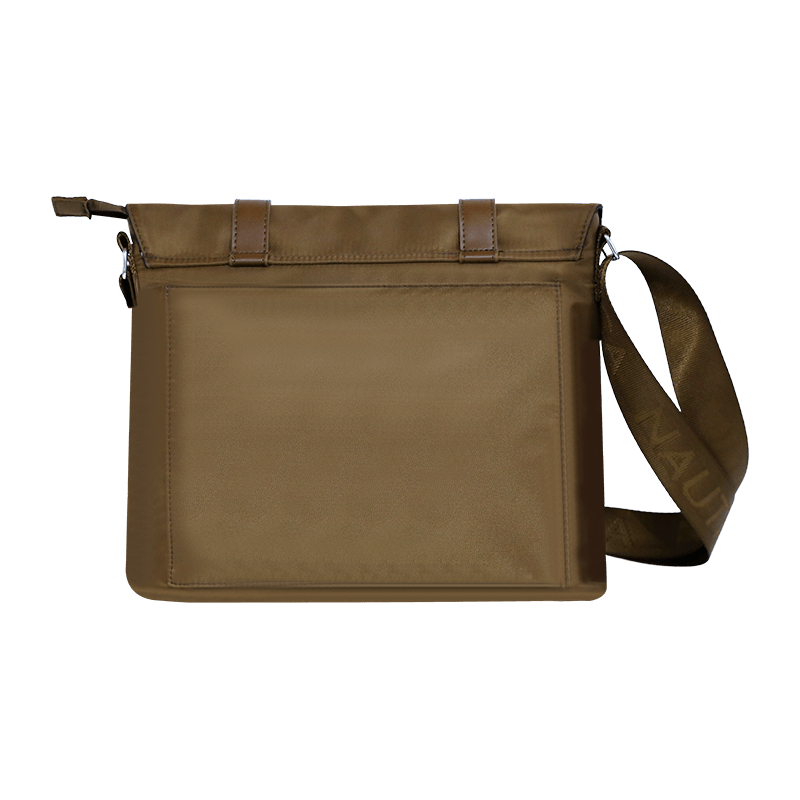 Wholesale Men's Waterproof Nylon Crossbody Bag with Custom LogoThis retro nylon crossbody bag supports custom logos, OEM/ODM, and size options at a 500-piece minimum, fitting buyers who need comparable quotations and branded variants.View Product →
Customised logo work is routine on this category, and the practical limit is the artwork rather than the bag: a single colour logo screens cleanly onto coated nylon, while a two colour logo on a curved front panel needs either a woven label or a patch. The full crossbody bag range shows how the same shell is reused across sizes, which shortens sampling when a buyer wants three variants of one model.
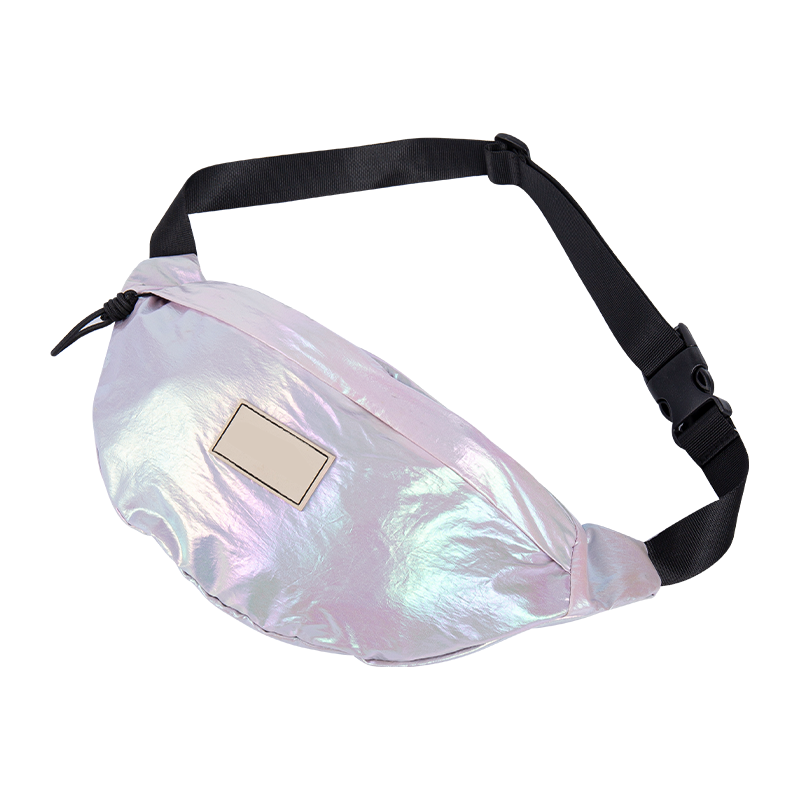 HUACHENG Lightweight Nylon Crossbody Waist Bag with YKK ZipperThis 0.55 lb nylon waist bag has adjustable webbing strap, multiple zipper pockets, and fits airline personal-item sizing for hands-free crossbody or waist wear.View Product →
Frequently Asked Questions
Can you wear a crossbody bag on a plane?
Yes. Most airlines treat a crossbody bag as a personal item as long as it fits under the seat in front of you, which in practice means a body around 30 by 22 by 12 centimetres. Keep the strap on when you board and slide the bag under the seat rather than into the overhead bin, so you never have to stand up mid-flight to reach your passport or medication.
Is a crossbody bag big enough to replace a daypack?
Below 3 litres, no. Between 3 and 6 litres it can replace a daypack for a museum or market day, though a full load starts to pull on one shoulder. At 6 litres and above a crossbody bag will hold a 13 inch laptop, but the strap begins to dig unless the webbing is at least 32 millimetres wide and padded.
How do I stop the strap from digging into my shoulder?
Three fixes, in order of effect: widen the webbing to 32 to 38 millimetres, shorten the strap so the bag rests at the hip rather than at the waist, and rotate any strap pad so it sits on the shoulder crest instead of the collarbone. If the bag still digs, the load is too heavy for the strap, not the other way around.
Are crossbody bags safe in crowded cities?
Position beats hardware. A bag worn at the front hip with the main zipper closed and the outer pocket turned toward your body is harder to open unnoticed than a bag with an expensive lock worn on the back. Anti-slash straps and covered zippers help, but the visible position of the opening is what removes the opportunity.
Crossbody bags look like a small category until you travel with the wrong one. Buy for the loaded weight, not the empty weight, and check the strap geometry before the colour. A bag that sits at your hip, opens toward you and holds under 1.5 kilograms will still feel invisible at hour ten of a travel day, which is exactly what a travel bag is supposed to do.