


 English
 Español
 عربى
عربىContent
- 1 What a Transparent PVC Backpack Actually Is
- 2 Why Venues, Schools and Factories Require Them
- 3 Film Grades and Material Choices That Change the Outcome
- 4 Construction Details That Decide How Long It Lasts
- 5 Sizing, Capacity and What Actually Fits
- 6 Customization, Care and Wholesale Notes
- 7 Frequently Asked Questions
The clear-bag rule that the NFL first enforced in 2013 turned a plain vinyl tote into a specification-driven product. A transparent PVC backpack is now judged against three numbers: 12 x 6 x 12 inches, one bag per person, and a clutch no larger than 4.5 x 6.5 inches. Get the film gauge, the seam type or the zipper wrong and the bag either fails at the gate or splits along a crease inside a single season.
What a Transparent PVC Backpack Actually Is
A transparent PVC backpack is a bag built from clear polyvinyl chloride film, normally between 0.30 mm and 0.50 mm thick, so that staff at a gate, a school entrance or a production line can verify the contents without opening it.
The film is a thermoplastic, and its clarity comes from what is not in it: no fillers, no pigment, no opaque backing. That also explains the trade-offs. Clear PVC is stiff, it scuffs, and it turns amber under prolonged ultraviolet exposure. It resists water at the surface but does not stop water at stitched seams.
In practice three formats cover almost every order: a drawstring sack for promotional work, a two-strap top-load backpack for campus and venue compliance, and a flat-based tote for retail and workplace screening. The backpack version is the one buyers ask about most, because it has to satisfy a published size rule and still be comfortable for an hour of walking.
The defining property of a clear bag is visible contents, not weather protection. If a supplier describes a stitched clear PVC pack as fully waterproof, ask where the water goes at the stitch line: every needle hole in film is a path straight through.
Why Venues, Schools and Factories Require Them
Clear bag policies exist to shorten screening time, because staff can confirm what is inside without opening the bag, which shortens the queue and reduces the number of hands that touch a stranger's belongings.
The modern version of the rule traces back to the 2013 stadium policy that most large venues, festivals, arenas and many universities have since copied in some form. Typical wording allows one clear bag no larger than 12 x 6 x 12 inches, plus one small clutch or wallet of roughly 4.5 x 6.5 inches. Medical and diaper bags are handled separately and usually still have to be clear.
Where a clear bag wins
- Screening without opening the bag
- No hidden compartments, so searches are quick
- Low tooling cost, so short runs stay practical
- Easy to wipe down in food and medical settings
- Large print areas on a flat front panel
What it costs you
- Nothing carried inside is private
- Scuffs and scratches show immediately
- UV exposure turns the film amber over time
- Seams leak unless they are welded
- Less packing flexibility than soft fabric
Industrial buyers arrive at the same product for different reasons. Electronics plants and food processing lines use clear bags to stop small tools and components leaving the floor. Schools use them to cut down on concealed items. Both groups care far more about the seam and the zipper than about the print.
Where no clear-bag rule applies, the same buyer usually switches back to coated fabric for daily commuting and travel.
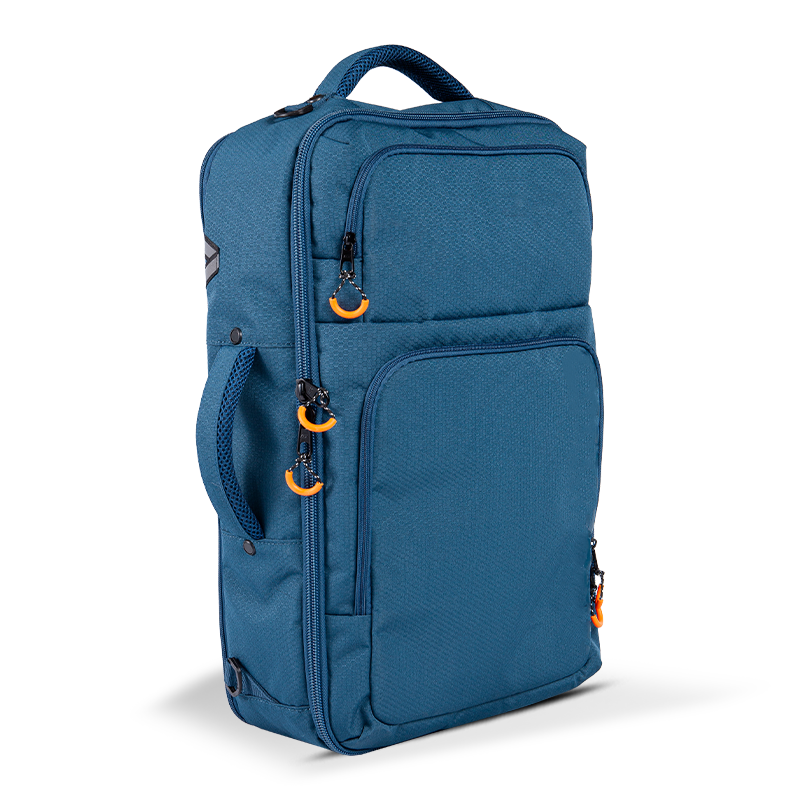
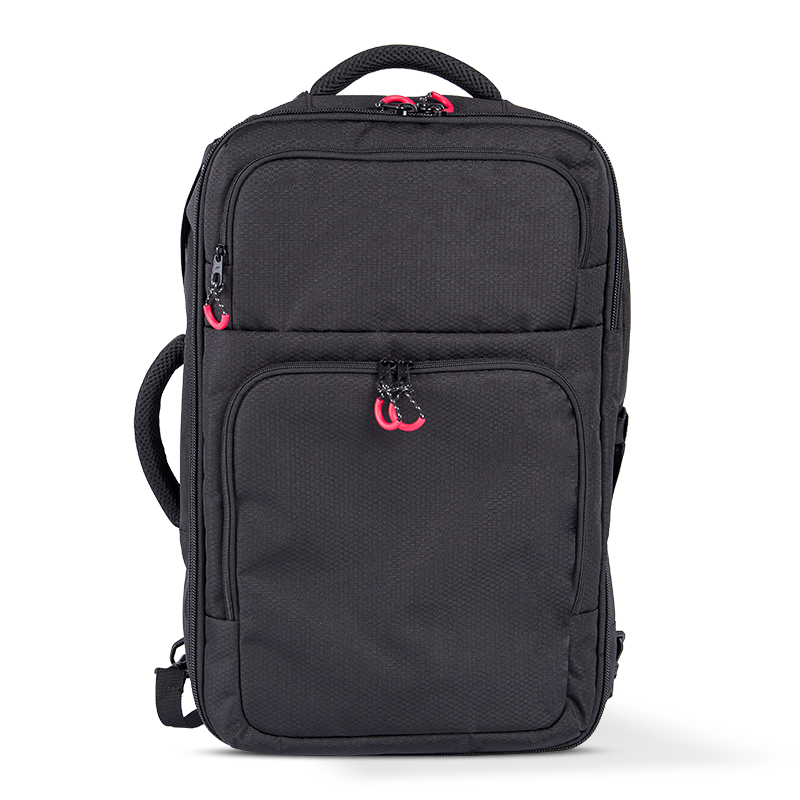
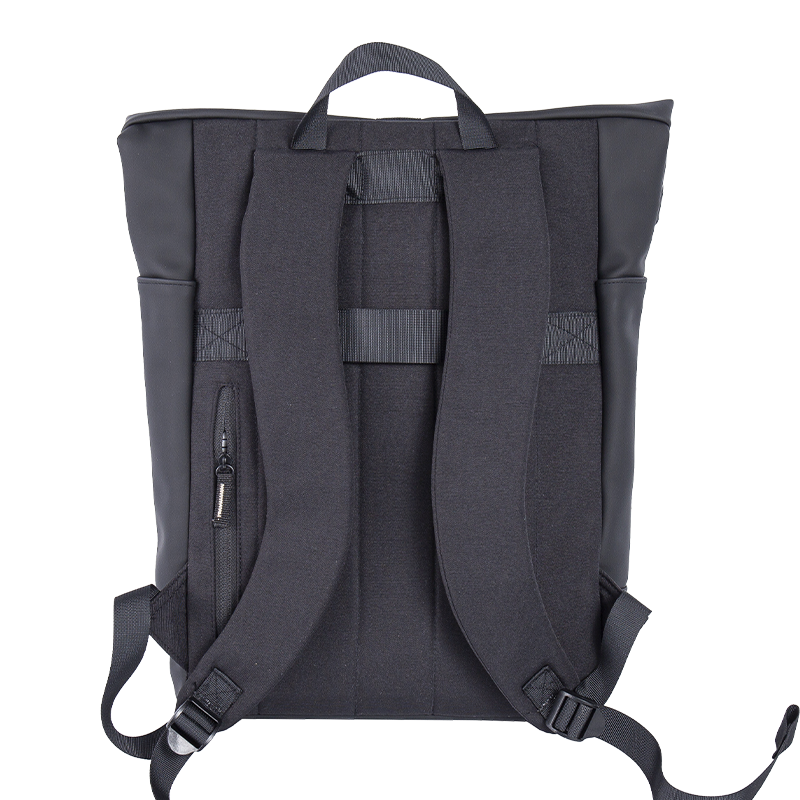 Waterproof Roll-Top Business Backpack with 16-Inch Laptop SleeveA coated-fabric commuter backpack for days without clear-bag rules, with expandable 21–26L capacity, recycled waterproof material and a padded 16-inch laptop compartment.View Product →
If a venue publishes a bag policy, treat it as a specification rather than a suggestion. The safe build is 12 x 6 x 12 inches, clear, one bag per person, and staff measure the bag itself, not what you are carrying inside it.
Film Grades and Material Choices That Change the Outcome
Clear film is not one material: standard PVC, phthalate-free PVC, TPU and EVA differ in clarity, cold resistance and price, and picking the wrong one shows up as clouding, yellowing or cracking within the first season.
| Material | Clarity | Cold performance | Relative cost | Typical use |
| Standard clear PVC, 0.30 mm | Excellent | Brittle near -10 C | Lowest | Stadium and event bags |
| Phthalate-free PVC | Excellent | Similar to standard | Plus 10 to 20 percent | Schools and children's ranges |
| TPU film | Excellent, stays clear longer | Good to about -30 C | Two to three times | Cold climates and premium outdoor use |
| EVA sheet | Slight haze | Good | Moderate | Toiletry and storage pouches |
| PVC with UV additive | Excellent at first | Similar to standard | Plus 5 to 10 percent | Outdoor festivals and season-long events |
| Coated nylon or oxford | None | Excellent | Low | Commuting where clear is not required |
Two failure modes dominate. The first is cold crack: ordinary PVC turns brittle around -10 C, so a bag left in a car boot overnight in winter can split along a fold. TPU and modified PVC formulations keep flexing well below that. The second is UV yellowing, which is cosmetic, but a venue that asked for a clear bag will argue about one that has turned amber.
Phthalate content is a separate purchasing question. Restrictions under REACH in the EU and CPSIA in the United States apply to many consumer products, and school ranges often specify phthalate-free film even where it is not legally required. Ask for the film supplier's written declaration instead of a verbal assurance.
Buyers assessing film for a backpack often start by comparing it with a simpler PVC item, such as a beach bag or shopping tote, where the same gauge and welding questions apply with less hardware in the way.
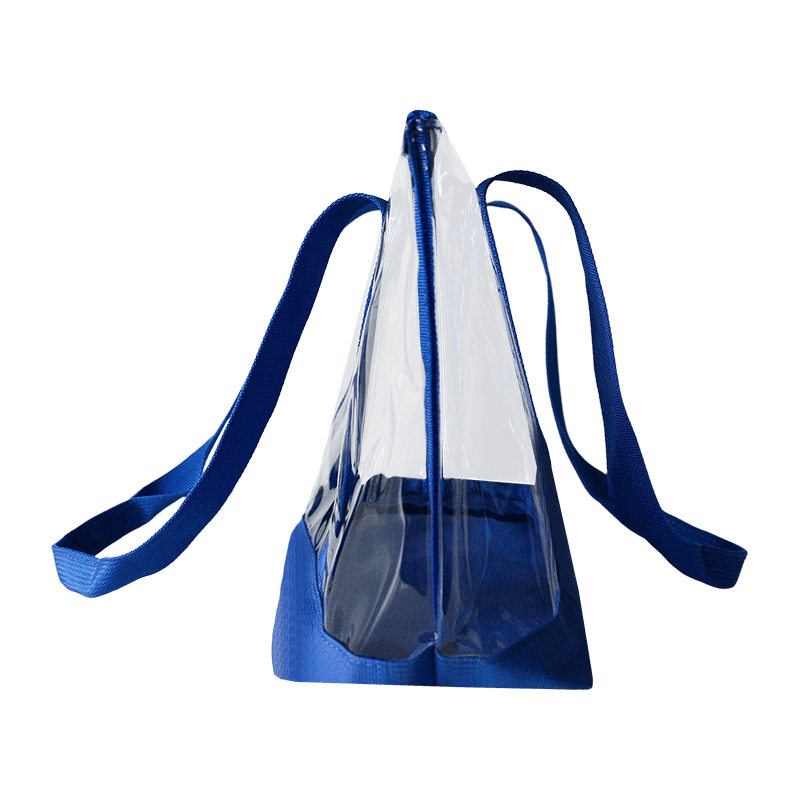 Custom Transparent PVC Beach Bag and Shopping ToteA simple transparent PVC tote for comparing film gauge and welding without backpack hardware, with zipper opening, waterproof body and custom-logo option.View Product →
A 0.25 mm film looks and feels acceptable in a sample room and fails in daily use. Below 0.30 mm, clear PVC takes a permanent crease within a few weeks, and that crease line is exactly where the film splits.
Construction Details That Decide How Long It Lasts
The seam decides the lifespan of a clear PVC bag, because heat-welded or radio-frequency welded seams hold far better than stitched seams: every stitch hole is a perforation in the film that tears open under load.
- Film gauge. Measure at three points with a micrometer. A 0.30 mm minimum is the practical floor for a bag that gets folded.
- Seam method. Radio-frequency or heat welding is the first choice. If the bag is stitched, insist on binding tape on both faces of the seam.
- Zipper. A nylon coil with a metal slider tolerates film movement better than a moulded plastic zipper, which splits at the slider once the bag is overfilled.
- Stress points. Bartacks at both strap anchors plus reinforced corners on the base. These two details account for most warranty claims.
- Hardware. Rounded acetal or finished metal only. An unfinished D-ring will saw through film within a few months of normal use.
Hardware matters less than buyers expect, with one exception: any sharp-edged adjuster or raw metal ring will cut film that rubs against it. Rounded acetal hardware is usually the safer specification on a bag that flexes with every step.
One test worth running before a production order: load the bag with 3 kg, hang it from a single shoulder strap and lift it thirty times. Stitched seams on 0.30 mm film typically start to open at the strap anchor within about a dozen lifts. Welded seams do not.
Sizing, Capacity and What Actually Fits
A 12 x 6 x 12 inch clear backpack holds roughly 14 litres, which covers a folded jacket, a 0.5 litre bottle, a tablet and a small lunch box, but not a laptop plus a full gym kit.
Policies normally quote height x width x depth, and the measurement is taken on the outside of the bag, so a soft, over-stuffed 12 x 6 x 12 pack can still be refused. Keep the packed silhouette inside the limit. Shoulder straps should be at least 25 mm wide webbing; anything narrower digs in once the bag is more than half full.
Small items are the main reason a clear bag looks untidy at a gate. A compact organizer case keeps cables, chargers and passport-sized items together so nothing slides across the film while it is being inspected.
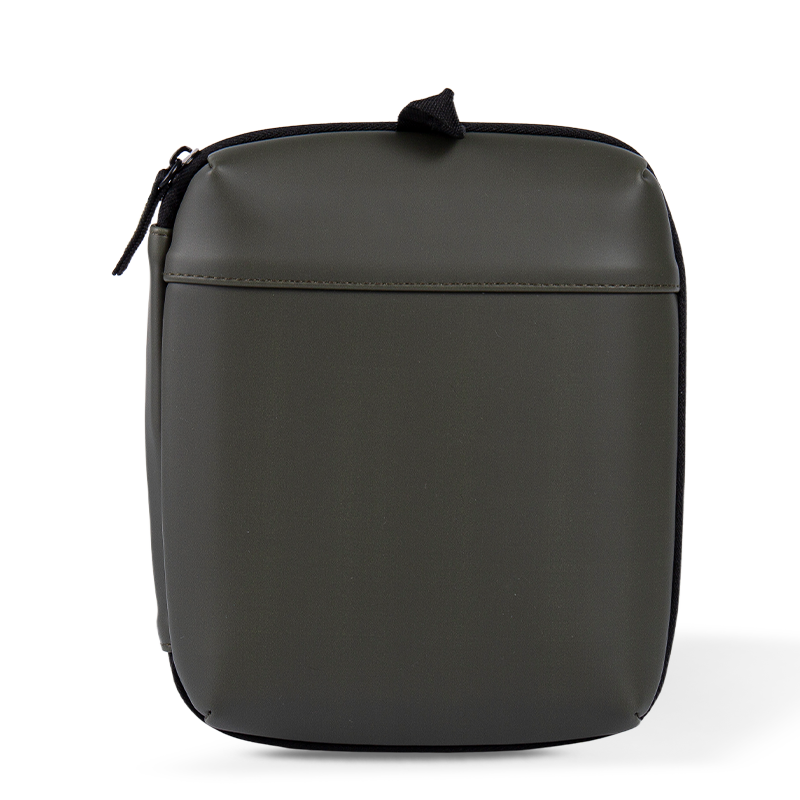 Waterproof PU Leather Cable and Travel Organizer CaseA compact water-resistant PU leather case that keeps cables, chargers and passport-sized items together during clear-bag checks and daily carry.View Product →
For commuting and travel, where no clear-bag rule applies, buyers usually move to coated fabric. The travel backpack range covers 20 to 35 litre builds with padded laptop compartments, a different product from a compliance bag even though the two are often sold side by side.
Nominal volume overstates usable space in a clear pack. Stiff film does not stretch, and bulky seams eat into the corners, so budget roughly 15 percent less usable room than the same figure quoted on a soft nylon bag.
Customization, Care and Wholesale Notes
Logo decoration on clear PVC is mostly limited to screen printing with flexible, phthalate-free ink or a printed opaque panel, because heat-transfer films can cloud, distort or crack the surface they are applied to.
- Artwork. Keep at least 60 percent of the front panel clear. A bag that no longer reads as transparent at arm's length defeats the reason it was bought.
- Ink. Use flexible screen ink cured at low temperature. High heat distorts the film and leaves a milky halo around the print edge.
- Pre-production sample. Confirm gauge, print position and seam type on the finished bag, never on a flat sheet of film.
- Packing. One PE sleeve per bag, then a carton. Unprotected PVC picks up transit scuffs that cannot be removed afterwards.
- Care sheet. Include washing and drying instructions. Returns on clear bags are usually cleaning damage rather than manufacturing defects.
Cleaning is the other half of the instruction sheet. Wipe the film with lukewarm water and mild soap, then air dry away from direct heat. Alcohol, acetone, ammonia-based cleaners and abrasive pads cloud clear PVC permanently, and no polish brings it back. Full hand-washing and drying steps are set out in our guide to cleaning a backpack without damaging it.
In wholesale terms, a clear bag is a commodity until three things are fixed: the film gauge, the seam method and the decoration method. Buyers who specify all three get consistent reorders. Buyers who only compare price get a different bag every shipment.
Frequently Asked Questions
Are transparent PVC backpacks waterproof?
They are water-resistant, not waterproof. The film itself does not absorb water, but stitched seams and the main zipper let water through in sustained rain. Welded seams and a covered zipper improve matters; for genuine rain protection, a coated rolltop build is the better choice.
Are clear PVC backpacks allowed in stadiums?
Usually yes, provided they match the published dimensions, most commonly 12 x 6 x 12 inches with one bag per person plus a clutch no larger than about 4.5 x 6.5 inches. Policies vary between venues, and staff measure the bag rather than the contents, so an oversized clear bag is still turned away.
How thick should the PVC film be?
0.30 mm is the practical minimum for a bag that gets folded daily. Between 0.35 mm and 0.50 mm the bag holds its shape better in structured backpacks and totes. Below 0.30 mm, creases turn into cracks within a few weeks of regular use.
Can a logo be printed on a clear PVC backpack?
Yes. Screen printing with flexible, phthalate-free ink is the standard method. Heat transfer is riskier because the film can cloud, distort or crack. Many buyers combine a small printed logo with a colour-matched webbing strap or a branded patch panel so the bag still reads as clear at the gate.
Fix the film gauge, the seam method and the print method before you compare prices on two quotations for the same "clear PVC backpack". Those three variables account for most of the gap between them.