



 English
 Español
 عربى
Content
- 1 The Size Rule: 22 x 14 x 9 Inches Is Not Universal
- 2 One Carry-On, One Personal Item
- 3 Liquids, Batteries and the Security Checkpoint
- 4 Where the Millimeters Go: Shell, Wheels and Handle
- 5 Packing to the Rule, Not to the Space
- 6 For Buyers: What to Verify Before Ordering Carry-Ons
- 7 Carry-On Rules: Quick Answers
A 20-inch spinner can still fail an airline sizer. Catalog sizes describe the case body; airlines measure the whole object, wheels and handles included. That gap between marketing inches and gate inches is where most carry-on problems begin, and it is the first thing we check when a buyer asks for a guaranteed carry-on specification.
The Size Rule: 22 x 14 x 9 Inches Is Not Universal
Most major US carriers publish a carry-on limit of 22 by 14 by 9 inches, but that number is a ceiling, not a promise. The sizer at the gate is the final judge, and it measures the bag as it travels: wheels down, handle retracted, side pockets loaded.
Southwest allows a slightly larger footprint at 24 by 16 by 10 inches. United publishes the same 22 by 14 by 9 inch limit in both inches and centimeters, which helps when a factory spec sheet is written in metric. American and Delta use 22 by 14 by 9 inches and state that wheels and handles count.
| Airline | Max length | Max width | Max height | Notes |
| American | 22 in | 14 in | 9 in | Wheels and handles included |
| Delta | 22 in | 14 in | 9 in | Must fit the overhead bin |
| United | 22 in | 14 in | 9 in | 23 x 35 x 56 cm |
| Southwest | 24 in | 16 in | 10 in | One carry-on plus personal item |
The FAA's 45 linear inch guideline is a useful sanity check for bags that fall between airline templates. It is not a separate allowance, and it does not override an airline's published dimensions.
One Carry-On, One Personal Item
US carriers generally allow one overhead-bin carry-on and one personal item that fits under the seat in front of you. The personal item is not a second carry-on, even if it has wheels or a laptop sleeve.
Carry-on
- Typical max: 22 x 14 x 9 inches
- Stows in the overhead bin
- 7-10 kg cap on many international routes
- Packed for three to five days
Personal item
- Typical footprint: 18 x 14 x 8 inches
- Stows under the seat
- No separate weight on most US carriers
- Laptop, documents and medication
Liquids, Batteries and the Security Checkpoint
The 3-1-1 rule still governs liquids at US checkpoints: containers of 3.4 ounces (100 ml) or less, inside one clear quart-sized bag, one bag per passenger. Empty bottles are fine; the limit applies to the container size, not the amount left inside.
- Liquids, gels and aerosols: 100 ml or 3.4 oz containers in one quart bag.
- Spare lithium batteries and power banks: carry-on only, not checked.
- Power banks above 100 Wh: many airlines require approval; above 160 Wh is usually prohibited.
- Sharp objects: rules vary by country; a fixed blade of any length is usually prohibited in carry-on.
Weight Limits Are the Second Gate
Weight is enforced more often on international routes than in the US. A bag that passes the sizer can still fail the scale, especially on a 7 kg short-haul allowance.
Where the Millimeters Go: Shell, Wheels and Handle
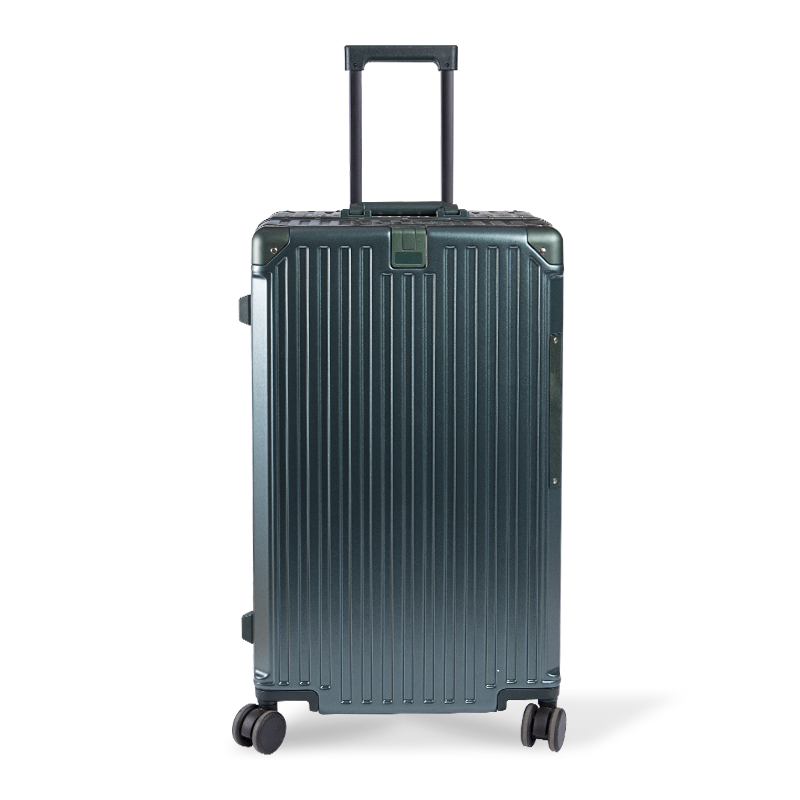
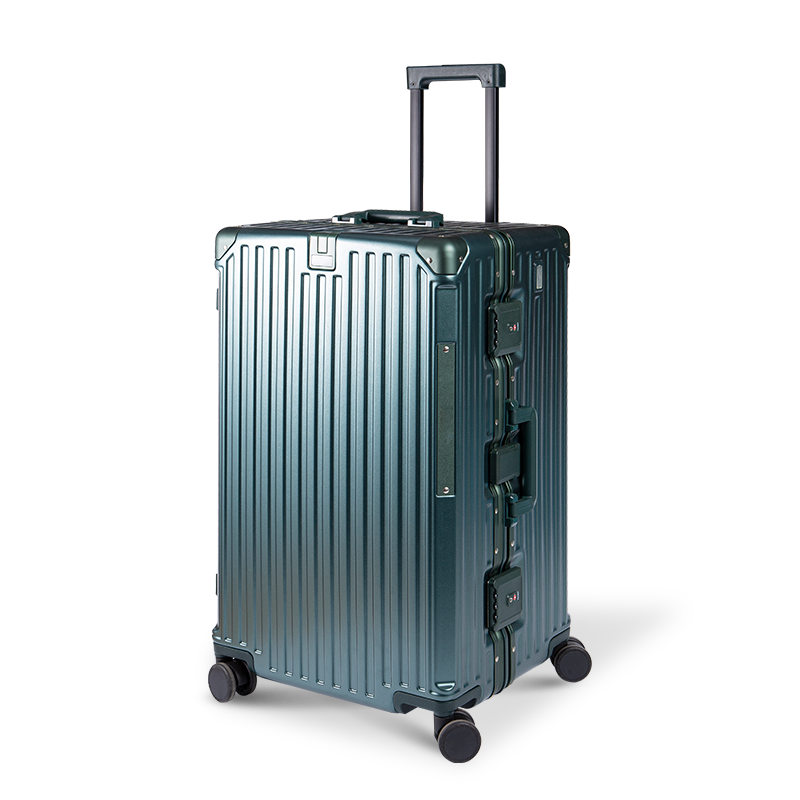
A carry-on is a size-controlled product. The shell, wheel housings and telescopic handle all consume part of the airline allowance, so a 20-inch case body is not the same as a 20-inch travel footprint.
On a typical hard-shell build, wheels add 1.2 to 1.8 inches, the handle adds 0.5 to 0.8 inches, and an expansion zipper adds about 2 inches when open. Soft-shell bags compress roughly 0.5 inches under load; hard shells do not give at the gate.
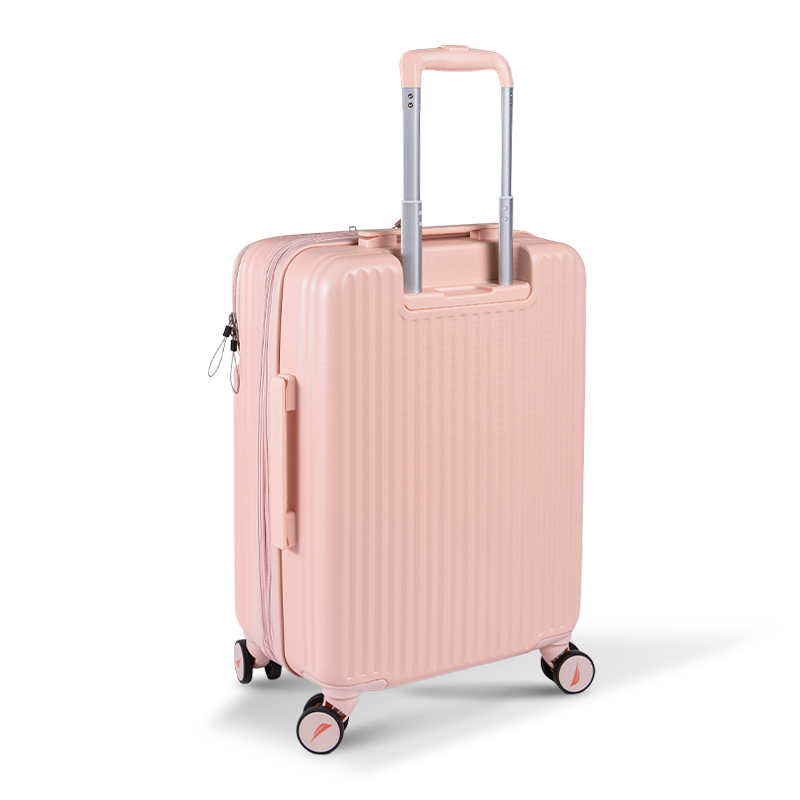 Front-Opening Carry-On Luggage with Dual CompartmentsFront-opening access and dual closed compartments help organize a carry-on load, while the ABS+PC shell adds pressure resistance for packed travel.View Product →
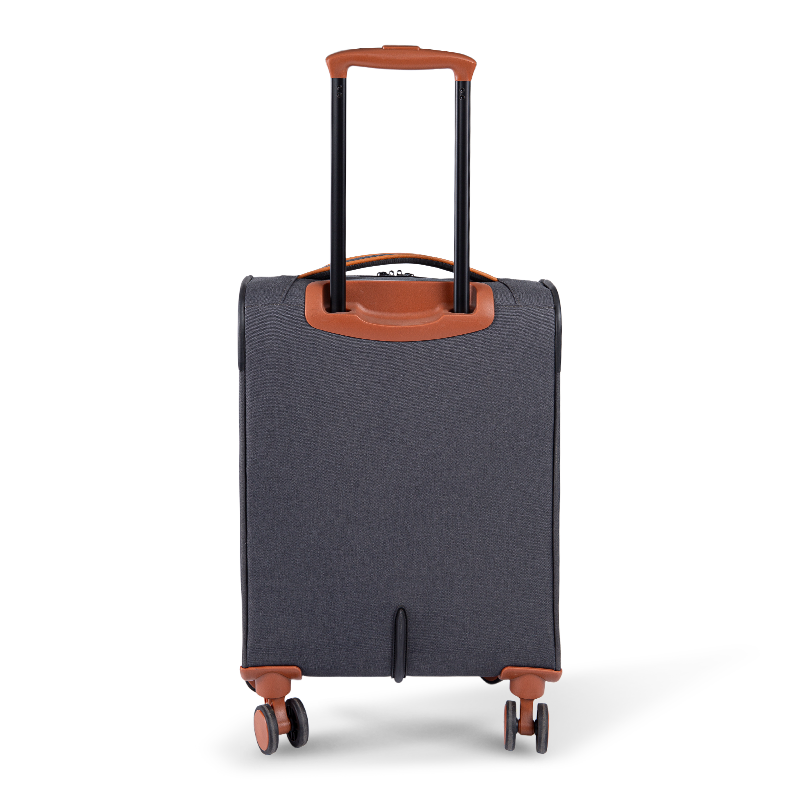 Grey 20-Inch Soft-Shell Carry-On SpinnerLightweight grey 20-inch soft-shell carry-on with spinner wheels and telescopic handle; check its wheel-inclusive dimensions against airline sizers.View Product →
- Hard shell: predictable dimensions, better crush protection, no give at the gate.
- Soft shell: compressible and forgiving in overhead bins, but it can bulge past the template when overpacked.
- Front-opening: access without laying the bag flat, useful in tight cabins.
- Expansion zips: add about 2 inches when open, enough to turn a carry-on into a checked bag.
Packing to the Rule, Not to the Space
Packing to the rule means building a load that stays inside 22 by 14 by 9 inches and under the airline's weight cap after the bag is zipped. A bag that fits empty can fail full.
- Weigh the empty bag. A hard-shell 20-inch typically runs 6.5 to 8.5 lb; a soft-shell can be 5 to 7 lb.
- Pack cubes, not loose items. Compression cubes reduce volume and keep the load from bulging past the shell.
- Check the sizer dimensions with the bag loaded. Include wheels, handle and any front pocket.
- Weigh the packed bag. If the route has a 7 kg cap, leave 0.5 kg for the bag's own hardware and a jacket.
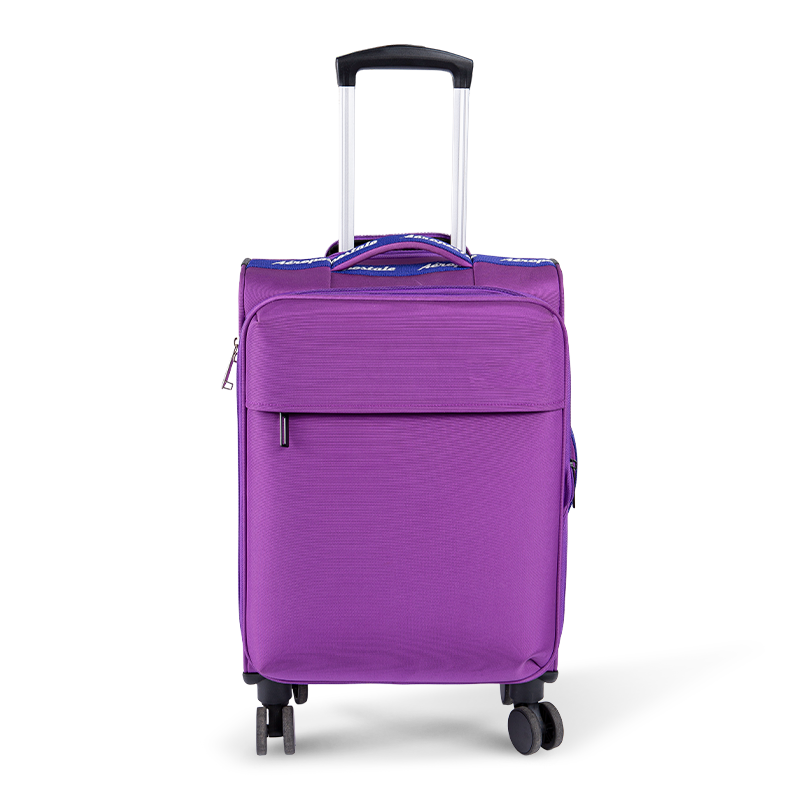 Waterproof Oxford Soft-Shell Carry-On with ExpansionSoft-shell Oxford carry-on offers 20% expansion, TSA lock, antibacterial lining and lightweight cabin sizes; verify bulk dimensions and durability before ordering.View Product →
For Buyers: What to Verify Before Ordering Carry-Ons
Buyers sourcing carry-on luggage should verify external dimensions with wheels, manufacturing tolerance and wheel and handle durability before placing a bulk order. A 0.2 inch variance across a production run is enough to fail a strict airline sizer.
Ask for a measured sample, not a drawing. The difference between a catalog spec and a loaded bag is usually the wheel assembly, the handle housing and the zipper tape.
- External size with wheels and handles, not case body only.
- Tolerance: +/- 0.2 in on height and width.
- Wheel diameter and replacement availability.
- Handle wobble after repeated extension cycles.
- Zipper pull strength and lock compatibility.
- Labeling: SKU, material, batch and care instructions.
Our carry-on suitcase buying guide covers shell, wheel and packing trade-offs in more detail. Factory-side checks are listed on our plant and equipment capability page.
Carry-On Rules: Quick Answers
Does carry-on size include wheels and handles?
Yes. American, Delta and United all measure the bag with wheels and handles included, so a case body labeled 20 inches can exceed the limit once the hardware is added.
Can a backpack count as a personal item?
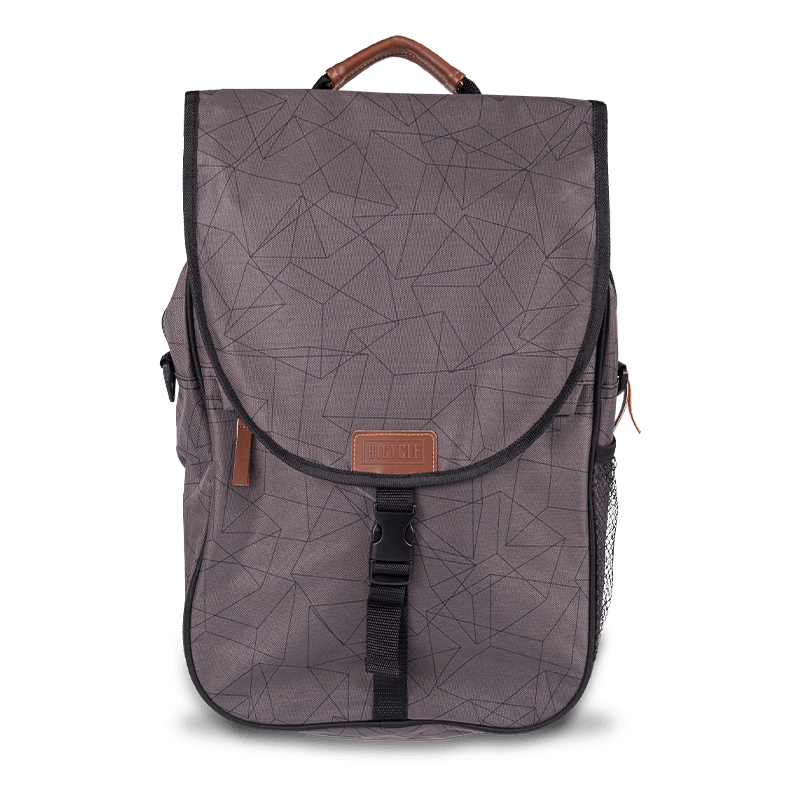
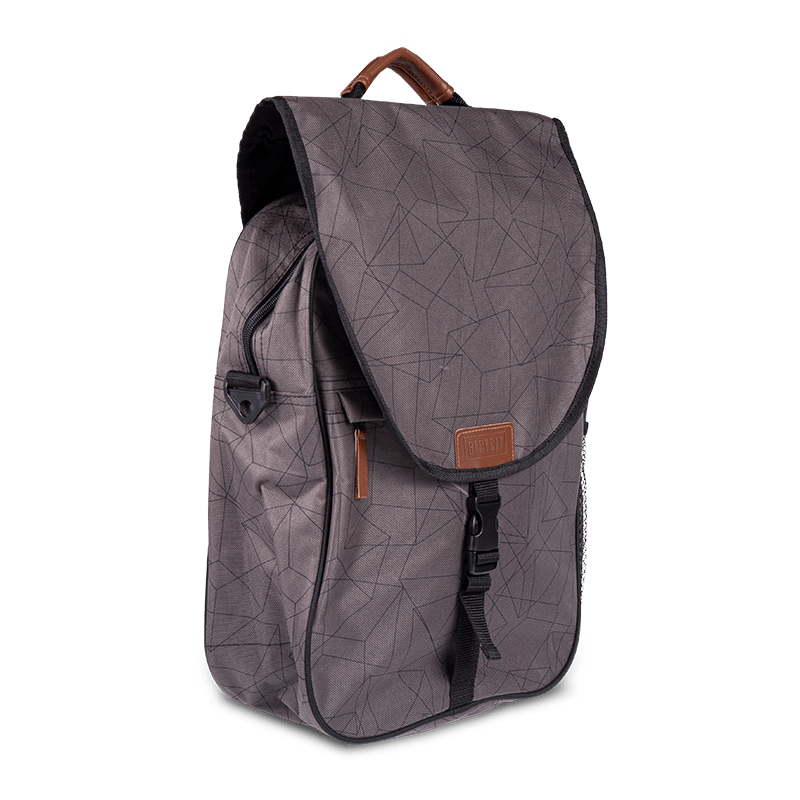
Yes, if it fits under the seat in front of you. Most US carriers use a footprint of about 18 by 14 by 8 inches, but the under-seat space is the real test.
Is a 20-inch suitcase always accepted as a carry-on?
Usually, but not automatically. A 20-inch case body with large wheel housings can measure 22.5 inches or more. Check the external height with wheels before you fly.
How strict are gate agents about carry-on size?
Enforcement varies by airport and boarding pressure. When a sizer is present, the bag must fit without force; otherwise it is checked, often with a fee.
Carry-on rules are simple at the headline level and fussy in practice. The airline measures the whole bag, the sizer does not negotiate, and the difference between smooth boarding and a gate-check fee is often half an inch of wheel housing.
For travelers, the safe move is a bag that measures 21.5 by 13.5 by 8.5 inches or less with wheels. For buyers, the safe move is to write that number on the purchase order and test a loaded sample before the container ships.