



 English
 Español
 عربى
عربىContent
- 1 Why the Right Backpack Choice Matters More Than You Think
- 2 Step One: Define Your Primary Use Case
- 3 Choosing the Right Capacity: Volume vs. Real-World Need
- 4 Materials: What the Fabric Tells You About Durability
- 5 Structural Features That Determine Comfort Under Load
- 6 Compartment Layout and Organization Logic
- 7 Zippers, Hardware, and the Details That Determine Longevity
- 8 Matching Backpack Features to Specific Scenarios
- 9 A Practical Pre-Purchase Checklist
- 10 What We've Learned from 25+ Years of Backpack Manufacturing
Why the Right Backpack Choice Matters More Than You Think
A backpack is one of the most personal pieces of gear you carry every day — yet most buyers spend less than five minutes choosing one. After more than 25 years manufacturing backpacks for brands across the globe, we've seen what separates a bag that lasts a decade from one that fails in three months. The difference almost never comes down to price alone. It comes down to whether the bag was matched correctly to its intended use, the right capacity was chosen, the materials suit the environment, and the structural details actually support the human body carrying it.
This guide walks you through every decision point — from the broadest (what will you use it for?) to the most specific (which zipper type holds up longest?) — so you can make a confident, well-informed purchase the first time.
Step One: Define Your Primary Use Case
The single biggest mistake buyers make is purchasing a backpack based on looks before identifying how it will actually be used. The structural requirements of a daily commuter pack and a 3-day hiking pack are fundamentally different, even if both hold roughly the same volume. Ask yourself the following before evaluating any product:
- Will this be used for daily commuting, school, business travel, outdoor hiking, or weekend trips?
- How frequently will you carry a laptop or tablet, and what size screen?
- Will you be in urban environments, on trails, or both?
- Do you need the bag to pass as professional in office settings?
- Will you be going through airport security regularly?
Once you've answered these questions honestly, the pool of suitable options narrows significantly, making every other decision easier.
Backpack Types by Use
| Type | Typical Capacity | Key Features | Best For |
|---|---|---|---|
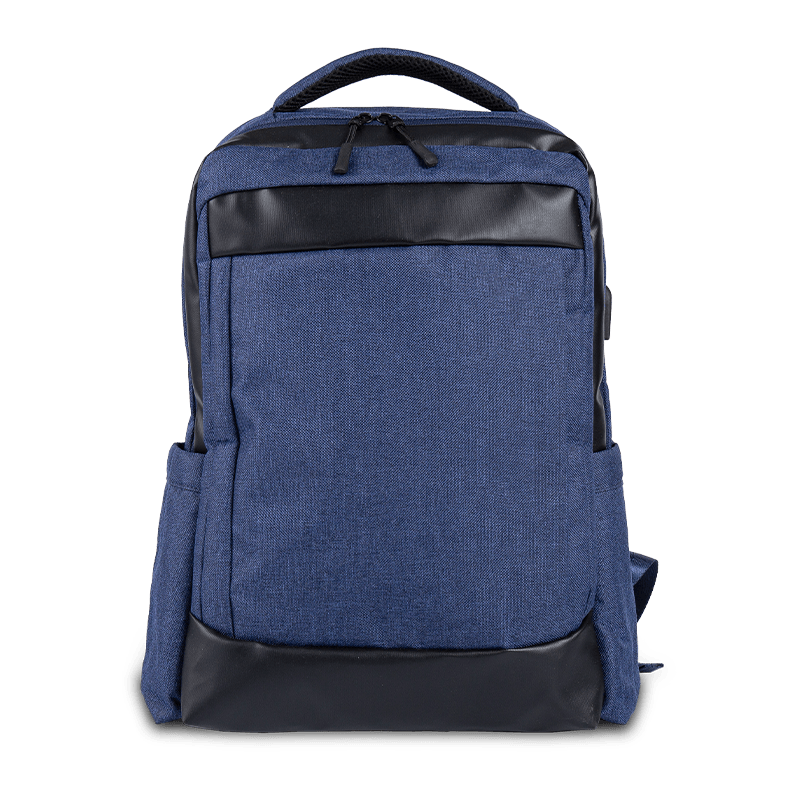
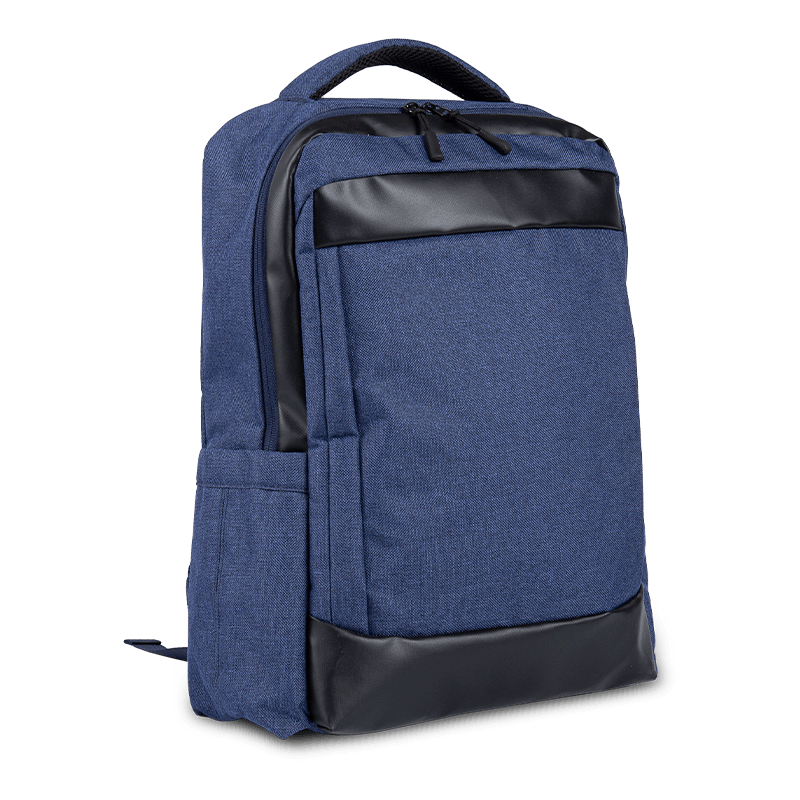
| Business Backpack | 20–30L | Padded laptop sleeve, clean exterior, organizer pockets | Daily commute, office use |
| Travel Backpack | 30–50L | TSA-friendly layout, trolley sleeve, compression straps | Weekend trips, carry-on travel |
| Outdoor / Hiking Backpack | 25–70L | Hip belt, frame support, hydration compatibility | Day hikes, multi-day trekking |
| School Backpack | 18–28L | Multiple compartments, padded back panel, durable base | Students, daily academic use |
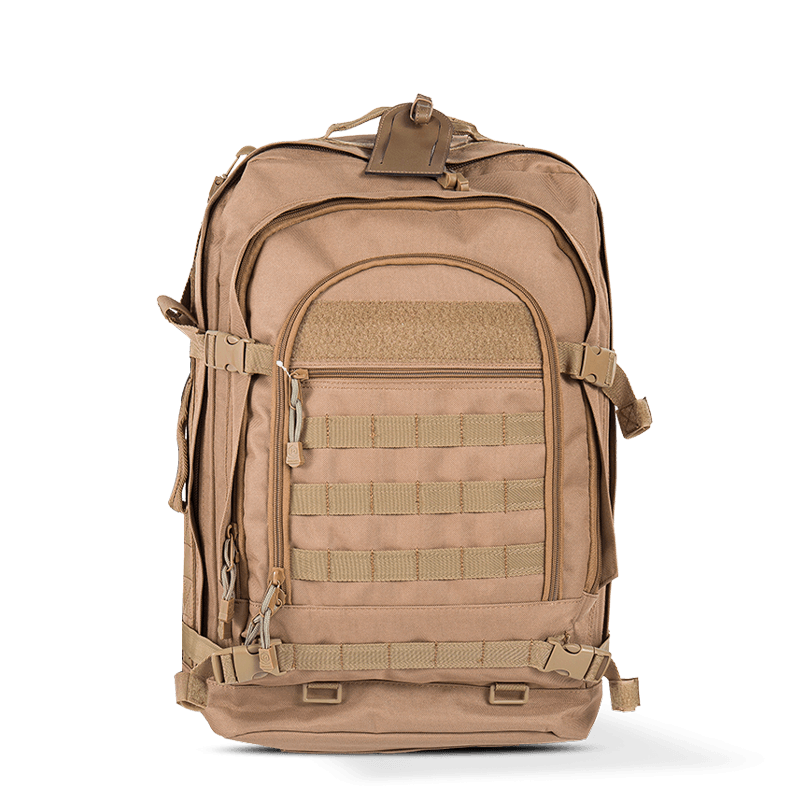
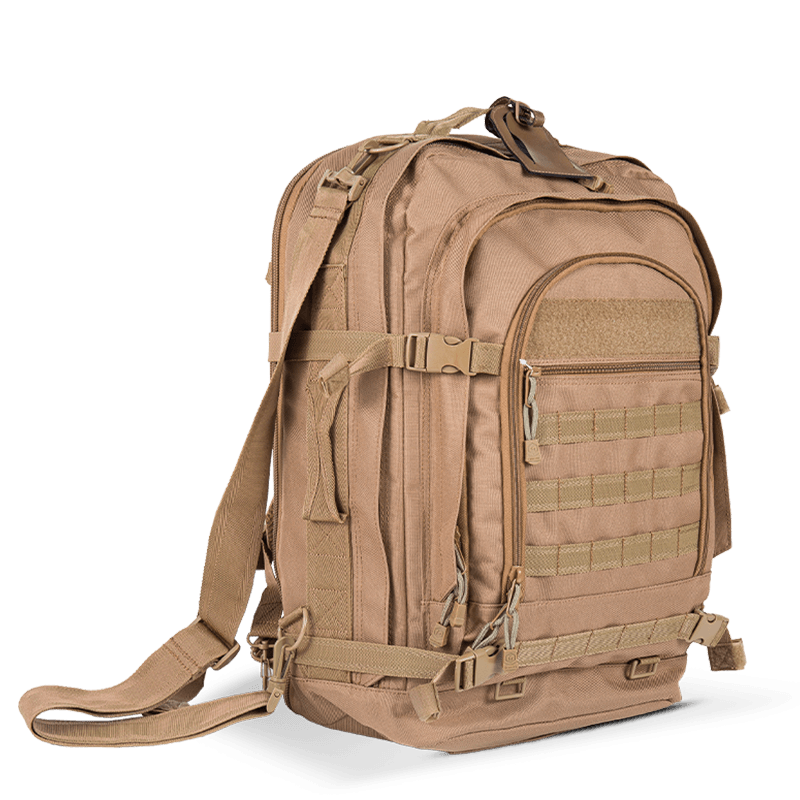
| Military / Tactical Backpack | 30–60L | MOLLE webbing, reinforced stitching, heavy-duty zippers | Rugged outdoor use, tactical activities |
Choosing the Right Capacity: Volume vs. Real-World Need
Capacity is measured in liters and is one of the most misunderstood specifications in backpack buying. Bigger is not better. Carrying excess volume encourages overpacking, which shifts your center of gravity, strains your spine, and fatigues you faster. As a rule of thumb from our production experience:
- 15–20L — Ideal for a laptop, chargers, a water bottle, and daily essentials. Excellent for commuters who don't carry bulky items.
- 20–30L — The sweet spot for most urban and business users. Fits a 15.6" laptop, documents, a change of clothes, and accessories without becoming unwieldy.
- 30–45L — Suitable for weekend travelers or those who carry camera gear, gym clothes, and work equipment simultaneously.
- 45L+ — Reserved for multi-day outdoor trips or extended travel. At this volume, frame support and hip load transfer become critical.
A useful real-world test: lay out everything you plan to carry daily, then measure how much space it actually takes. Most people discover they need 5–10 liters less than they assumed.
Materials: What the Fabric Tells You About Durability
From the manufacturing side, the fabric choice is one of the most consequential decisions in bag construction — and one buyers rarely scrutinize carefully enough. Here are the materials you'll encounter most often and what they mean in practice:
Polyester
Polyester is the most widely used backpack material globally, and for good reason. It is lightweight, relatively resistant to moisture, easy to dye in consistent colors, and cost-effective to produce. Look for 600D or 900D polyester in load-bearing areas — the "D" stands for denier, a unit measuring thread density. Higher denier means a heavier, more abrasion-resistant weave. Most quality everyday packs use 600D polyester for their main body.
Nylon
Nylon is stronger than polyester at equivalent weights, making it a preferred choice for outdoor and travel packs where puncture resistance and longevity matter. Ripstop nylon — a grid-reinforced weave — prevents small tears from expanding, which is particularly valuable in rough outdoor use. The tradeoff is cost: nylon-based bags typically carry a 20–40% price premium over equivalent polyester designs.
Canvas and Cotton Blends
Canvas offers a classic aesthetic and holds its shape well, but it is heavier and less water-resistant than synthetic options. It suits lifestyle or school bags where style is a priority and the bag won't regularly encounter wet conditions.
Water Resistance: A Critical Distinction
Most fabrics marketed as "waterproof" are more accurately described as water-resistant — they can handle brief rain exposure but will not keep contents dry in a sustained downpour unless the seams are taped and a waterproof zipper is used. If you're buying for wet climates or outdoor use, ask specifically about seam sealing and zipper type, not just the base fabric. A DWR (Durable Water Repellent) coating adds meaningful protection but degrades over time with washing and UV exposure.
Structural Features That Determine Comfort Under Load
A backpack's comfort under real carrying conditions is determined by its structural design, not its padding thickness alone. These are the elements that matter most:
Back Panel Design
An ergonomically contoured back panel keeps the bag's weight close to your center of gravity. Flat back panels force the load outward, increasing torque on your lower back. Look for an S-curve or anatomical back panel shape in any bag you plan to carry for more than 30 minutes at a stretch. Mesh-ventilated panels additionally reduce sweat buildup, though they typically hold the bag slightly further from your back.
Shoulder Strap Padding and Width
Strap width should increase proportionally with expected load weight. Narrow straps (under 4cm wide) concentrate pressure and cut into the trapezius muscle during extended wear — fine for light loads, problematic for anything over 8–10kg. High-density foam padding (not memory foam, which collapses under sustained pressure) retains its shape and distributes load more effectively over a full workday.
Sternum Strap
A chest/sternum strap is often absent on fashion-oriented packs but is meaningfully useful even in urban settings. It prevents shoulder straps from sliding outward during movement and stabilizes the bag during fast walking or running for a train. For outdoor packs, a sternum strap with a safety whistle integrated into the buckle is a standard feature for good reason.
Hip Belt (For Loads Over 10kg)
The human body is built to carry weight through the hips, not the shoulders. A properly fitted hip belt transfers approximately 60–80% of a backpack's total weight onto the hips, dramatically reducing shoulder fatigue on longer carries. For daypacks under 15L, a hip belt is unnecessary. For packs regularly loaded above 10kg, it becomes an important ergonomic feature rather than a luxury.
Compartment Layout and Organization Logic
How a bag organizes its internal space is as important as raw volume. A poorly organized 30L pack can feel less usable than a well-designed 20L pack. Evaluate these elements:
- Dedicated laptop compartment: Should be suspended above the bag's base (never resting directly on the bottom) to prevent impact damage. Confirm the sleeve fits your actual laptop size with millimeters to spare — a 15.6" laptop is roughly 370mm wide.
- Quick-access front or top pocket: For items needed frequently — transit cards, earphones, a passport — without opening the main compartment. This single feature can save significant frustration on travel days.
- Interior organization panels: Pen loops, key clips, and small zippered pouches within the main compartment help prevent small items from migrating to the bottom, where they become impossible to find without unpacking everything.
- External water bottle pockets: Stretch-mesh side pockets are a practical necessity. If you carry a 1L bottle daily, verify the pocket opening is actually wide enough — many bags advertise this feature but have pockets too narrow for standard bottles.
- Luggage pass-through sleeve: Invaluable for frequent travelers. A horizontal sleeve on the back panel slides over the handle of a wheeled suitcase, freeing both hands in airports.
Zippers, Hardware, and the Details That Determine Longevity
From our factory floor, zipper failure is the single most common reason customers return or replace bags — and it's almost entirely preventable with the right selection criteria.
Zipper Brands and Grades
YKK zippers (manufactured in Japan) remain the industry benchmark for reliability. Their self-lubricating construction and consistent tolerances mean they typically outlast the bags themselves. The number designation matters: a #5 zipper is appropriate for main compartments; a #3 is acceptable for small accessory pockets. Using a #3 on a main compartment to save cost is a common quality shortcut you should watch for. SBS is a quality Chinese-manufactured alternative used in mid-range products with reasonable durability.
Buckle and Hardware Quality
Plastic buckles on sternum straps and compression straps should be made from acetal resin (often branded as Duraflex or ITW), not standard ABS plastic. Acetal buckles resist UV degradation, cold-weather brittleness, and impact cracking far better. Metal hardware (D-rings, cam buckles) adds weight but is appropriate for load-bearing attachment points on tactical or hiking packs.
Stitching Density
The seams at strap attachment points are the highest-stress areas in any backpack. Reinforcement stitching here — bar tacks or box-X stitching — is a non-negotiable quality indicator. A bag that uses only standard seam stitching at strap attachment points will eventually fail at that point under regular heavy use, regardless of how good the fabric is.
Matching Backpack Features to Specific Scenarios
To make this practical, here's how the criteria above translate into feature priorities for the most common buyer scenarios:
The Daily Business Commuter
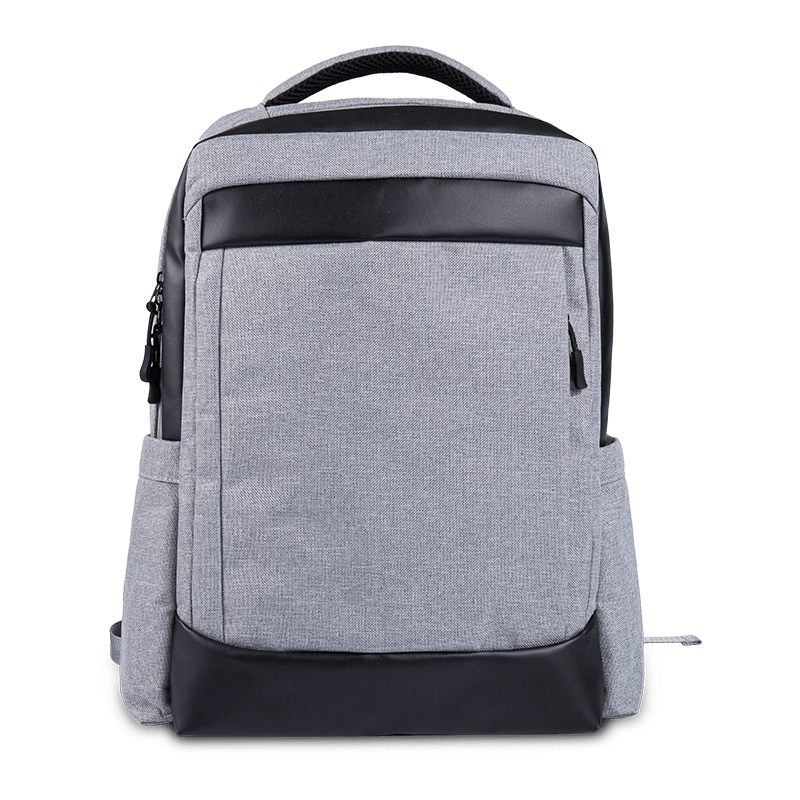
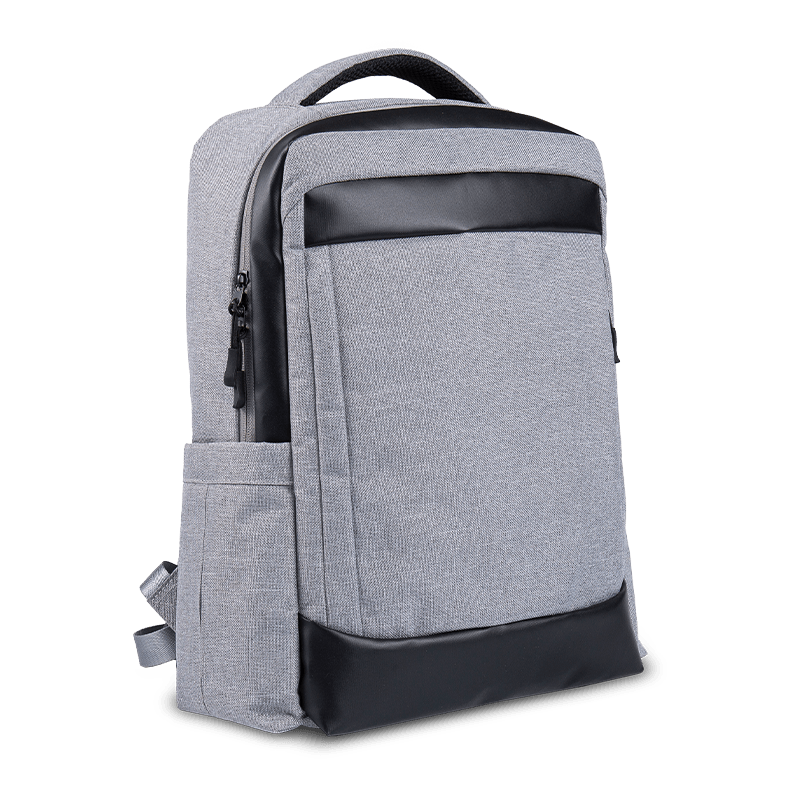
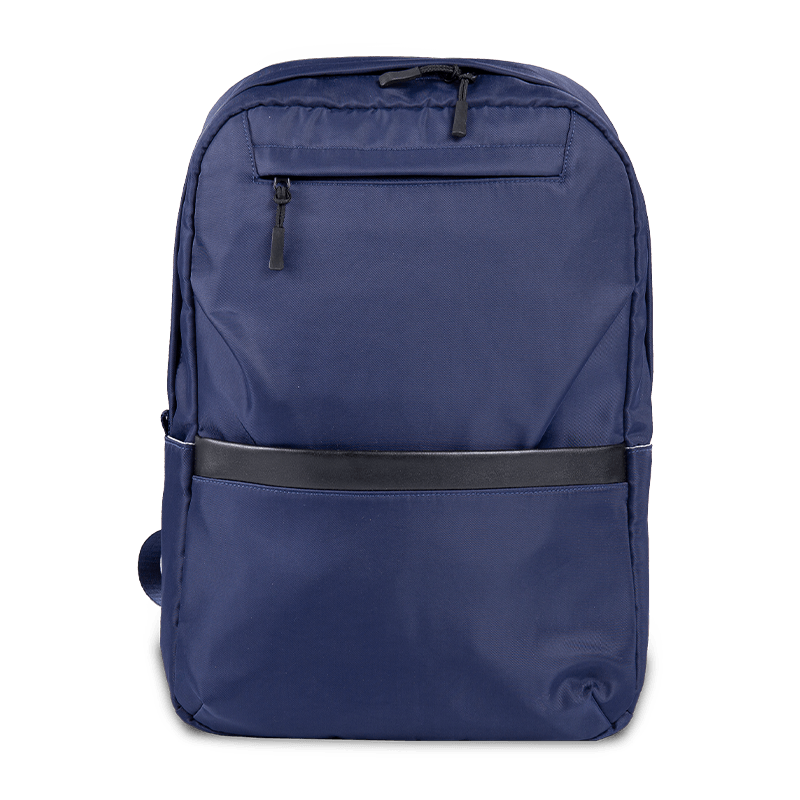
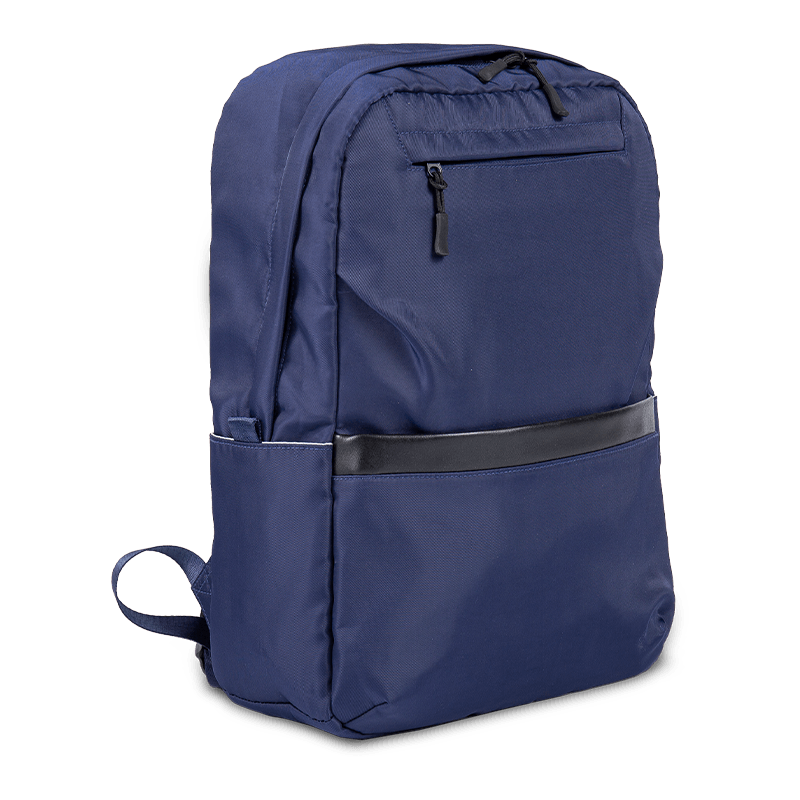
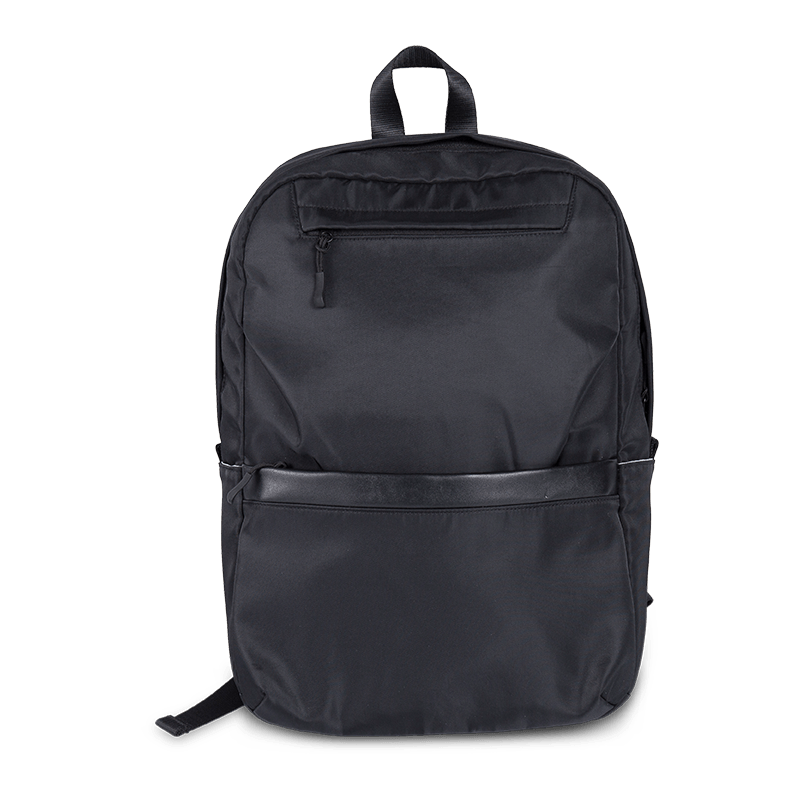
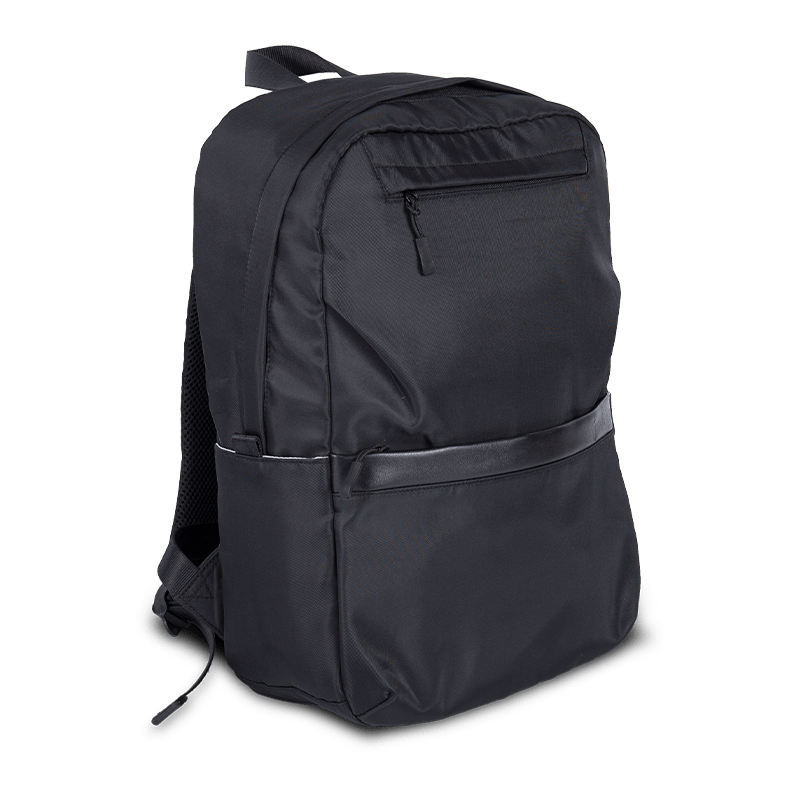
Prioritize: clean exterior without excessive straps or MOLLE webbing, suspended laptop compartment for screens up to 15.6", ergonomic back panel for all-day wear, and a refined material like smooth polyester or nylon that doesn't look out of place in a meeting room. A USB pass-through charging port is a genuinely useful feature here — many commuters now carry power banks and value the ability to charge a phone mid-commute without opening the bag. Our range of business backpacks is designed specifically with this commuter-to-office transition in mind.
The Frequent Flyer
Prioritize: a TSA-approved lay-flat laptop compartment (opens 180° for security screening), a luggage pass-through sleeve, quick-access pockets for travel documents, and a total expanded volume that fits within most airlines' personal item dimensions (typically 45 × 35 × 20 cm). Water-resistant treatment is valuable for outdoor airport transfers. If you often travel with both a carry-on suitcase and a backpack, consider a travel backpack designed to sit securely on top of wheeled luggage.
The Student
Prioritize: durability over style (a bag carried 5 days a week sees roughly 1,000+ open-and-close cycles per year — zipper quality becomes critical), sufficient volume for textbooks and a laptop, a reinforced base that won't wear through on classroom floors, and a weight that doesn't add meaningfully to an already heavy academic load. Padded back panels become especially important for younger students whose spines are still developing. Browse our school bag collection for options designed with students' daily demands in mind.
The Outdoor Enthusiast
Prioritize: ripstop nylon or high-denier polyester, a hip belt (for anything over a 2-hour carry), a hydration reservoir sleeve and hose exit port, load lifter straps at the top of shoulder straps, and bright color options or reflective trim for safety on trail. Rain cover compatibility — either a built-in cover in a base pocket or a cover sold as an accessory — is worth factoring into your purchase decision if you hike in variable weather. Our outdoor backpack range covers everything from light day hikes to multi-day trekking loads.
A Practical Pre-Purchase Checklist
Before committing to any backpack, run through this checklist. It takes two minutes and prevents the majority of post-purchase regret:
- Does the stated capacity match your actual daily carry load, with a small margin?
- Is the back panel ergonomically shaped, or flat?
- Are strap attachment points reinforced with bar tack or box-X stitching?
- What zipper brand and gauge is used on the main compartment?
- Is the laptop sleeve suspended off the base, or does it rest on the bottom?
- Does the water bottle pocket actually accommodate your bottle diameter?
- Is the fabric denier specified, or is it described only by generic terms like "heavy-duty"?
- For travel use: does it include a luggage pass-through sleeve?
- If you'll carry more than 10kg: does it include a hip belt?
- What is the manufacturer's warranty or quality guarantee?
A manufacturer who cannot answer questions 3, 4, and 7 specifically is unlikely to be producing to a consistent quality standard — a useful signal in itself.
What We've Learned from 25+ Years of Backpack Manufacturing
At Huacheng, we've produced backpacks for buyers across more than 30 countries — everything from minimalist business commuter packs to military-grade tactical bags. The consistent feedback from end users over decades is this: the bags that earn loyalty are the ones that were designed around a specific, honest use case and built without quality compromises at the stress points. Every feature that looks good in a product photo but adds no functional value is essentially cost transferred away from the materials and construction that actually matter.
Whether you're sourcing as a brand looking for an OEM manufacturing partner or a buyer making a personal purchase decision, the evaluation criteria don't change: use case fit, correct capacity, verified material specifications, ergonomic construction, and quality hardware. Get those right, and the backpack will serve you well for years. Compromise on them for aesthetics or price alone, and you'll likely be choosing again within 18 months.
If you're exploring sourcing options or want to see our full product range across business, travel, outdoor, school, and military categories, visit our backpack manufacturing catalog — we'd welcome the conversation.