


 English
 Español
 عربى
Content
A cosmetic pouch or cooler bag specification usually gives PEVA away in a single line: "lining: PEVA film, 0.12 mm, chlorine-free, phthalate-free." That one line decides which film the factory orders, how the seam is sealed, which test reports travel with the container, and what you can honestly print on the hangtag.
Definition
PEVA, or polyethylene vinyl acetate, is a copolymer of ethylene and vinyl acetate. It is a soft, chlorine-free plastic film, usually 12 to 18 percent vinyl acetate by weight, used as a waterproof lining or barrier layer in bags, coolers and pouches.
Buyers meet the name in three places: a shower-curtain listing, a "PVC-free" callout on a toiletry bag, and a supplier email asking whether PEVA is acceptable instead of PVC. The answers overlap, but the bag trade cares about a narrower set of facts: gauge, vinyl acetate content, sealing behaviour and the paperwork behind the safety claim. This guide sticks to those.
What Is PEVA Material?
PEVA is a flexible plastic made by copolymerising ethylene with vinyl acetate, and it belongs to the same polymer family that much of the industry simply calls EVA.
The vinyl acetate is what changes the material. Pure polyethylene is a stiff, waxy, semi-crystalline plastic. Inserting vinyl acetate groups along the polymer chain disrupts that crystallinity, so the film turns soft, slightly rubbery and clear without any plasticiser added. That structural detail is the whole reason PEVA can be sold as a phthalate-free alternative to PVC, where flexibility comes from plasticiser molecules sitting between the chains rather than from the chain itself.
PEVA and EVA are the same chemistry; the naming split is mostly market convention. Film suppliers tend to write PEVA for lining-grade film in the 12 to 18 percent vinyl acetate range, while moulding compound suppliers write EVA and often mean 18 to 28 percent. Arguing about which name is correct wastes time. Ask for the technical data sheet and read the vinyl acetate figure instead.
At lining gauges, the material typically shows these numbers:
- Density around 0.92 to 0.94 g/cm3, lower than a plasticised PVC compound, so a 0.12 mm film weighs less per square metre.
- Gauge from 0.08 mm for light pouches to 0.15 mm for heavy wet packs, with 0.12 mm the common middle for cosmetic and cooler linings.
- Softening begins near 90 to 100 C, comfortably inside the range of ordinary heat-sealing bars.
- Flexibility holds to roughly -20 C, so a cooler bag does not crack when it comes out of a cold-chain container.
How PEVA Compares With PVC, EVA and TPU
PEVA sits between PVC and TPU: softer and cheaper than TPU, lighter and safer than PVC, and it seals on standard heat-sealing equipment without the high-frequency welders that PVC usually demands.
| Material | Chlorine | Plasticiser | Hand feel | Sealing | Typical bag use |
| PEVA | None | Not required | Soft, faintly waxy, translucent | Heat seal around 110 to 140 C; corona treat before printing | Cosmetic and cooler linings, wet pockets |
| PVC | About 57 percent of resin weight | Phthalate or citrate | Stiffer, glossy, very clear | High-frequency welding is easy | Legacy toiletry bags, clear windows |
| EVA, high VA | None | Not required | Rubbery, slightly tacky | Heat seal at lower temperature | Soft pouches, handle grips |
| LDPE | None | Not required | Stiff and hazy | Heat seal | Simple inner poly bags |
| TPU | None | Not required | Elastic, premium touch | Heat seal; high-frequency welding with care | Waterproof zips, higher-end films |
Strengths in a bag programme
- Chlorine-free, so there is no dioxin question if the bag is incinerated at end of life.
- Lower odour than PVC, and no plasticiser to migrate onto light-coloured fabric.
- Good clarity for see-through windows on pouches and travel organisers.
- Seals on the heat-sealers most soft-goods factories already own.
Limits to design around
- High-frequency welding is unreliable without additives, so PVC tooling does not transfer directly.
- Creases and scuffs show more than on PVC at the same gauge.
- Keep sustained heat below roughly 60 to 70 C in transit and warehouse storage.
- Print adhesion needs corona treatment; untreated film sheds ink.
The Properties Buyers Actually Test
Buyers test five things on a PEVA lining: gauge consistency, seal strength, cold-crack resistance, haze and odour.
0.08-0.15
mm film gauge
12-18%
vinyl acetate
-20 C
cold flexibility
90-100 C
softening onset
Gauge is the first argument. A 0.08 mm film passes a light pouch specification and fails a cooler bag, not because it leaks on day one but because a seam that is only 0.16 mm thick after folding gives the sealing bar very little material to fuse. At 0.12 mm the same seam carries enough polymer to reach full strength without burning through.
Seal strength is measured as peel force per 15 mm of seam, and the figure that matters is the one your own filling weight produces, not the one in the supplier brochure. A cooler packed with two kilograms of drinks loads its bottom seam in a way a cosmetic pouch never does.
- Cold-crack test: fold the film at -20 C and look for whitening or a split along the fold.
- Haze and transmittance: relevant only where the lining is visible through a clear panel.
- Odour panel: three people, 24 hours after unrolling, before the film is sealed into a closed bag.
- Migration test: the report must name the exact gauge, colour masterbatch and any additive.
Where PEVA Shows Up in Bags and Luggage
PEVA appears wherever a bag needs a wipe-clean, waterproof barrier without chlorine: cosmetic and toiletry bags, cooler and lunch bags, wet pockets in backpacks, travel organisers and luggage linings.
On a typical pouch the PEVA film is the inner layer, heat-sealed to a polyester, nylon or oxford shell. The outer fabric takes abrasion and colour; the film does the moisture work. In our own cosmetic and toiletry bag ranges the film is usually 0.12 mm, welded to the shell around the perimeter and open only at the zip.
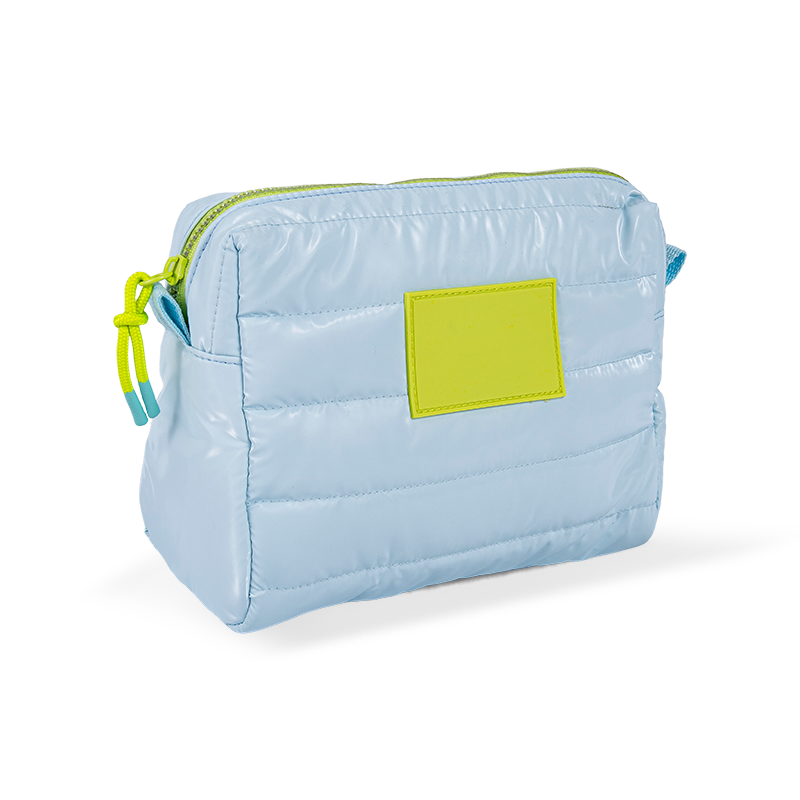 Padded Hand-Held Travel Toiletry Bag with Waterproof LiningThis padded hand-held toiletry bag organizes personal care items for travel, with a waterproof polyester shell, antibacterial finish, and colorful zipper-head options.View Product →
Cooler bags use the same film for a different reason. The insulation foam decides how long the contents stay cold; the PEVA liner decides whether meltwater stays inside the bag or finds the customer's car seat. Liner seams on a cooler should be welded rather than stitched, and the zip should be a water-resistant coil rather than a standard nylon spiral.
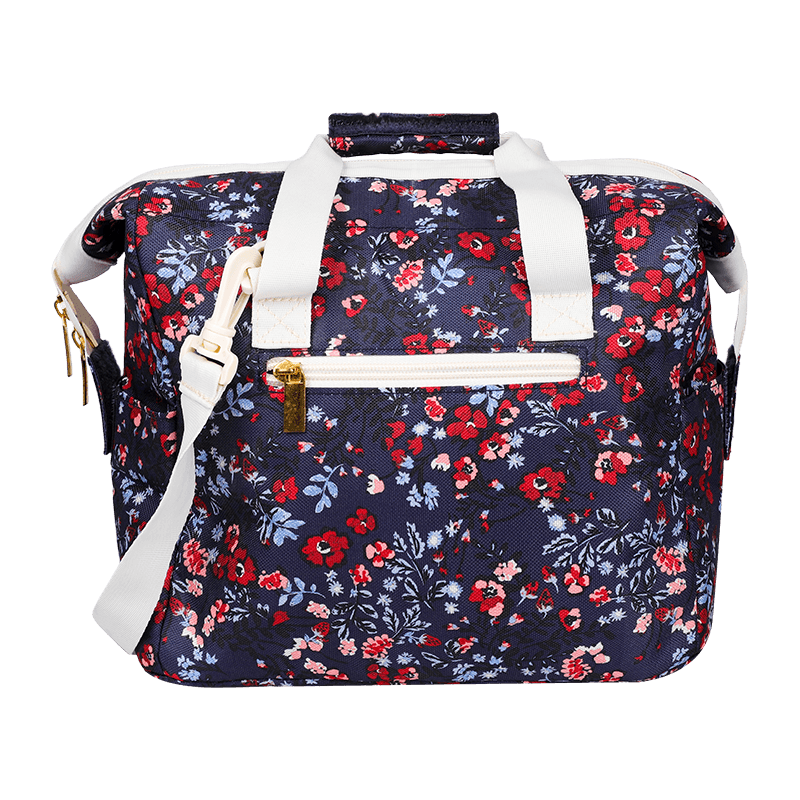 Wholesale Insulated Lunch Cooler Tote Bag with Aluminum Foil LiningAn insulated twill lunch tote with aluminum foil lining and waterproof construction, sized for food transport; confirm liner seams and zip if leak resistance matters.View Product →
Travel organisers and wet packs add a third pattern: a PEVA pocket inside a fabric pouch, so a damp swimsuit or a leaking bottle is isolated from everything else in the case. The film here is thin, often 0.08 mm, and the pocket is frequently the first component to fail because the seam allowance is too narrow.
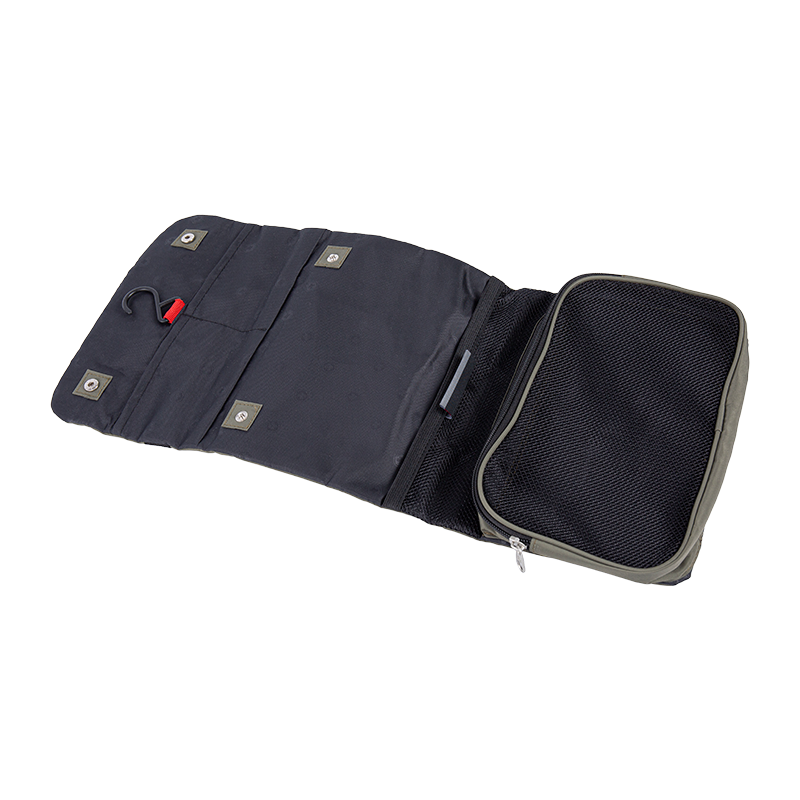 Hanging Polyester Travel Organizer Bag with Detachable Mini PouchA hanging polyester travel organizer for toiletries with detachable mini pouch and compact dimensions, useful as a fabric-based organizer alongside wet-pack and cooler liner options.View Product →
A PEVA lining is not the same thing as a waterproof bag. The film blocks water; the seam, the zip and the stitch holes decide whether the finished bag passes a leak test. Specify welded seams or sealing tape whenever the bag is expected to hold liquid rather than simply resist a splash.
Safety, Odour and Compliance
PEVA is chlorine-free and needs no phthalate plasticiser, which is why it has largely replaced PVC in cosmetic and cooler bag linings sold into markets with strict chemical limits.
That does not make every PEVA film compliant by default. Compliance depends on the full formulation, including colour masterbatch, slip additives and any regrind blended into the batch. The documents a bag buyer normally needs are:
- Phthalate screening to the CPSIA limit of 0.1 percent for the restricted phthalates, plus the extended list some retailers add.
- REACH Annex XVII compliance for the EU, including the entry on phthalates.
- Food-contact declarations to EU regulation 10/2011 or FDA 21 CFR 177.1350 where a cooler liner touches food or drink directly.
- Heavy-metal and azo dye screening on the finished film, not only on the resin.
Odour is the complaint that reaches customer service fastest. PEVA smells far less than PVC, but a freshly produced roll still carries a faint plastic note that becomes obvious once the pouch is sealed in a polybag. Letting film rest in a ventilated area for 24 hours before converting removes most of it; sealing the bag the same hour does not.
Buyer note
Compliance is a property of the finished film, not of the resin name. Ask for the migration report on the exact gauge, colour and additive package you will run, and keep the batch reference with the shipment.
Is PEVA Recyclable or Sustainable?
PEVA is technically recyclable, but it falls into resin code 7, so most household collection schemes will not take it, and the defensible claim is "chlorine-free and phthalate-free" rather than "widely recyclable".
The material is made from fossil feedstock, and its real advantage over PVC is narrower than marketing often suggests: no chlorine in the polymer chain, no plasticiser to migrate, and a lower film weight for the same barrier. Those are genuine gains at the manufacturing and use stage. They are not the same as a circular material.
Biodegradability claims deserve particular care. PEVA does not break down in a backyard compost heap on any useful timescale, and studies showing degradation generally rely on specific microbial or industrial conditions that a discarded pouch will never meet. If a supplier offers a biodegradable PEVA, ask which standard, which environment and which time frame.
A lining is not sustainable because it is chlorine-free. It is sustainable when the bag survives years of use, gets repaired once, and then enters a stream that actually accepts the material.
Where a brief genuinely calls for a lower-impact lining, recycled polyester or a tighter nylon pack cloth with a thin coating is often the more honest route than a novel film with an unverified end-of-life story.
A Sourcing Checklist for PEVA Linings
A PEVA lining is only as good as its specification, so confirm six points before you approve the sample and place the film order.
Match the gauge to the load
0.08 mm for organisers and wet pockets, 0.12 mm for cosmetic and cooler linings, 0.15 mm where the bag will hold liquid under pressure.
Read the data sheet, not the label
Confirm vinyl acetate content, density, softening range and whether the film is corona treated on the print side.
Request the test package on the exact film
Phthalates, heavy metals, migration and, for food-contact liners, the food-grade declaration. A resin-level certificate is not enough.
Seal a trial at your own fill weight
Measure peel strength on the seam pattern you will actually run, then load the bag for 24 hours at 40 C before signing off.
Aerate, then smell
Twenty-four hours in a ventilated room followed by a three-person panel catches most odour problems before they reach retail.
Fix the wording of any green claim
Get the recyclability or recycled-content statement in writing, together with the standard it refers to, before it goes on the hangtag.
Cost note: at the same gauge, PEVA usually prices between PVC and TPU. Much of the saving against PVC comes from the lower density of the film rather than from a cheaper resin, so compare cost per finished bag, not cost per kilogram.
Frequently Asked Questions About PEVA
Is PEVA the same as EVA?
Chemically yes. Both are ethylene vinyl acetate copolymers. Trade usage differs: PEVA usually describes lining-grade film in the 12 to 18 percent vinyl acetate range, while EVA often refers to higher-VA moulding or foaming grades. Confirm the vinyl acetate figure on the data sheet.
Is PEVA waterproof?
The film itself is an effective water barrier and absorbs almost nothing. Whether the finished bag is waterproof depends on the seams, the zip and the stitch holes, which is why welded construction matters for cooler bags and wet packs.
Does PEVA contain BPA or phthalates?
BPA is not used in PEVA polymerisation, and phthalate plasticisers are not needed because flexibility comes from the vinyl acetate comonomer. Additives, colourants and regrind can still introduce restricted substances, so the finished film needs its own test report.
Can PEVA be printed and welded like PVC?
It prints well after corona treatment, but it is not a drop-in replacement for PVC on high-frequency welding lines. Heat sealing and ultrasonic welding are the practical routes, and tooling usually needs re-setting for the lower softening point.
The short version: PEVA is a chlorine-free, plasticiser-free film that suits bag linings extremely well, provided the gauge, the seal and the paperwork are specified together. Get those three right and it is one of the least troublesome materials in a soft-goods programme.