



 English
 Español
 عربى
عربىContent
A traveler buys a backpack with a charger, slides a power bank into the internal sleeve, plugs the phone in, and expects a full battery by arrival. The result often depends less on the port and more on how the charging system was built. Most backpacks with a charger do not generate electricity. They simply route power from a battery that you place inside the bag. That distinction affects capacity, safety, and how long the pack will survive daily use. More than three decades of making backpacks and luggage have taught us that the most reliable charging backpacks are designed as complete systems, not as pouches with a wire pushed through them.
What does "backpack with charger" mean?
The same search phrase is used for three different products, and the differences change the buying decision.
| Configuration | How it works | Best for | Main risk |
|---|---|---|---|
| USB pass-through port | A power bank sits inside the pack. A short cable runs from the bank to an external USB port, so you can charge a phone from the outside. | Commuters and travelers who already own a power bank. | A weak cable attachment can fail after repeated use. |
| Integrated battery | The backpack includes a rechargeable battery pack built into the design. | Users who want a one-piece solution and do not want to carry a separate power bank. | Replacement, cleaning, and airline rules become more complicated. |
| Simple cable pass-through | There is no internal wiring. You push your own charging cable through a fabric slot and plug it into your phone. | Minimalists who want a low-cost, adaptable option. | The cable is not secured, so it can snag or pull out. |
Most manufacturers describe the first type as the standard charging backpack. The backpack does not store electricity by itself; it simply gives you a tidy way to route electricity from the battery in your bag to the phone in your hand.
What matters most in a charging backpack
When we evaluate charging backpacks in the factory, we look at four things first.
Port type and charging speed
A standard USB-A port on the outside is simple, but it does not determine speed by itself. The output still comes from the power bank inside. If the power bank delivers 5V/1A, the phone charges slowly no matter how new the backpack looks. If fast charging is important to you, choose a backpack that can accommodate a USB-C power bank and leaves enough space for the cable to connect properly.
Power bank compartment and cable routing
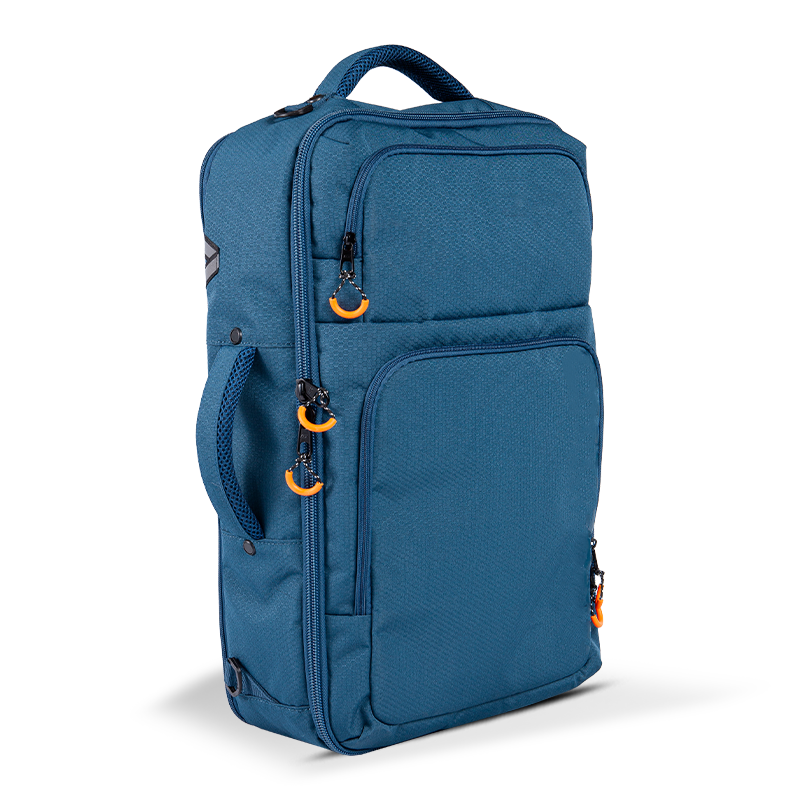
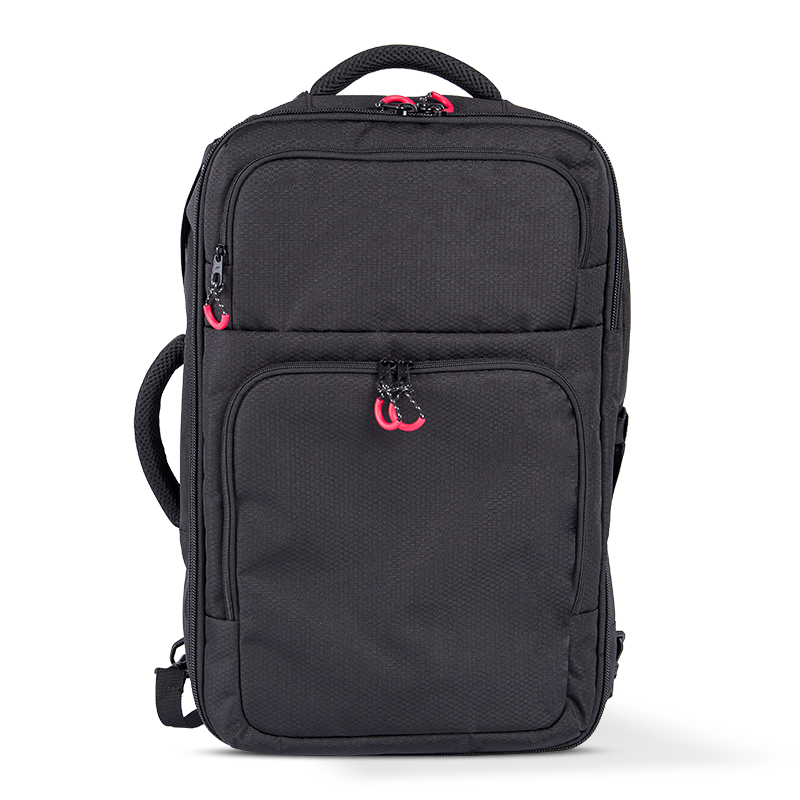
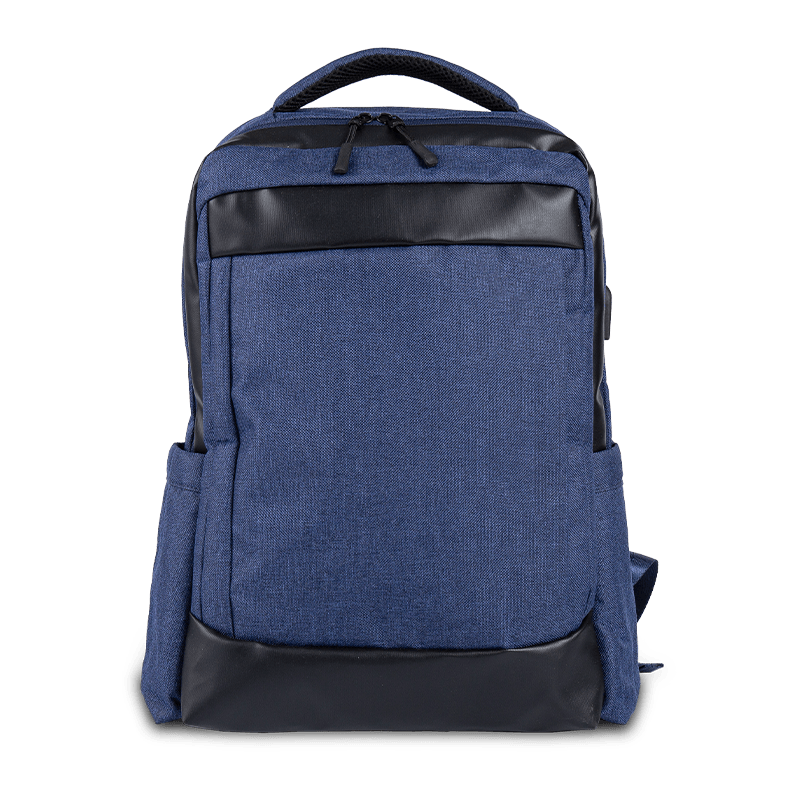
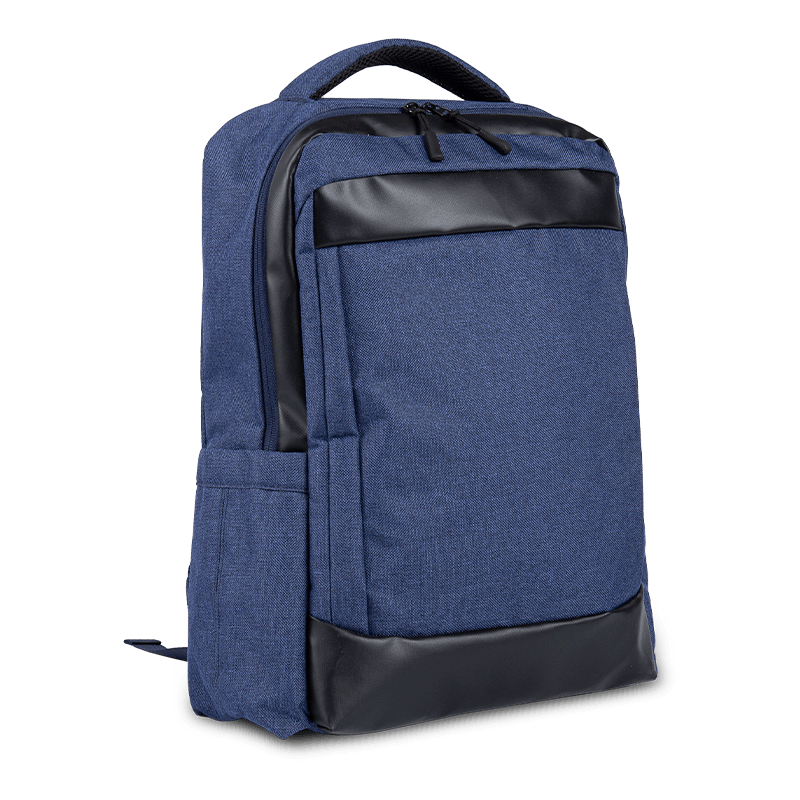
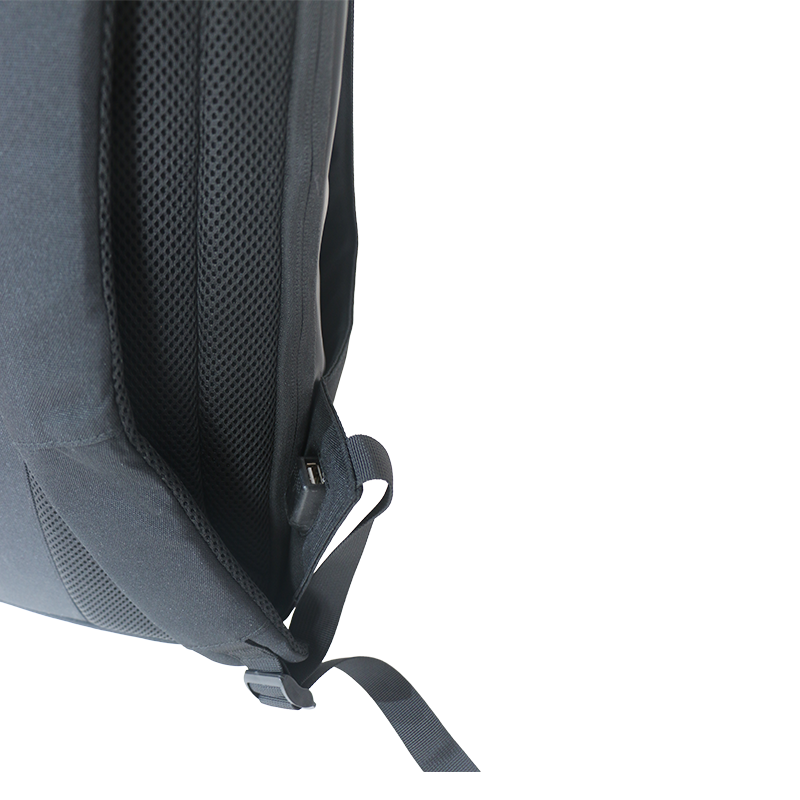
Good cable routing is what separates a useful charging backpack from an annoying one. The power bank should sit in a padded elastic sleeve, not a loose pocket. The cable should run through a protected path, and the external port should be held firmly so it does not move when you plug in your phone. Without these details, the cable can break inside the fabric and leave you with a dead port. A business travel laptop backpack with a USB charging port is one example of those details handled at the manufacturing stage.
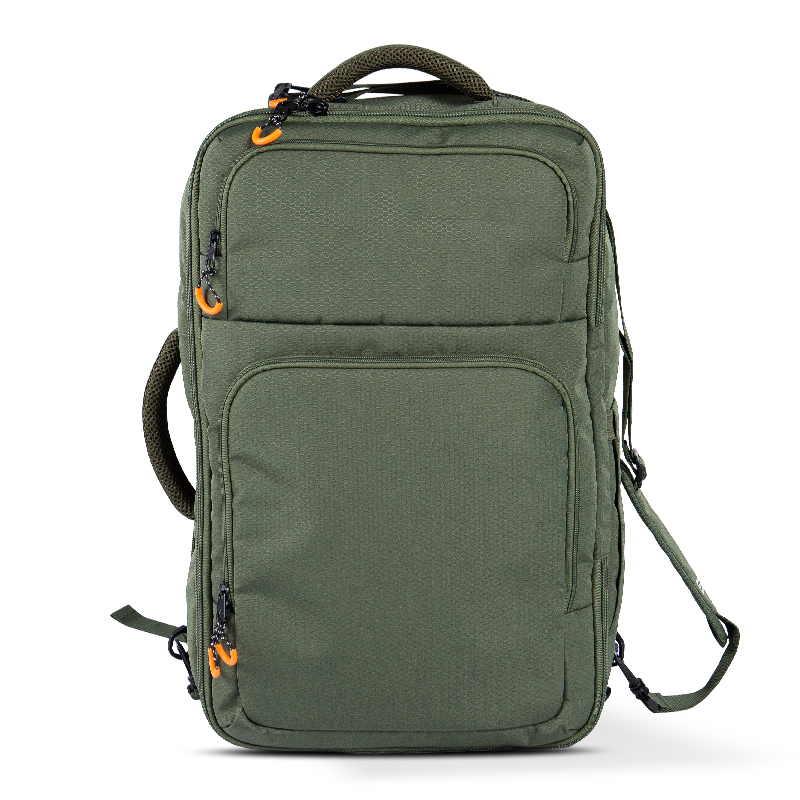
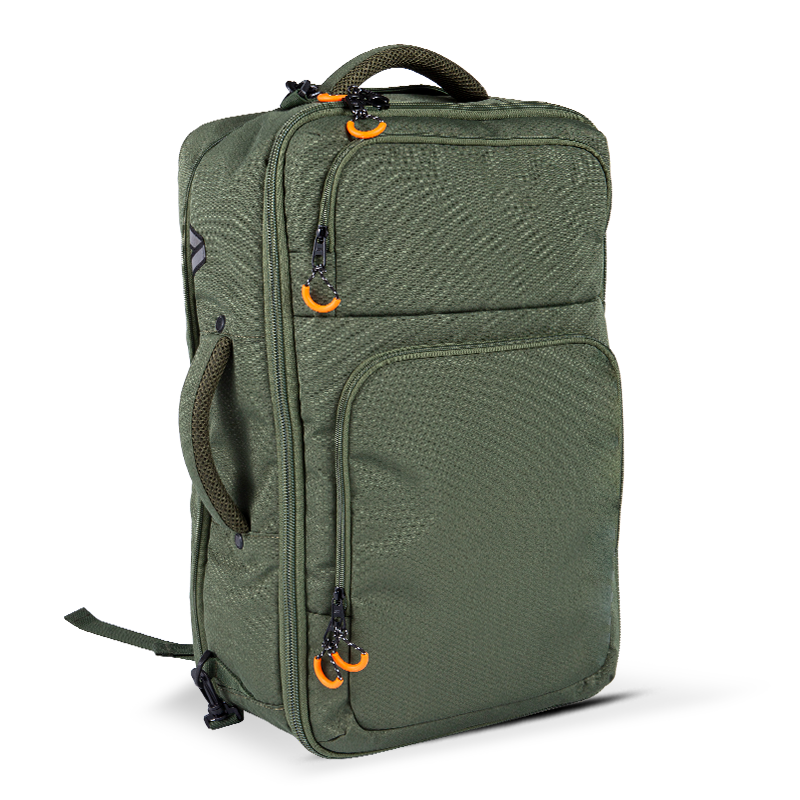
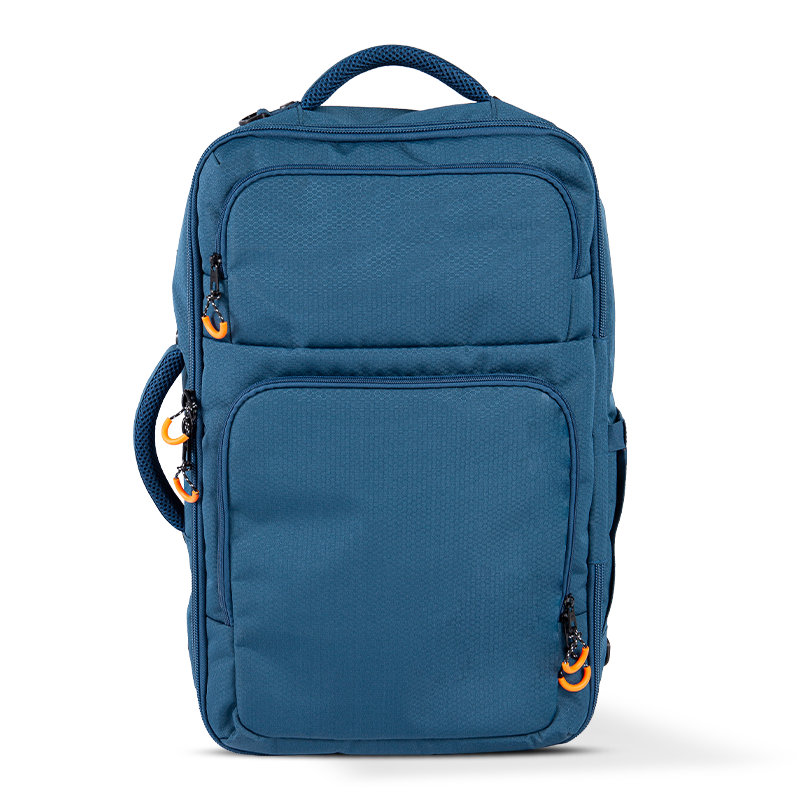
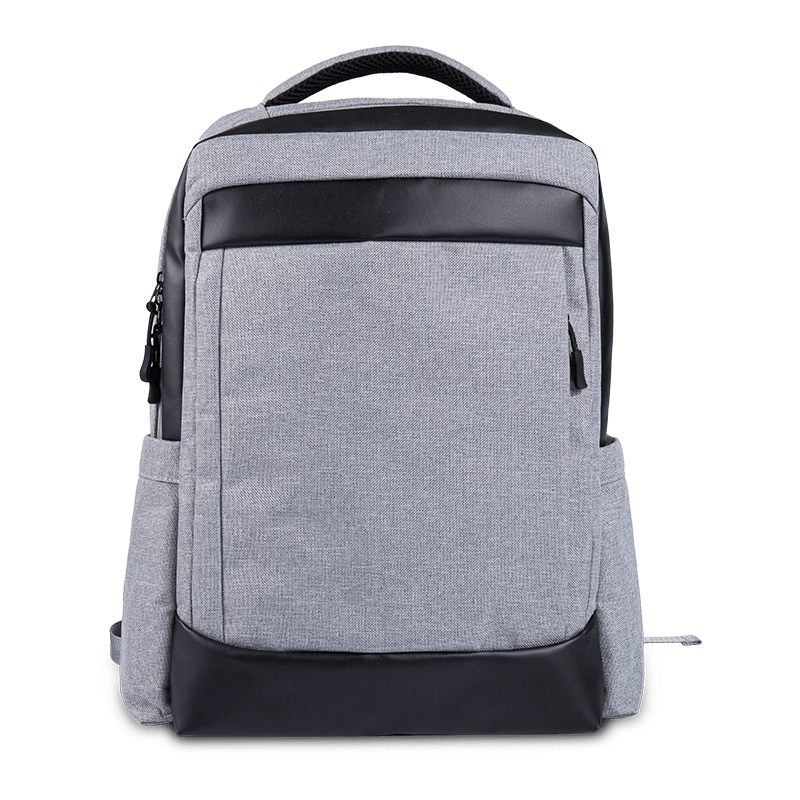
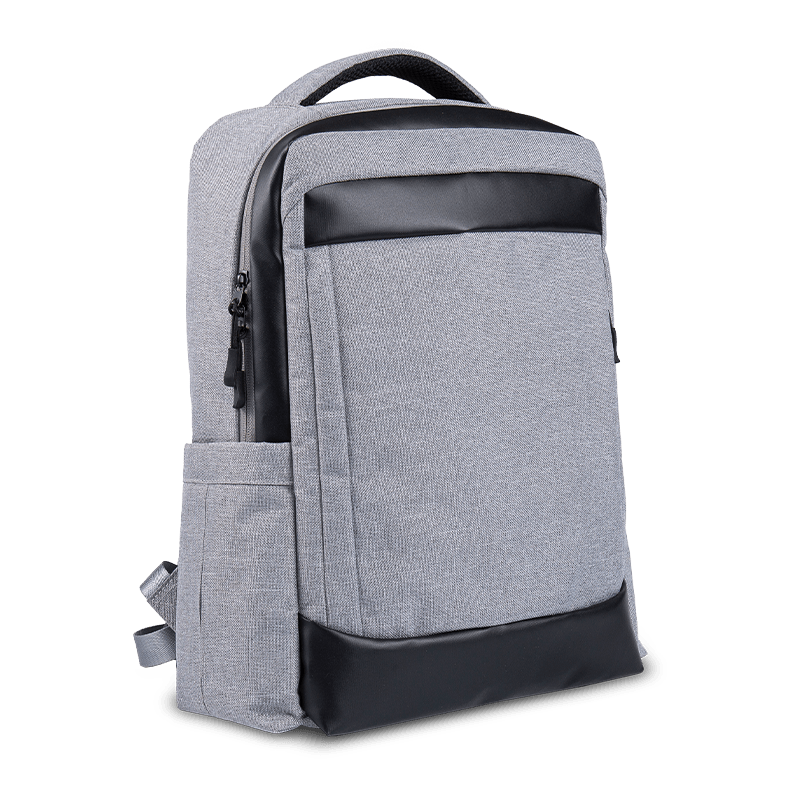
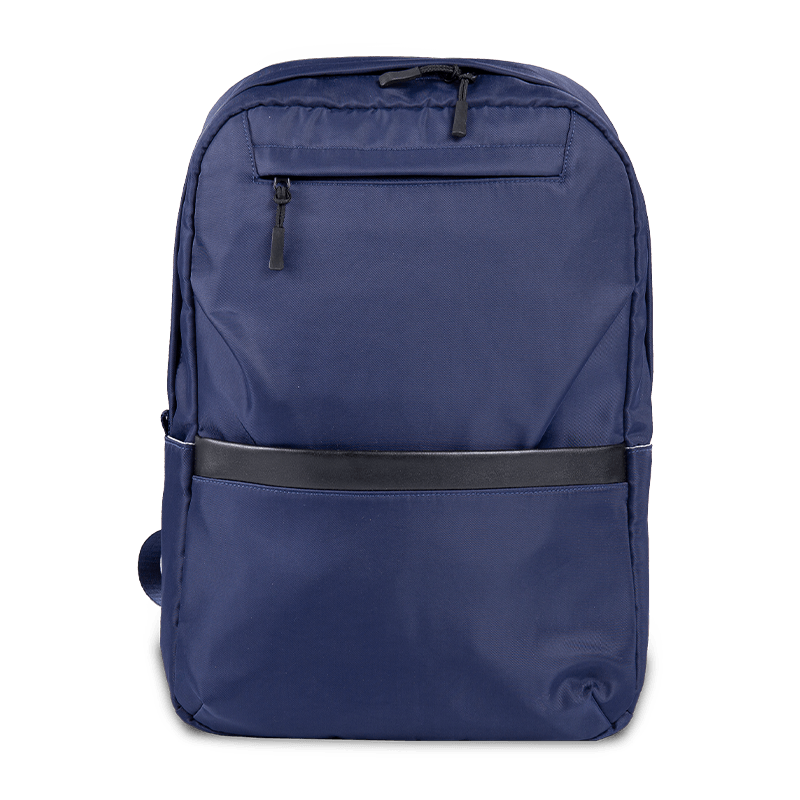
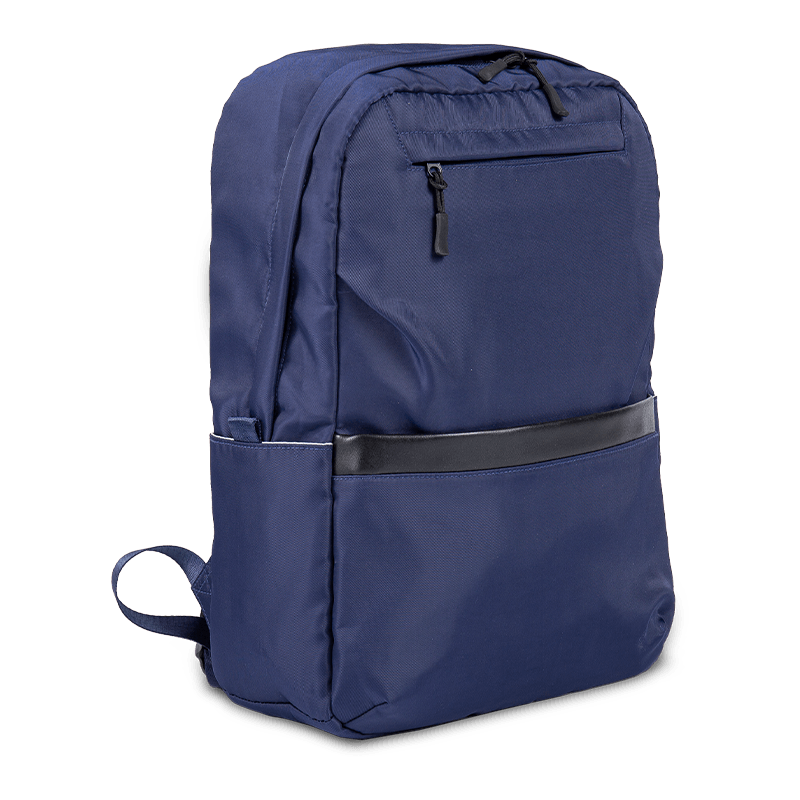
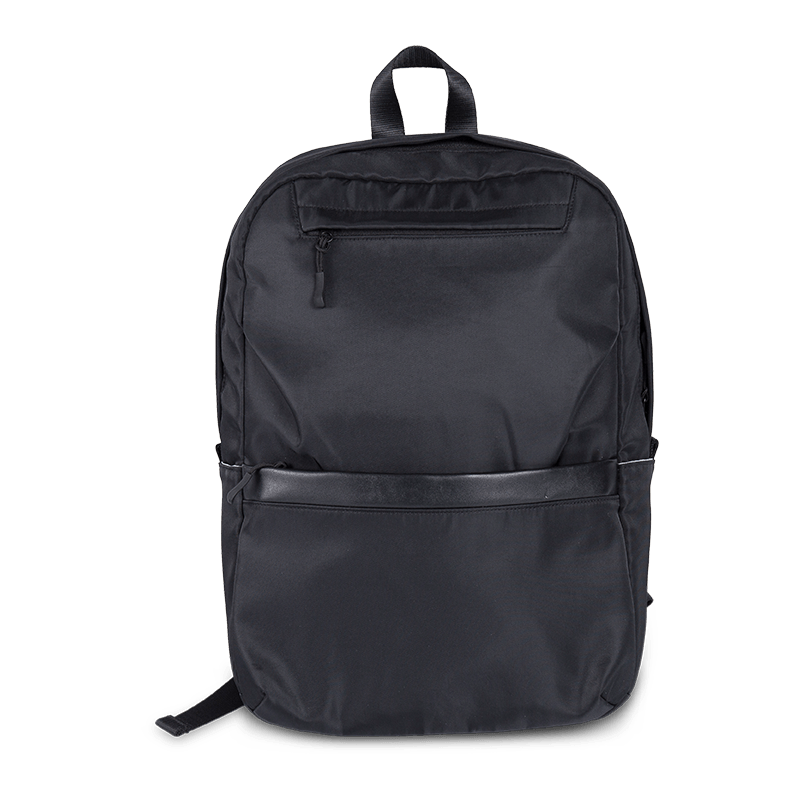
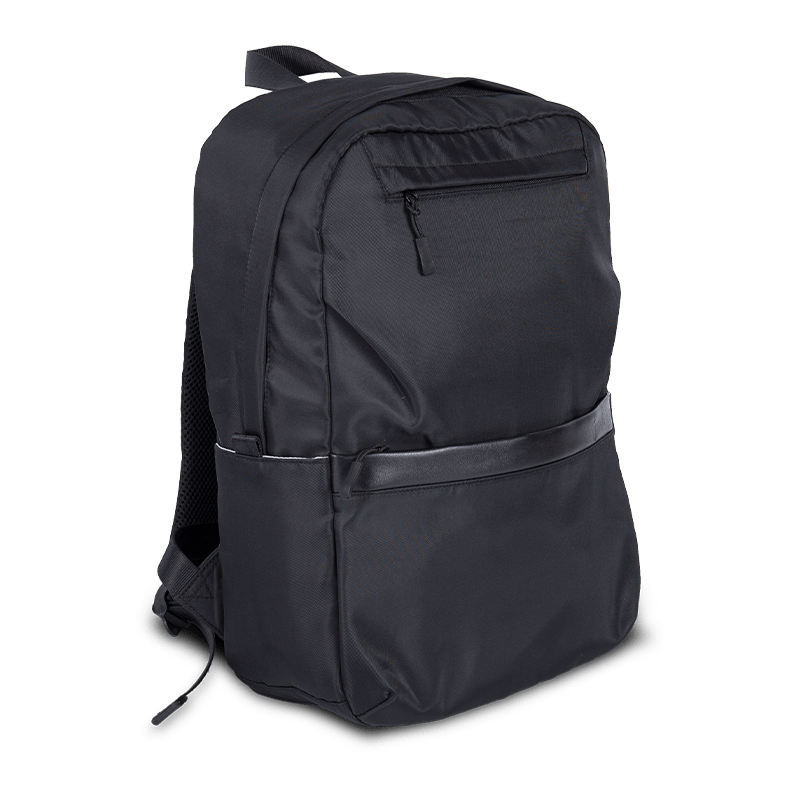
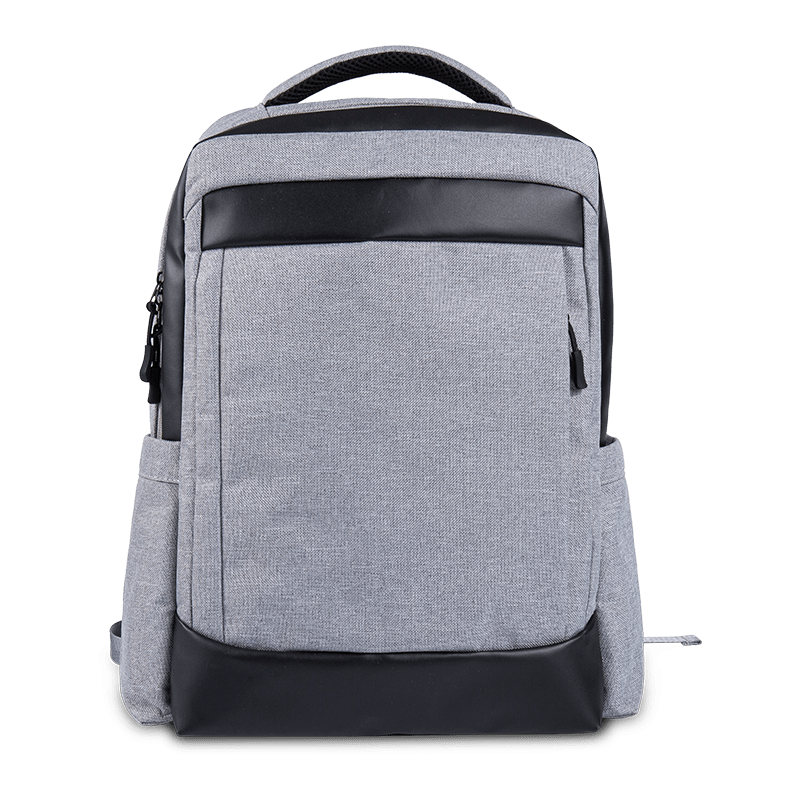
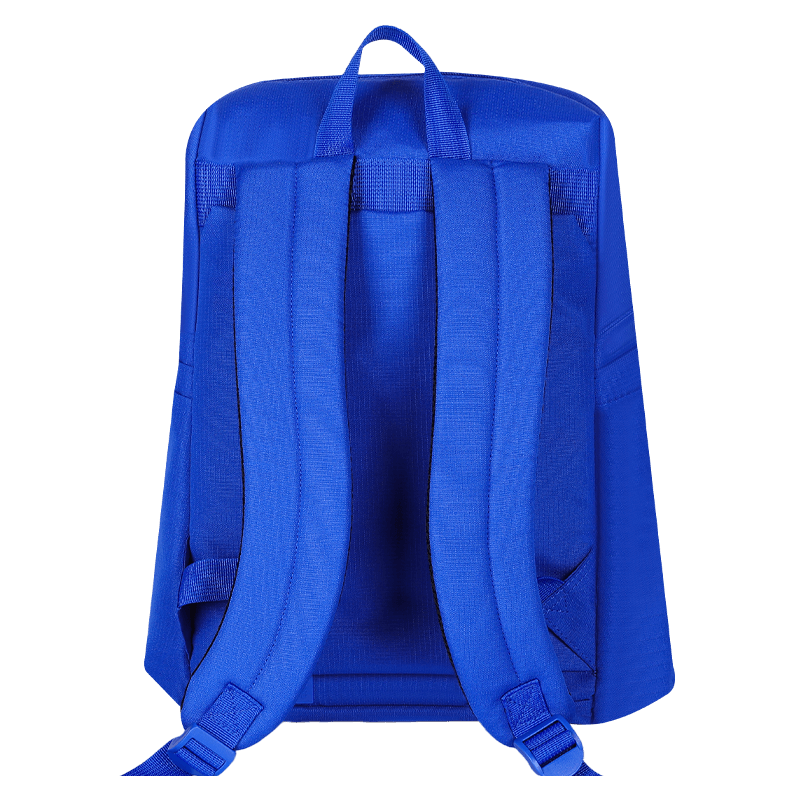 Laptop backpack, business travel laptop bag with USB charging port Suppliers, CoHuacheng is Wholesale Laptop backpack, business travel laptop bag with USB charging port Suppliers and Company in China,View Product →
Battery safety and access
A removable power bank is easier to inspect, replace, and carry through airport security. If the pack has a fixed battery, it should be isolated from pressure points and connected to a switch or pull cord so the circuit is not always live. Most airlines require spare lithium-ion batteries to be carried in carry-on baggage, and a removable battery makes that rule easier to follow.
Choosing the power bank that goes inside
The backpack is only part of the charging equation. Since most designs rely on an external power bank, the battery you choose determines how useful the port will be throughout the day. For a typical smartphone, a 10,000 mAh power bank provides roughly two full charges and still fits into most padded sleeves. If you carry a tablet as well, consider a 20,000 mAh unit, but check its dimensions against the backpack’s power bank pocket.
Capacity is not the only factor. A power bank with a higher output, such as 18W or 20W through USB-C Power Delivery, will charge a compatible phone faster than a basic 5V/1A port. The backpack should have enough space around the power bank to let the cable bend without putting stress on the connector. If the power bank is too tall or too thick for the pocket, the pressure can push the cable out or damage the sleeve over time.
Do not forget that it is a backpack first
A charging port does not make up for weak straps or a badly placed laptop sleeve. A backpack with charger still has to carry your laptop, water bottle, cables, and daily odds and ends. The port should add convenience, not take up space that you need for normal storage.
- Laptop compartment: check whether it fits your laptop size and whether the padding covers the bottom and corners.
- Weight distribution: a power bank and a laptop put a lot of load on your shoulders, so wide straps and a stable back panel matter.
- Capacity: many charging backpacks sit around 15 to 25 liters, which works for daily use but feels tight for a full travel day.
- Weather protection: the port housing should be recessed or covered so rain cannot enter the main compartment.
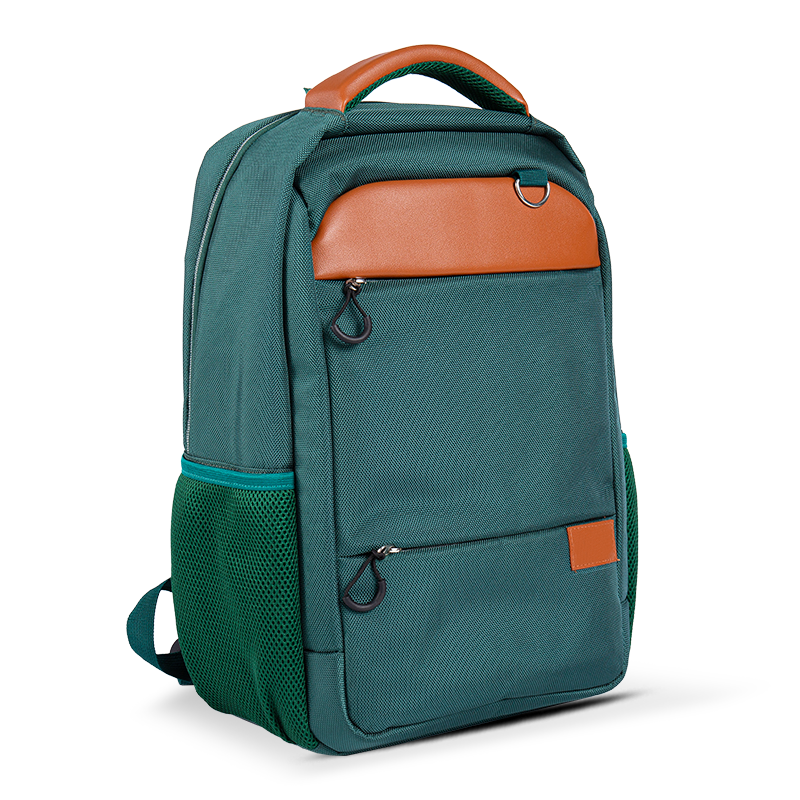
For wet or outdoor conditions, look for sealed zippers and a covered charging opening. An eco-friendly RPET backpack with USB charging is a practical choice when you want a waterproof roll top and a lower environmental footprint.
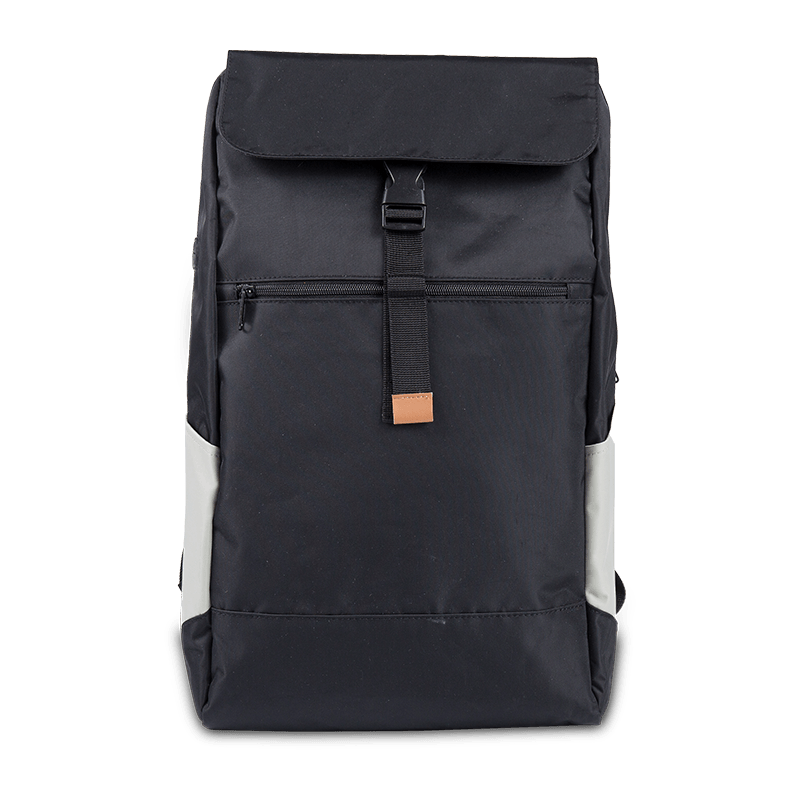
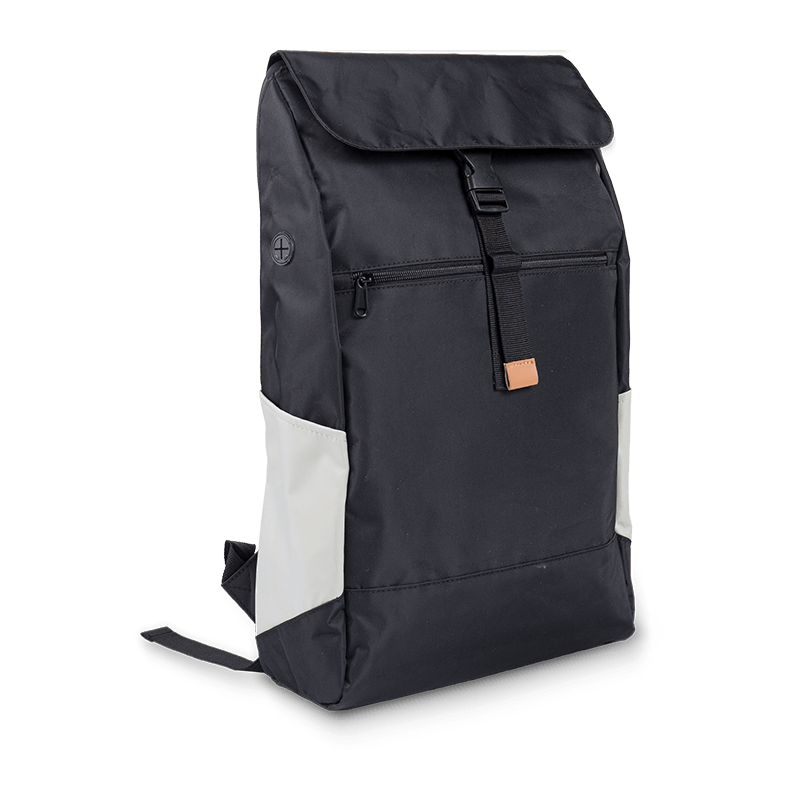
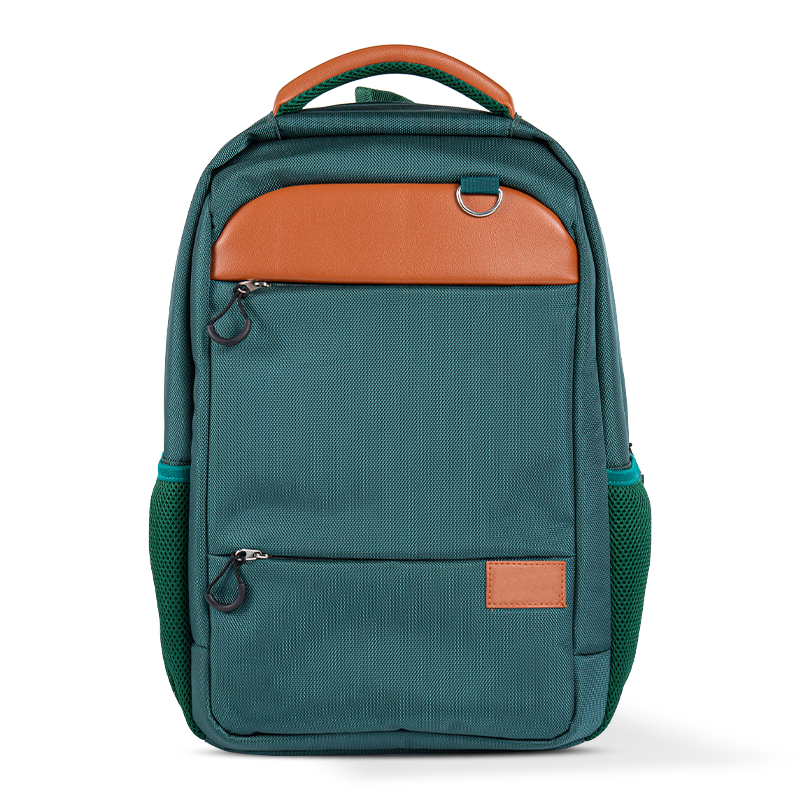
 Customized logo eco-friendly backpack waterproof deep green RPET material USB chHuacheng is Wholesale Customized logo eco-friendly backpack waterproof deep green RPET material USB charging laptop carrying travel backp...View Product →
How to use a backpack with charger correctly
Using a charging backpack is not complicated, but the order matters.
- Put the power bank in the designated sleeve and connect the internal cable to the power bank’s output port.
- Route the cable through the guide until the external connector is available at the outside port.
- Close the compartment without trapping the cable under a zipper.
- Plug your phone into the external port only when you need power.
- Unplug the internal cable if the backpack will be stored for a long time.
When the backpack needs cleaning, remove the power bank first. Machine washing a bag with an integrated cable system can damage the port and shorten the lifespan of the wiring.
Common mistakes to avoid
In our production experience, cable failure is the most common reason a charging backpack stops working. The cable looks simple, but it is bent every time the user opens the bag, plugs in a phone, or removes the power bank.
- Focusing only on the outside port while ignoring the quality of the power bank pocket.
- Assuming the charging cable is replaceable. On many pass-through backpacks, the internal cable is sewn into the fabric, so ask whether it can be replaced if it wears out.
- Choosing a fixed battery without checking airline rules or replacement options.
- Buying a backpack with a charging port but no protective housing for the power bank and laptop.
These mistakes stand out in wholesale orders because they show up as returns and complaints after a few months of daily use.
Is a backpack with charger worth it?
For most people, the answer is yes, as long as the charging system is built around a removable power bank and a durable external port. The value comes from convenience, not from battery technology hidden in the fabric. A charging backpack keeps the same phone cable from tangling with a water bottle, prevents you from opening the main compartment every time the battery drops, and gives the power bank a permanent home.
The right choice depends on your routine. A commuter with a laptop will care more about organization and padding. A traveler will care more about capacity and airport rules. A student may want something light and flexible. If you are still comparing general features, work through our complete backpack buying guide before you commit to a final model.