



 English
 Español
 عربى
عربىContent
A carry-on that misses the airport sizer by a single inch can turn a two-hour flight into a gate-check ordeal: the boarding agent tags your bag at the aircraft door, and on strict budget carriers the fee often runs $50 or more. Most full-service airlines in 2025 still measure cabin bags at about 22 x 14 x 9 inches (56 x 36 x 23 cm), while many European and Asian carriers enforce a tighter 55 x 40 x 20 cm.
Here is the short answer before anything else: the best carry-on luggage of 2025 is any bag that clears those sizers with room to spare, weighs roughly 3 kg empty, rolls on true spinner wheels, and uses a shell material matched to the route — hard ABS/PC or aluminum-magnesium for protection, high-density waterproof oxford for flexibility. No logo, gadget, or color option matters more than those four measurements. The sections below explain how to judge each one, based on what more than three decades of luggage manufacturing have taught us about where bags actually fail.
What "Best" Means for a Carry-On in 2025
Strip away the marketing and the top-rated carry-ons of 2025 all pass the same five checks. Use them as a scorecard when you compare models:
- Dimensions: 20 to 22 inches tall, sized under 56 x 36 x 23 cm and ideally shaped to also clear the 55 x 40 x 20 cm gauges common in Europe and Asia.
- Capacity: 35 to 45 liters, enough for four to seven days with packing cubes.
- Empty weight: about 3 kg (6.6 lb) or less, so a packed case stays under the 7-10 kg cabin weight limits many carriers enforce.
- Rolling: four spinner wheels that turn freely on both carpet and tile, with a multi-stage aluminum handle that locks without side wobble.
- Security and service: a TSA-recognized combination lock, wheels and handles that can be replaced rather than discarded, and a supplier that stands behind both.
Those standards barely moved through 2025, and they still hold now. What did change is visible on the sales floor: front-opening shells that let you reach a laptop without laying the case flat, textured finishes that hide scuffs, and a steady shift toward recycled fabrics. Judge any current model against the same five checks and the comparison becomes mechanical instead of emotional.
Hard Shell or Soft Shell: Match the Shell to the Trip
Start with this decision because it shapes everything else. Hard shells protect; soft shells adapt. If you carry camera gear, glass bottles, or product samples that cannot be crushed, a rigid wall is worth more than any exterior pocket. If you commute, overpack, or hop between trains and rideshares, the give and outside storage of fabric will serve you better.
| Aspect | Hard-Shell Carry-On | Soft-Shell Carry-On |
|---|---|---|
| Impact protection | Rigid wall shields fragile contents | Fabric flexes; contents absorb the shock |
| Packing behavior | Fixed volume, two-sided clamshell | Expands 15-20% and flexes into tight bins |
| Typical empty weight | Roughly 2.8-3.5 kg in ABS/PC; heavier in aluminum | Often 2.3-3.0 kg |
| Wet weather | Water sheds off the shell; zippers are the weak point | Needs a waterproof coating and covered zippers |
| Care | Wipes clean with a damp cloth | Spot clean; fabric can stain |
| Suits best | Fragile gear and rough regional routes | Commuters, overpackers, mixed transport |
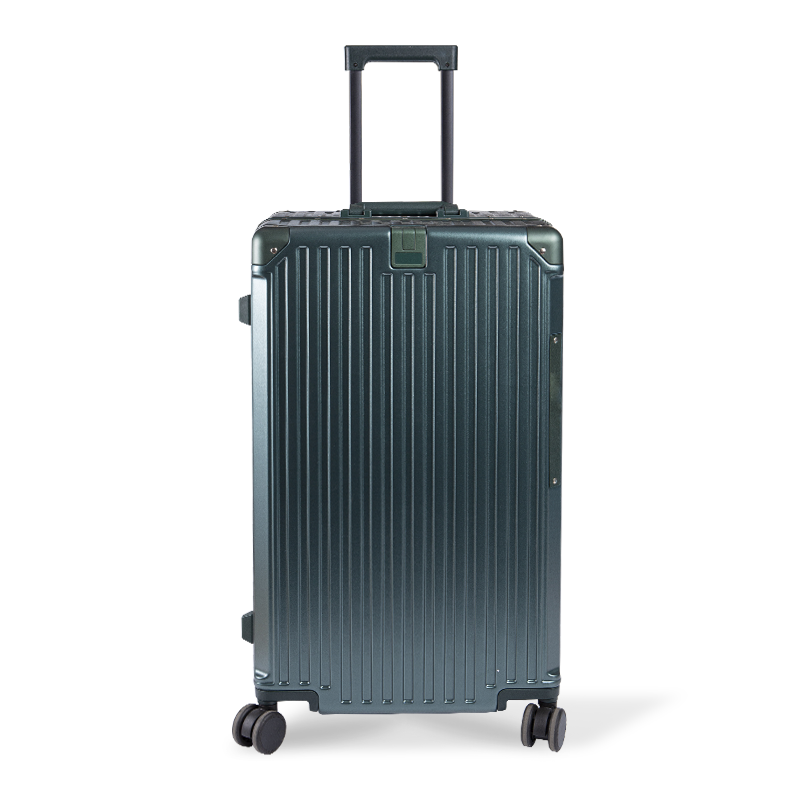
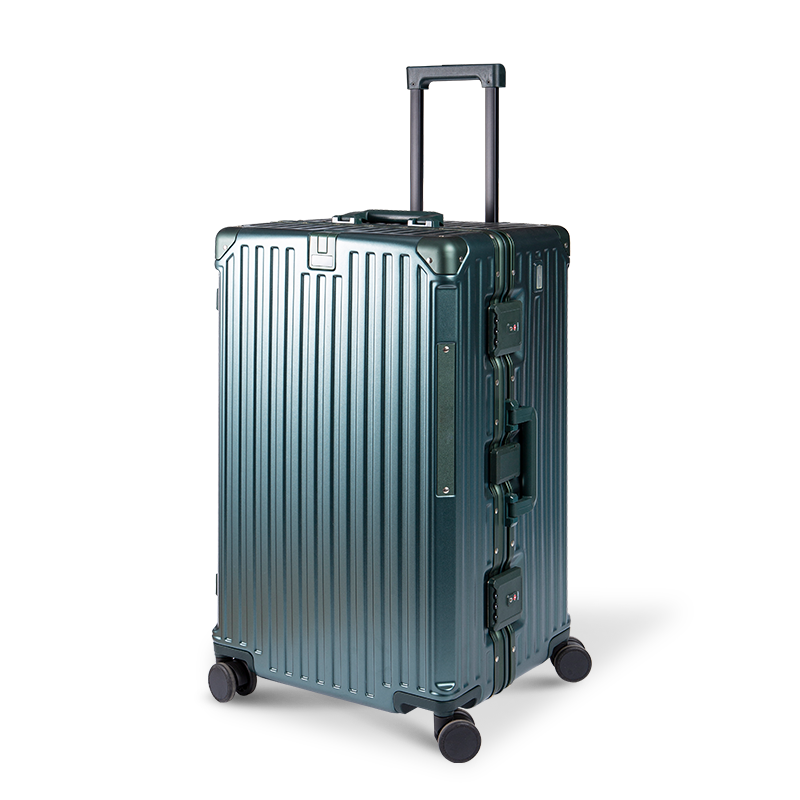
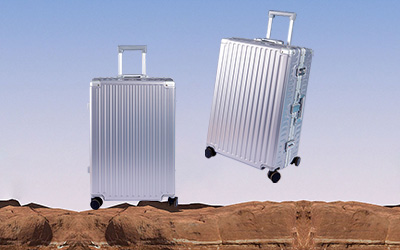
Aluminum-magnesium alloy sits at the premium end of the hard-shell range. The metal resists deformation, the frame tolerates careless transfers, and a combination lock integrates cleanly into the shell edge — reasons enough for frequent flyers to accept the extra weight and cost. Textured ABS/PC shells cover the value end and hide the scuffs that polished surfaces advertise. For a working example of the premium approach, the model linked below shows how a metal shell, spinner wheels, and a coded lock come together in current production.
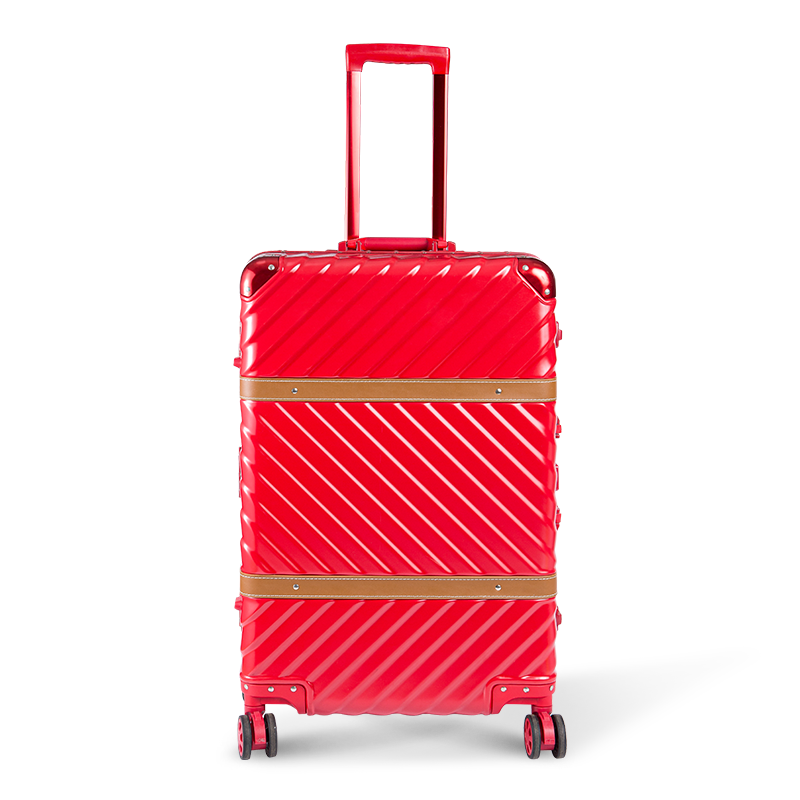
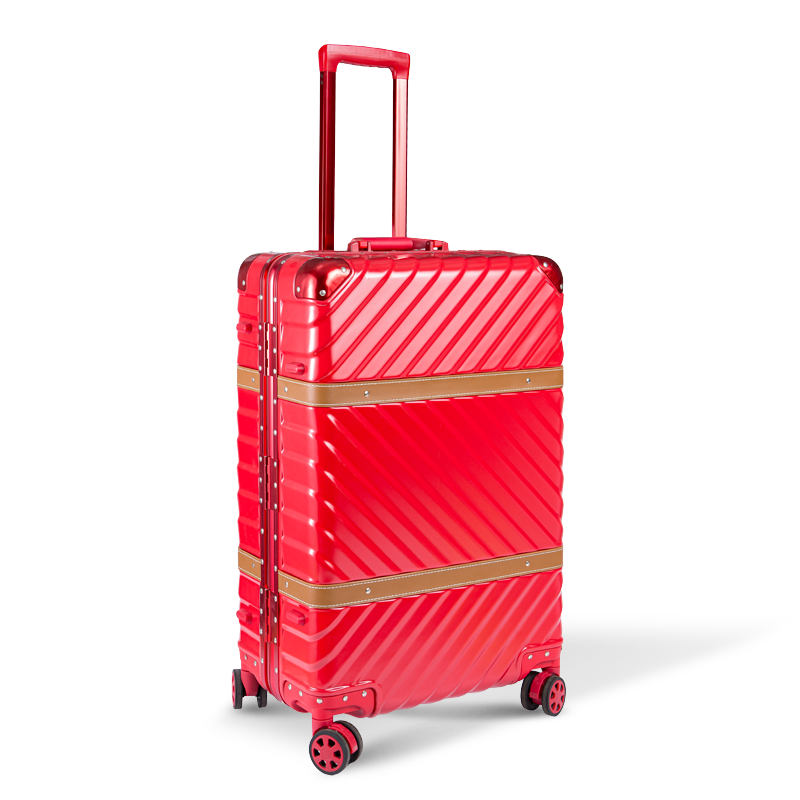
All-aluminum-magnesium alloy 20-inch carry-on suitcase with combination lock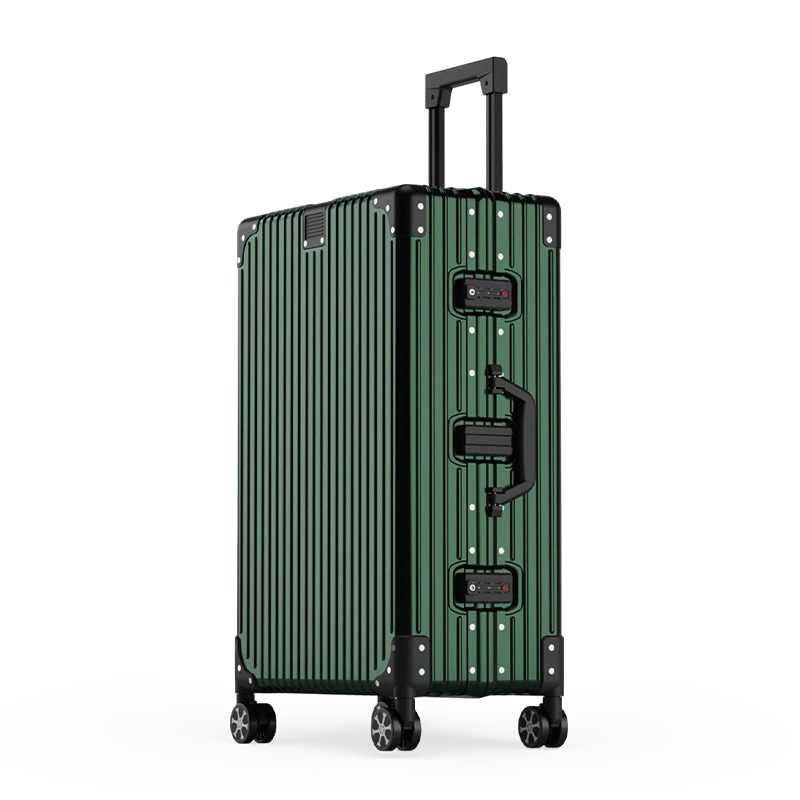 All-Aluminum-Magnesium 20-Inch Carry-On With Combination LockA premium metal-shell carry-on with spinner wheels and an integrated coded lock, illustrating the aluminum-magnesium approach to hard-shell durability discussed above for frequent flyers.View Product →
Shell Materials Explained: ABS+PC, Aluminum, and Waterproof Oxford
Material choice decides a bag's lifespan more than any feature list. In hard shells, pure ABS keeps cost down but can crack under a sharp knock, which is why the industry settled on ABS/PC blends: ABS contributes rigidity, polycarbonate contributes flex, and the shell dents instead of shattering. Wall ribbing adds stiffness, and a textured finish keeps daily wear out of sight. Full aluminum-magnesium cases occupy another tier — they bend under extreme force rather than failing outright, at a noticeably higher price and roughly a kilogram more weight.
Soft shells live or die on fabric specification. Look for a high-density oxford weave in the 600D to 1680D range with a PU or comparable waterproof coating, neatly finished seams, and coil zippers that survive being forced. Stitch density matters as much as denier: a loose stitch line at the handle junction gives out long before the fabric does. Recycled RPET versions of these fabrics now match virgin polyester for strength, which is useful if sustainability sits in your buying brief.
High-density waterproof oxford cloth solid-color carry-on luggage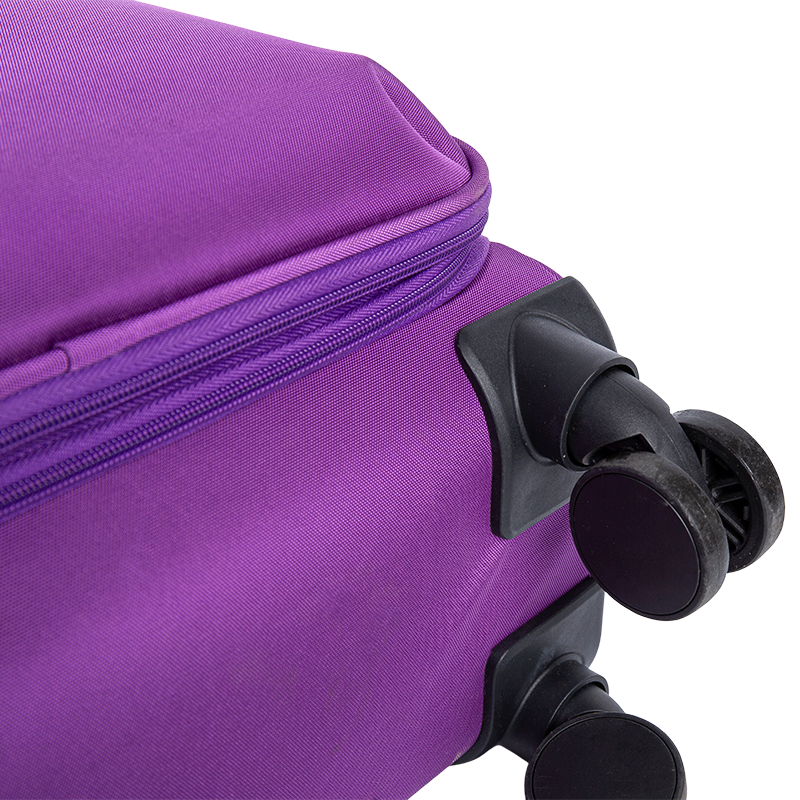 High-Density Waterproof Oxford Cloth Carry-On LuggageA soft-shell carry-on in waterproof oxford fabric with antibacterial lining, expandable capacity, and a TSA lock, matching the fabric and construction guidance covered in this section.View Product →
One warning from the factory side: the material on a spec sheet and the material in the finished case are not always the same thing. Wholesale buyers should request denier certifications or drop-test reports and check shell wall thickness in person before committing to volume. Ten minutes of checking prevents a season of returns.
Features Worth Paying For in 2025
Feature lists grow every year, but only a few features change daily ownership. These earn their cost:
Wheels and telescopic handles
Four multi-directional spinner wheels have become the default for a good reason: they let a fully packed case glide beside you instead of tilting against your arm. Double wheels roll more steadily over carpet, curb edges, and cobblestones, and quiet wheel design matters more than you would expect in a hotel corridor at five in the morning. For the handle, extend it fully and shake it gently — a multi-stage aluminum tube should lock with minimal side play. Wobble is the most visible symptom of cheap riveting, and it only worsens with use.
Locks and zipper security
A TSA-recognized combination lock lets security staff inspect the case without cutting it open. On aluminum shells the lock is usually built into the frame; on zipper bags it is integrated into the slider. Pair it with self-repairing coil zippers, which realign after a snag instead of splitting along the seam.
Front openings, expansion, and USB ports
Front-opening shells were the most useful design shift of 2025: the front panel unzips to a padded sleeve, so a laptop comes out at the gate without opening or laying down the whole case. Expansion zippers add 10-20% of volume, handy for the return leg — though a fully expanded case may exceed sizer limits, so treat the extra space as a bonus, not a plan. A USB port is worth having for its internal wiring, but remember that most airlines require the power bank itself to be removable and carried in the cabin.
Portable front-opening carry-on travel luggage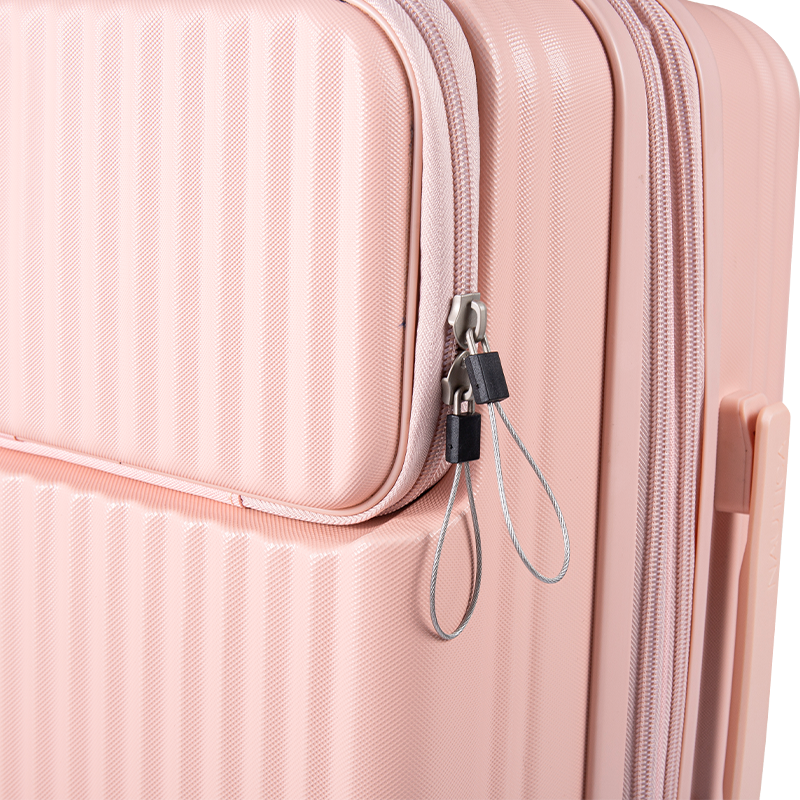 Portable Front-Opening Carry-On Travel LuggageAn ABS+PC front-opening case with a padded laptop sleeve and expansion zipper, a practical example of the 2025 design shift described just above.View Product →
Match Size and Capacity to Your Routes
Buy to the smallest sizer your routes touch — that is the whole rule. The 20-inch international class, around 55 x 40 x 20 cm, clears the strictest European and Asian carriers and still holds 35-38 liters. The 21-22 inch US class, 56 x 36 x 23 cm, adds roughly 5-8 liters for four-to-seven-day trips. If your routes mix both, the volume you give up with the smaller case is smaller than the fee you avoid. Weight is the other quiet constraint: several Asian carriers cap the entire cabin bag at 7 kg, and a 3.5 kg shell leaves you 3.5 kg of clothes before an awkward repack at the check-in desk.
Whatever the case size, keep the laptop, documents, and valuables in a personal item — a compact travel backpack or tote that sits under the seat — so a forced gate check never touches your essentials. If you want the whole selection process in one place, our carry-on suitcase buying guide walks through size rules, shell choices, wheels, and packing strategy step by step.
A carry-on that still rolls straight and zips smoothly after five years is bought with measurements, not impulse. Before paying, run this sequence:
- Set the case into the smallest sizer used on your routes, packed rather than empty.
- Weigh it; keep the empty case at or under about 3 kg.
- Roll it across carpet and tile, then over a curb edge.
- Extend the handle to full height and check for side play.
- Work every zipper end to end and test the combination lock.
Cases that pass those tests rarely need replacing, and cases that fail them rarely improve with use. We have been manufacturing luggage since 1999 — hard-shell, soft-shell, and folding trolley designs for brands, wholesalers, and retail channels worldwide, including custom logo and OEM programs. Browse the full range of carry-on luggage, bags, and travel accessories to see how these standards translate into finished products.